1.1 About this documentation
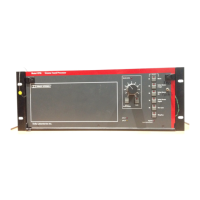
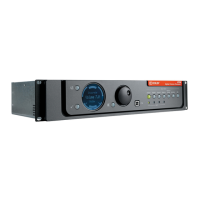
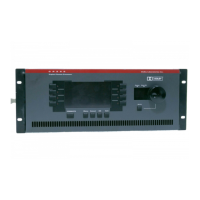
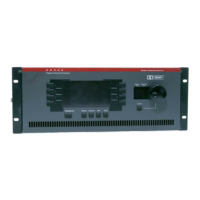
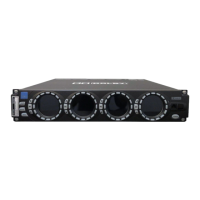
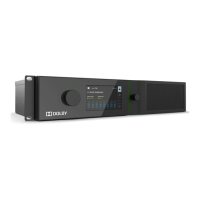
This documentation shows you how to install and operate a Dolby CP950 and CP950A.
With the Dolby CP950 and CP950A, you can present high-quality audio from the following audio sources:
• Dolby Digital Cinema playback systems
• Onscreen advertising servers
• Digital video tape recorders (VTRs)
• Digital satellite or cable TV receivers
• Blu-ray Disc
• DVDs
• Compatible servers supplied by any party other than Dolby
The Dolby CP950 and CP950A provide the following audio input connectors:
• 8 × Audio Engineering Society (AES) 16-channel digital AES3 audio input
• HDMI input
• Stereo nonsync inputs (RCA)
• Microphone input (XLR)
• Two 1 × AES BNC input connectors
• CAT1710 media block board with Dolby Atmos Input Ethernet port (included only with CP950A).
The Dolby CP950 and CP950A provide the following audio output connectors:
• Dolby Atmos Connect output using either AES67 or BLU Link protocols
16-channel digital on the CP950
64-channel digital on the CP950A
• 16-channel analog audio outputs
The analog audio outputs are balanced TASCAM female DB25 connectors.
• Hearing impaired (HI) and visually impaired (VI) analog output channels (RCA)
• HDMI repeater output
Note: You can mix analog and digital outputs on the CP950 or CP950A. The maximum number of
output channels cannot be exceeded. The CP950 supports 16 channels and the CP950A supports 64
channels.
The Dolby CP950/CP950A Ethernet port supports IPv4. You can use this port for automation and control
through a web browser interface. To control automation from a Dolby Digital Cinema playback system or a
device supplied by any party other than Dolby, you can use the Ethernet or serial interface. Ethernet supports
SOAP web services and American Standard Code for Information Interchange (ASCII) commands. The RS232
serial interface also supports ASCII commands.
You can configure the Dolby CP950/CP950A with macros that accept audio using the system inputs. An
independently adjustable global audio delay is assigned to each macro to ensure that sound and picture are
perfectly synchronized. You can assign unique delays to dierent macros using the same input. This provides
flexibility for alternative content sources, which oen require dierent delays.
The Dolby CP950 and CP950A utilize high-resolution multiple-rate equalization (EQ) for all channels. You can
perform the setup manually using the Dolby CP950/CP950A web client user interface (UI) through the
standard one-third octave EQ (internal real-time analyzer). Advanced users can run the automatic EQ process
in Dolby Atmos Designer (DAD) v3.3.x or later soware. You can download the current version of DAD
soware by clicking downloads in the Dolby CP950/CP950A web client. Authorized users can download the
current version of DAD soware, release notes, and manual at https://customer.dolby.com. You can also
access the DAD manual in the DAD soware Help menu.
You can back up Dolby CP950/CP950A settings to a PC and restore the backup to another Dolby CP950/
CP950A if you experience a hardware or soware failure. This minimizes the need for additional calibration
aer repairs or unit replacement.
About this documentation
Dolby Cinema Processor CP950 and Dolby Atmos Cinema Processor CP950A Manual 13
Issue 9 Part Number 8800298 19 January 2022



 To Next Page