In some cases, you may have more than one auditorium interconnected on the same network. We do not
recommend such a configuration. In such cases, you must enter a dierent unique destination multicast IP
address for each auditorium.
RTP source and RTP destination UDP ports
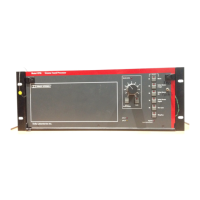
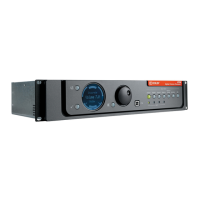
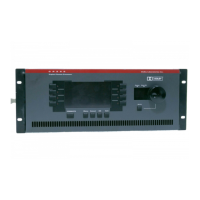
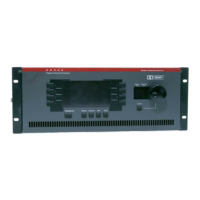
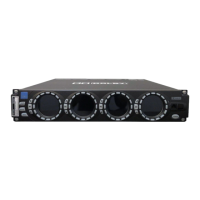
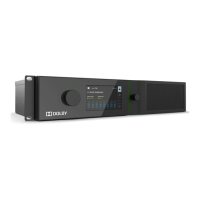
The system transmits audio in streams of eight channels. The Dolby CP950 is a 16‐channel audio processor,
which provides two streams of eight channels. The CP950A is a 64-channel audio processor, which provides
eight streams of eight channels.
The system sends audio packets with two important values: RTP source and RTP destination User Datagram
Protocol (UDP) ports. Downstream devices with matching values accept these audio packets and ignore
packets with no matching values. Dolby devices have a default schema for these ports.
The default channels 1‐8 are:
• Source = 6518
• Destination = 6517
The default channels 9‐16 are:
• Source = 6519
• Destination = 6517
The default channels 17‐24 are:
• Source = 6520
• Destination = 6517
The default channels 25‐32 are:
• Source = 6521
• Destination = 6517
The default channels 33‐40 are:
• Source = 6522
• Destination = 6517
The default channels 41‐48 are:
• Source = 6523
• Destination = 6517
The default channels 49‐56 are:
• Source = 6524
• Destination = 6517
The default channels 57‐64 are:
• Source = 6525
• Destination = 6517
If you hover over these fields, you can enter the desired UDP settings for each channel bank.
You can manually change the source and destination RTP ports by checking the advanced mode box. This
enables you to easily set up a configuration for a device supplied by any party other than Dolby.
For more information on Dolby Devices and AES67, please visit our Vimeo web page that includes a specific
video on AES at https://vimeo.com/435856534.
Modifying the network settings
Dolby Cinema Processor CP950 and Dolby Atmos Cinema Processor CP950A Manual 77
Issue 9 Part Number 8800298 19 January 2022



 To Next Page