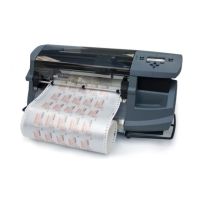
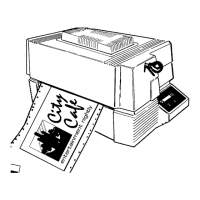
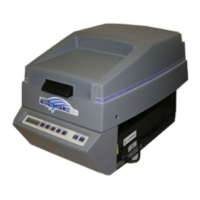
HS15
plus
REFERENCE CARD
KEY/FUNCTION DESCRIPTION
RUN SINGLE Key --
Plot
Press
RUN SINGLE
to plot single jobs. The HS15
plus
returns to the off-line status (as at
power-up) after each job and waits for the operator to press
RUN SINGLE
key again to
plot the next job.
Controlled Stop Press either Run key to pause plotting at the next logical break in the program and
check current job.
Slewing while in pause will result in the plotter returning to the
position in the job and resuming the job when
RUN SINGLE
is pressed again.
RUN CONT Key --
Plot
Press
RUN CONT
to plot two or more jobs continuously. The HS15
plus
plots one job
after the other without pausing between them and remains on-line until the
RUN
CONT
key is pressed again or
RESET
is pressed.
Controlled Stop Press either Run key to pause plotting at the next logical break in the program and
check current job.
Slewing while in pause will result in the plotter returning to the
position in the job and resuming the job when
RUN CONT
is pressed again.
Slew Keys --
The arrow and
SLOW
keys do not function while a job is plotting, during an error
condition, or while a Run light is on, even if the plotter is idle.
Arrow Keys Press arrow keys to position carriage and material between jobs.
•
Up and down arrow keys move the carriage between the rear and the front of the
plotter.
•
Left and right arrow keys rotate the drum and feed material through the plotter or
back toward the roll holder.
SLOW Key
Press the
SLOW
key (a single beep indicates slow slew mode) and press the arrow
keys to slow slew. Press the
SLOW
key again (two beeps indicate normal slew mode)
and hold down a right or left arrow key to ramp up to high speed slew.
RESET Key --
Emergency Stop
Press
RESET
key to stop HS15
plus
operation, clear the current job from the buffer, and
return the plotter to off-line status.
Clear Press the
RESET
key to stop the error signal after a power-up or plotting failure. (See
“Error Conditions” section in this manual.)
Access Hold the
RESET
key at power-up to access additional diagnostics. (See “Special
Diagnostics” section in this manual.)



 To Next Page