KONE NanoSpace™
Owner’s Manual
190 (196) OM-01.03.086
(B) 2016-01-11
© 2014 KONE Corporation
All rights reserved.
H.1 Cleaning the walls
The following table describes the methods and substances required to clean the walls of your
elevator.
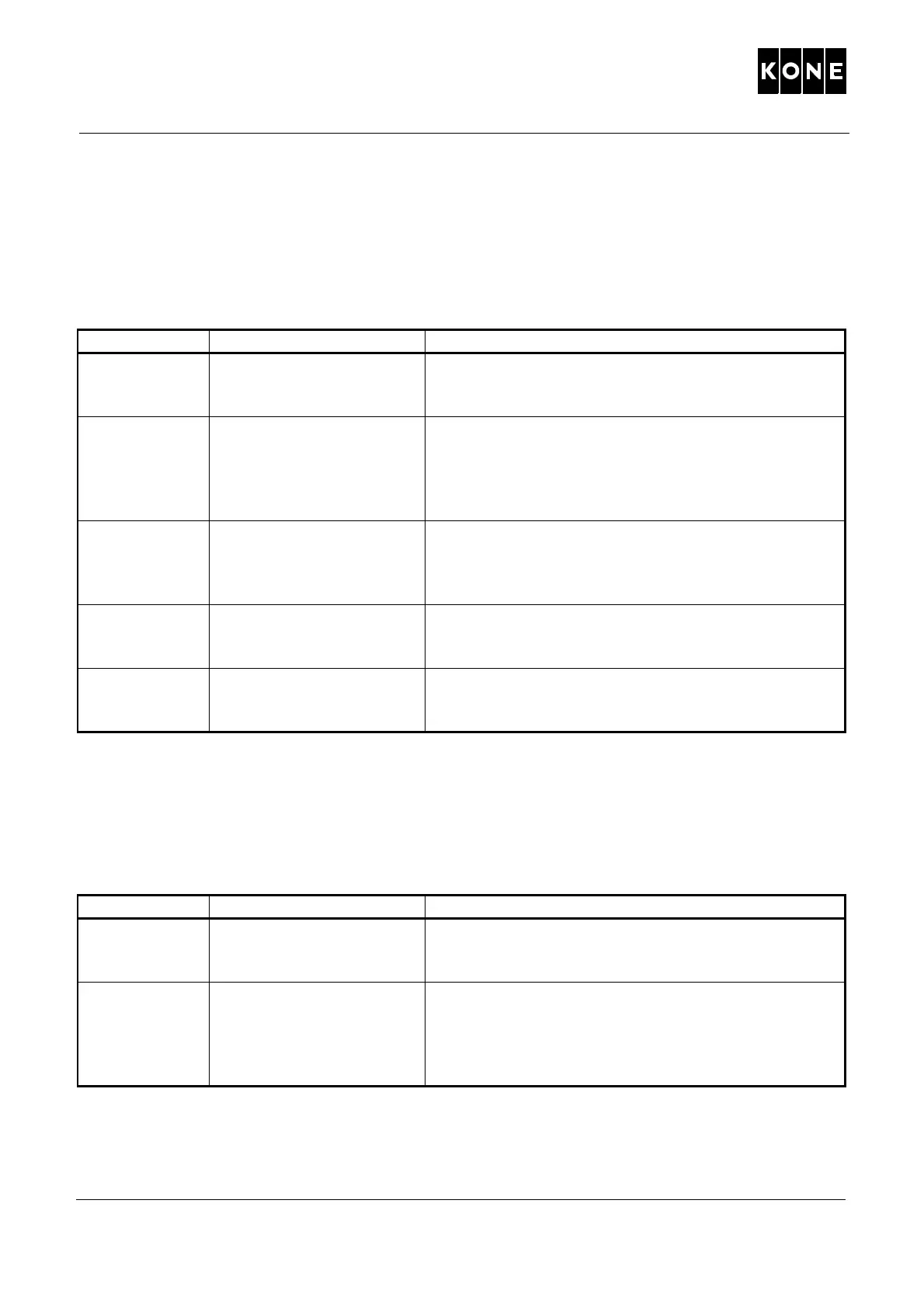
Table 20: Cleaning the walls
H.2 Cleaning the ceilings
The following table describes the methods and substances required to clean the ceilings of
your elevator.
Table 21: Cleaning the ceilings
Material Method Cleaning substance
Coated metal Use a soft cloth, careful
rinsing and drying o
f the
surface.
Use water and neutral soap.
Avoid solvents, for example, acetone, toluene, ethyl
acetate
, thrichloroethylene or perchloroethylene.
Metal laminate Use a soft cloth.
Do not use abrasive
sponges.
Use water a
nd small amounts of neutral cleaning
fluid.
For resistant stains, use a mildly abrasive detergent.
Do not use abrasive, acetone or strong alkaline
conventional cleanin
g agents.
Real wood
laminates
Use a sof
t, damp cloth. Do not use, for example, abrasive cleaners, powders,
scouring pads, steel wool or sandpaper, as they will
mar, etch, corrode and permanently discolor real
wood surfacing products.
Recycled and
wood
laminate
s
Use a soft cloth.
Do not use abrasive
sponges.
Use water a
nd small amounts of neutral cleaning
fluid.
Do not use solvents, as they will melt the
coating.
Glass and
mirrors
Use a soft duster. Avoid
scratc
hes from dry dirt or
dust.
Use a general window cleaner.
Do not use abrasives.
Material Method Cleaning substance
Coated metal Use a soft cloth, careful
rinsing and drying o
f the
surface.
Use water and neutral soap. Avoid solvents, for
example, acetone, toluene, ethyl acetate,
thrichloroethylene or perchloroethylene.
Stainless steel Use a clean sponge, soft
cloth or so
ft fibre brush,
then rinse in clean water
and dry.
Use soap, detergent or dilute (1%) ammonia solution
in warm clean water.
For finger prints, use detergent and warm water.
For stubborn spots, stains and light discoloration, use
mild, non-scratch
ing creams and polishes.


 To Next Page