Posterior Capsulotomy—1064 nm Nd:YAG 107
Selecta
PBL200051, Rev J
Medical therapy should be instituted as circumstances and medical judgment
dictate. Persistent administration of an oral hyperosmotic agent in the first
several hours after treatment may be warranted.
Damage to intraocular lens
Pitting or marking of IOLs occurs in Nd:YAG laser posterior capsulotomy
with several clinical studies reporting a 25% or greater incidence. The
potential of IOL damage is a function of lens type, proximity to the posterior
capsule, the level of laser energy used, and physician experience. Risk of
damage increases if the patient has a posterior chamber IOL, if the posterior
capsule lies close to the IOL, and as the total amount of energy employed to
effect capsule opening increases.
Posterior chamber lenses, particularly those close to the posterior capsule, have
the greatest potential for damage. This potential can be minimized by
carefully focusing behind the lens in pseudophakic subjects, by optimizing the
view of the posterior capsule with the use of a contact lens, by avoiding
repetitive shots to the same area, and by using the lowest energy setting
necessary to open or sever the membrane.
Numerous pits on the IOL may result in glare, which can affect the visual
outcome. Physicians who experience problems with continued pitting should
consider ending the treatment.
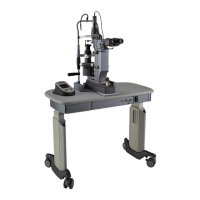
The Selecta aiming beam is offset longitudinally up to 0.1 mm in front of the
Nd:YAG beam. Physicians who experience continued focusing problems,
which can lead to IOL pitting, should first check the ocular setting of each eye
on the slit lamp. If this does not correct the problem, contact your local
Lumenis representative for assistance.
Use extreme caution in assessing patients with glass IOLs for Nd:YAG
treatment. Instances of shattered glass IOLs have been reported. In such cases,
explantation of the IOL may be necessary. If the Nd:YAG treatment is
selected, it should be conducted on low energy and with extreme care.
An increase in IOL pitting is possible when silicon IOLs are used. We advise
caution when using silicon IOLs and recommend using +250 offset position.
If pitting persists, manually position the lamp to increase the posterior offset.
Inadvertent patient movement
Misaiming the laser or movement of the patient may result in damage to non-
target ocular tissue or the area surrounding the target tissue. If the patient
cannot fixate, use of a contact lens or retrobulbar anesthesia injection is
recommended.
Bleeding
Bleeding may occur if the iris or vascular tissue is inadvertently lased. The
bleeding generally stops spontaneously, but if it does not subside, this


 To Next Page