Need help?
Do you have a question about the LUMENIS smart532 and is the answer not in the manual?
General introduction to the Smart532-nm green laser system and its applications.
Defines the manual's target audience and its purpose in aiding system operation.
Explains symbols, notes, cautions, and warnings used throughout the manual.
Outlines the physician's legal and operational responsibilities for device use.
States that routine service must be performed by Lumenis-certified technicians.
Warns that unauthorized modifications void the warranty and user authority.
Describes Lumenis' inspection service for resold devices.
Provides a glossary of technical terms and abbreviations used in the manual.
Introduces laser safety precautions and regulatory compliance for system operation.
Covers essential training needs and institutional requirements for safe laser use.
Details the responsibilities and role of the Laser Safety Officer.
Specifies requirements for a safe laser treatment environment.
Discusses the selection, types, and importance of laser safety eyewear.
Provides extra measures and warnings for protecting the eyes.
Covers various safety practices, including fiber optics and beam integrity.
Addresses potential fire hazards and prevention methods during laser use.
Outlines dangers associated with high-voltage components and electrical safety.
Explains the critical importance of proper system grounding for safety.
Lists essential cautions and warnings for safe system operation.
Provides specific cautionary advice for operators regarding training and procedures.
Highlights critical warnings about laser classification and potential hazards.
Describes the built-in safety mechanisms designed for user protection.
Explains how password protection secures the system's operation.
Details the automatic system self-testing performed upon power-on.
Describes the automatic shutter that prevents accidental laser emission.
Explains the function of the door interlock for safety.
Identifies the placement of operational controls on the system.
Explains the function and operation of the emergency stop button.
Covers the system's ongoing monitoring of internal status.
Describes how system faults are detected and reported.
Explains the monitoring of laser power output for safety.
Details the monitoring of system temperature.
Describes the LED and audible indicators for laser emission status.
Lists relevant international standards and regulations the system complies with.
Explains the meaning and importance of system labels and certifications.
Provides a key to understanding the various symbols used on the laser system.
Offers guidance on electromagnetic compatibility requirements.
Details the system's electromagnetic emissions and their environment.
Outlines the system's immunity to electromagnetic interference.
Provides guidelines for maintaining safe distances from RF sources.
General overview of the Smart532 laser system and its capabilities.
Describes the properties and biological interaction of the 532-nm laser beam.
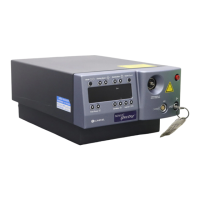
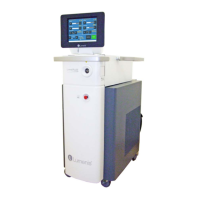
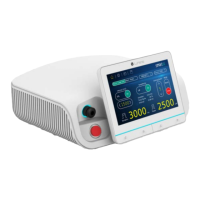
Identifies and illustrates the main components of the laser system.
Describes the central unit housing the laser source, optics, and controls.
Explains the function of the remote interlock for safety.
Details the different types of footswitches available for operation.
Lists compatible delivery systems and accessories.
Details the controls, indicators, and ports on the system's front panel.
Explains the function and operation of the emergency stop button.
Details the connection ports and labels on the system's rear panel.
Describes the primary user interface for system control.
Explains the internal optical components that generate and direct the laser beam.
Provides detailed technical specifications for the laser system.
Details the specifications for the treatment and aiming laser outputs.
Describes the system's operational modes and control methods.
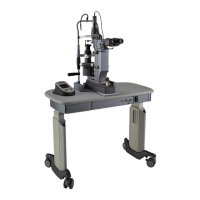
Lists compatible accessories such as slit lamps and delivery systems.
Specifies the necessary electrical power input and requirements.
Lists the system's physical dimensions and weight.
Outlines the recommended operating and storage environmental conditions.
Details system classifications for electric shock protection and laser safety.
Overview of the system's installation and initial setup process.
Instructions for safely unpacking the Smart532 laser system components.
Outlines the necessary facility requirements for system installation.
Specifies the required space and positioning for optimal ventilation.
Details the specific electrical power supply and line requirements.
Lists requirements for air quality, temperature, and humidity.
General steps and considerations for installing and setting up the laser system.
General guidance on connecting system components and accessories.
Step-by-step instructions for connecting the footswitch to the system.
Instructions for connecting the remote interlock for enhanced safety.
Guidance on connecting the system to the main power supply.
Instructions for connecting various compatible delivery systems.
Details on installing and connecting eye safety filters for protection.
Provides instructions for installing the required eye safety filters.
Describes how to connect automatic eye safety filters.
Describes how to connect fixed eye safety filters.
Procedures for safely preparing the system for transport or storage.
Key safety reminders before operating the laser system.
Steps for powering on, logging in, and initiating system self-tests.
Explains the various elements and functions of the main treatment screen.
How to select and activate the connected delivery system.
Instructions for adjusting the laser's power output.
How to set the duration of each laser pulse.
How to set the time between consecutive laser pulses.
Guide on adjusting the intensity of the aiming beam.
Details on using the SmartPulse mode for finer parameter control.
Displays the total number of treatment pulses delivered.
How to switch between Standby and Ready modes for operation.
Shows the name of the currently selected preset treatment settings.
Instructions for saving custom treatment parameter settings.
Managing (editing, deleting, selecting) saved presets.
Accessing the system's configuration and preference settings.
Adjusting the illumination level for the LIO.
Setting the system's internal time and date.
Selecting the user interface language for the system.
Adjusting the volume of system feedback and alerts.
Adjusting the screen backlight intensity for different modes.
Selecting the operational mode for the eye safety filter.
Essential steps and checks before commencing a laser procedure.
Procedure to verify the proper functioning of the aiming beam.
Guidance for operating the laser during a procedure.
Steps to follow after completing a laser procedure.
Routine maintenance tasks that can be performed by the user.
Outlines annual maintenance performed by a service engineer.
States that repairs must be done by certified Lumenis personnel.
Instructions for cleaning the exterior of the laser console.
Guidance on cleaning the touch-screen LCD panel.
Step-by-step instructions for replacing system fuses.
Maintenance procedures requiring specialized skills and tools.
Details on calibration of power measurement devices by qualified personnel.
Procedure for testing the system's internal power meter accuracy.
Information regarding the instrument's warranty terms and conditions.
Procedures for decontaminating equipment before return for service.
Contact details for Lumenis customer support centers worldwide.
A comprehensive guide to diagnosing and resolving system issues.
Provides general background on laser use and its effects.
Explains how laser energy interacts with and affects biological tissues.
Lists general safety warnings and precautions for laser therapy.
Details potential adverse effects and complications of laser treatment.
Discusses the occurrence and management of pain during laser procedures.
Addresses the risk and prevention of infection, especially with endoprobes.
Discusses potential bleeding complications and follow-up.
Describes potential effects on visual acuity and function.
Notes on the use and characteristics of non-contact devices.
Lists the approved medical applications for the Smart532 laser.
Specific indications for laser treatment in ophthalmology.
Specific indications for laser treatment in ENT procedures.
Specific indications for laser treatment in dermatology.
Specific indications for laser treatment in dentistry.
Focuses on the use of the laser for ophthalmic photocoagulation.
Detailed list of ophthalmic conditions treatable with the laser.
Links specific eye conditions to recommended treatment types.
Situations where ophthalmic laser treatment is not advised.
Details on using the laser with a slit lamp delivery system.
Information regarding the use of the LIO delivery system.
Details on the use and characteristics of endoprobes.
Specific precautions for performing ophthalmic laser procedures.
Critical warnings relevant to ophthalmic laser procedures.
Discussion of parameters influencing treatment outcomes in ophthalmology.
Recommended treatment parameters for CW mode in ophthalmology.
Recommended treatment parameters for SmartPulse mode.
Focuses on laser treatments for the posterior segment of the eye.
Discusses potential adverse effects specific to posterior segment treatments.
Important warnings for patients undergoing posterior segment laser procedures.
Guidelines for performing posterior segment laser procedures.
Focuses on laser treatments for the anterior segment of the eye.
Lists the applications of the laser in anterior segment procedures.
Warnings specific to anterior segment laser procedures.
Discusses adverse effects related to anterior segment procedures.
Guidelines for performing anterior segment laser procedures.
Specific guidelines for performing Iridotomy procedures.
Specific guidelines for performing Trabeculoplasty procedures.
A list of references for further reading on ophthalmology topics.
Details the use of the laser in ENT procedures.
Specific indications for laser treatment in ENT.
Contraindications for laser use in ENT procedures.
How the laser is applied in various ENT procedures.
Warnings specific to using the laser in ENT procedures.
Precautions to be taken during ENT laser procedures.
Guidelines for performing ENT laser procedures.
Information on various delivery devices and accessories.
Details on available eye safety filters for delivery systems.
Information about the Acculite endoprobe and its usage.
Explains fluence and irradiance calculations for endoprobe delivery.
Details on the Laser Indirect Ophthalmoscope (LIO).
Describes the applications and advantages of the LIO.
Warnings related to the safe use of the LIO.
Guidelines for properly using the LIO.
Information on slit lamp models and LaserLinks.
Description of integrated slit lamp systems.
Guidelines for operating slit lamp delivery systems.
 General
| Type | Laser System |
|---|---|
| Wavelength | 532 nm |
| Power Supply | 100-240 VAC, 50/60 Hz |
| Application | Dermatology, Ophthalmology |
| Aiming Beam | Red diode laser (635 nm) |
| Spot Size | 50-1000 µm |
| Repetition Rate | Continuous |
| Cooling System | Air-cooled |

 To Next Page