Smart532
™
Clinical Guide
UM-1151440EN, Rev. C, May 2016 A-23
● J.R. DiBartolomeo, “The Argon and CO
2
Lasers in Otolaryngology:
Which One and Why?”, Laryngoscope 91(9 Pt 2 Supp 26): 1-16, 1981
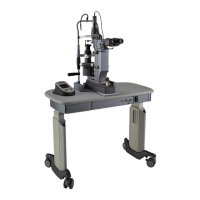
Lumenis offers fixed and moving physician’s filters for integrated slit
lamps, indirect ophthalmoscope attachments, and microscopes. These
filters shield the physician's or observer's eyes from laser light and allow a
normal field of view when the laser is in the Ready mode. The filters
contain high quality optical elements for high visibility and easily attach to
operating room microscopes. For a list of available filters, contact your
local Lumenis representative.
Fiber-optic endoprobes, such as the Lumenis Acculite endoprobe, are
useful for photocoagulation of the posterior segment, in procedures such as
pan-retinal photocoagulation, barrage of retinal tears, and treatment of
choroidal neovascularization secondary to age-related macular
degeneration.
Spot sizes delivered through the Acculite endoprobes vary, depending on
the distance of the Acculite endoprobe tip from the treatment site. Power
requirements vary from 300-1000 mW, depending on the type of treatment
and the desired tissue effect.
Endoprobes are supplied pre-packaged and sterile for one-time use only.
Fibers are precision-cut and polished to rigid optical specifications to
provide maximum energy delivery. An exterior jacket protects the fiber
from damage. Fibers and probes attach to the fiber port on the front panel
of the laser.
Fibers can be damaged or can injure a patient if not used carefully;
therefore, the physician should make the following checks before
activating the laser:
● Ensure that the fiber is fully inserted into the laser aperture. This will
allow the best efficiency through the laser fiber.
● Care must be taken when handling the optical fiber not to bend or kink
it excessively since this could fracture the fiber allowing laser light to
emerge from the fracture site.
● Identify all tissues that lie in the potential path of the laser beam to
avoid laser exposure to tissues other than those undergoing treatment.
● Carefully identify and protect all relevant anatomic structures from
possible undesired exposure.
● Ensure that the probe tip does not come into direct contact with tissue
when treating; if it does, the optical efficiency of the fiber will be
compromised.
● Use a suction tip in the treatment area to evacuate the laser plume.
and Accessories
Endoprobe


 To Next Page