UM-1151140EN, Rev. C, May 2016
Laser
Safety
and
Regulatory
2.8. System Safety
Features
2.8.1. Password
Protection
2.8.2. Self-Testing at
Start Up
2.8.3. Safety Shutter
2.8.4. Door Interlock
Connector
2.8.5. Location of
Controls
The Smart532 laser system is equipped with various built-in safety
features to provide maximum protection for both clinician and patient.
Before using the system for the first time, become familiar with these
features and how they operate.
Entry to the system's surgical operating program is protected by a
password (see Chapter 5). If the password is not keyed in, the operating
system is not accessible and laser beam emission will not be available.
When the Smart532 is turned on, the system computer automatically
executes system self-testing. Self-testing checks the following:
● Ability of the system to generate lasing power.
● Functionality of the electronic components.
● Safety monitoring circuits.
If the self-test is successfully completed, the system enters Standby mode.
The test circuits continuously monitor the operation of the system during
treatment.
The automatic safety shutter blocks the laser beam to prevent accidental
lasing.
The safety shutter opens only when the laser is in Ready mode and the
footswitch is pressed. The safety shutter remains closed when the system is
turned off, during self-test at system turn on, when the system is placed in
Standby mode, or when the safety monitor detects a fault.
The door interlock connector plug must be inserted into the proper
receptacle on the system's rear panel in order for the laser to operate. It can
be wired to an external switch to disable the laser if the treatment room
doors are opened during treatment.
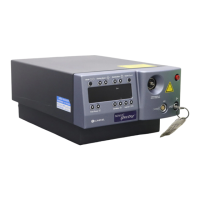
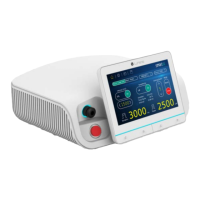
Operation and adjustment controls are all located on the system’s front
panel and touch-screen display so that the operator will enjoy the system’s
built-in ease-of-use design and ergonomic characteristics of the
accessories.


 To Next Page