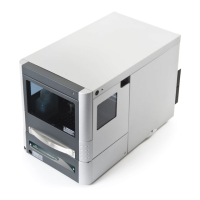
Instrument preparation
This section presents guidelines on how to set the instrument up, depending on
the type of spray being tested. Read each guideline below and take account of any
which are relevant to the spray tested.
Take account of ambient conditions, for example direct sunlight, at all stages.
Priming the spray
It may be necessary to prepare the spray as follows:
.
Nasal sprays – actuate the spray several times until a plume is obtained. For
suspension-based sprays, turn the container end over end several times, but
do not shake it vigorously.
.
Aerosols – shake the spray container and spray for a couple of seconds to
clear the nozzle. This is needed, for example, for most paint sprays, deodor
-
ants and MDIs.
'
Note
.
For some formulations shaking hard introduces air bubbles. For
suspension formulations it may cause the solid particles to sediment out
of suspension.
Propellant sprays
For sprays containing propellants, be aware that the presence of the propellant
may affect the calculated size distribution. If using a spray which contains a
propellant, refer to the section on beam steering in Chapter 6.
Positioning the spray
When positioning the spray take the following into account:
.
The working range of the lens. This depends on the spray particle size, as
described in the section “Problems with poor data” in Chapter 6. Outside
of the working range vignetting may occur.
.
The distance of the spray from the measurement zone. It is important to
sample at the same point each time a measurement is made to ensure
reproducibility.
.
The beam position relative to the centre of the spray plume.
.
The risk of contaminating the optics (this can be minimised by using the
Air Purge accessory).
CHAPTER 5
Spraytec Page 5.3



 To Next Page