Version 1.9 Page 115 of 170
4.4.3 DATABASE
OptoGait stores all data (patients, tests, results, settings, etc.) in a database file (Sql Server CE format
with the extension .SDF). Most users can use a single file to store all information, which by default
will be called ‘OptoGait.sdf’, located in the following directory:
Documents\Microgate\OptoGait
The name of this directory changes depending on the operating system used and the language, but
typing it in the address bar of an Explorer window will open the correct folder. Some examples
follow (<YourUserName> is the user name for logging into Windows):
Windows XP in Italian: C:\Documents and Settings\
<YourUserName>
\Documenti\Microgate\OptoGait
Windows XP in English: C:\Documents and Settings\
<YourUserName>
\My Documents\Microgate\OptoGait
Windows VISTA/7: C:\Users\
<YourUserName>
\Documents\Microgate\OptoGait
etc..
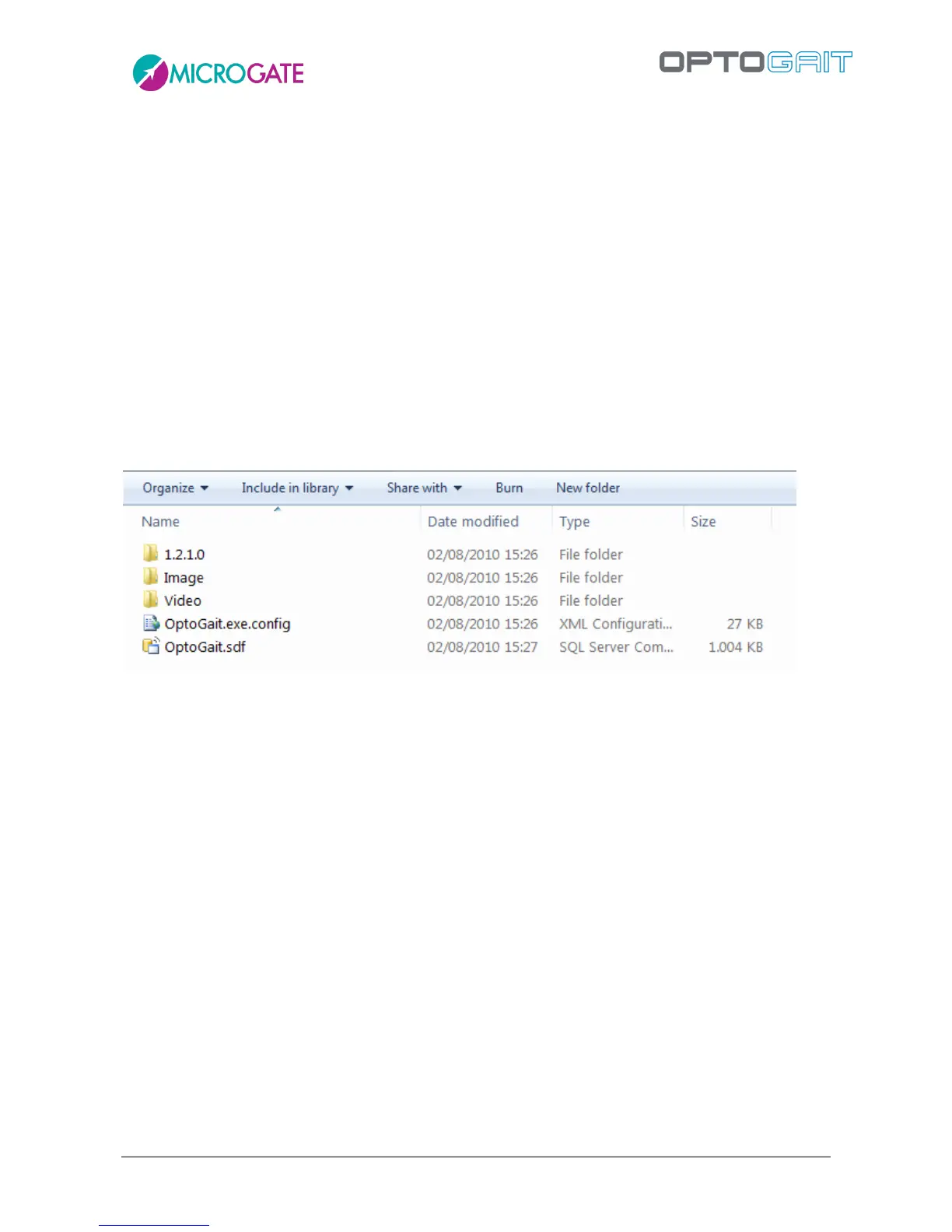
Figure 101 - Folder where by default all database, settings, video, and image files are located
The subdirectory VIDEO contains the videos (in .asf or .avi format depending on your choice in
4.4.1.4) acquired by the webcam. The subdirectory IMAGE stores all still pictures (.bmp files with
possible graphical notes) and saves them via the Video Analysis module .
The name of the videos is formed using the following pattern:
VideoX_DD_MM_YYYY_HH_MM_SS_ZZZZZZZZ-ZZZZ-ZZZZ-ZZZZ-ZZZZZZZZZZZ.EEE
Where
X: webcam No. 1 or No. 2
DD_MM_YYYY: day, month and year of acquisition
HH_MM_SS: hour, minutes and seconds of acquisition
ZZZZZZZZ-ZZZZ-ZZZZ-ZZZZ-ZZZZZZZZZZZZ series of univocal characters to avoid duplicates
EEE_video format (ASF or AVI)
Example:
Video1_02_04_2009_12_32_16_1f74d384-4a7f-4c5b-a94c-1772fb608736.asf
Meaning:



 To Next Page