ELECTRICAL SYSTEMS-HOUSE - 8
152
CAY M A N 2 0 0 7
Battery Maintenance
Liquid Lead Acid (LLA) battery cells
should be checked at least once a month. The
level should be above the top of the plates, but
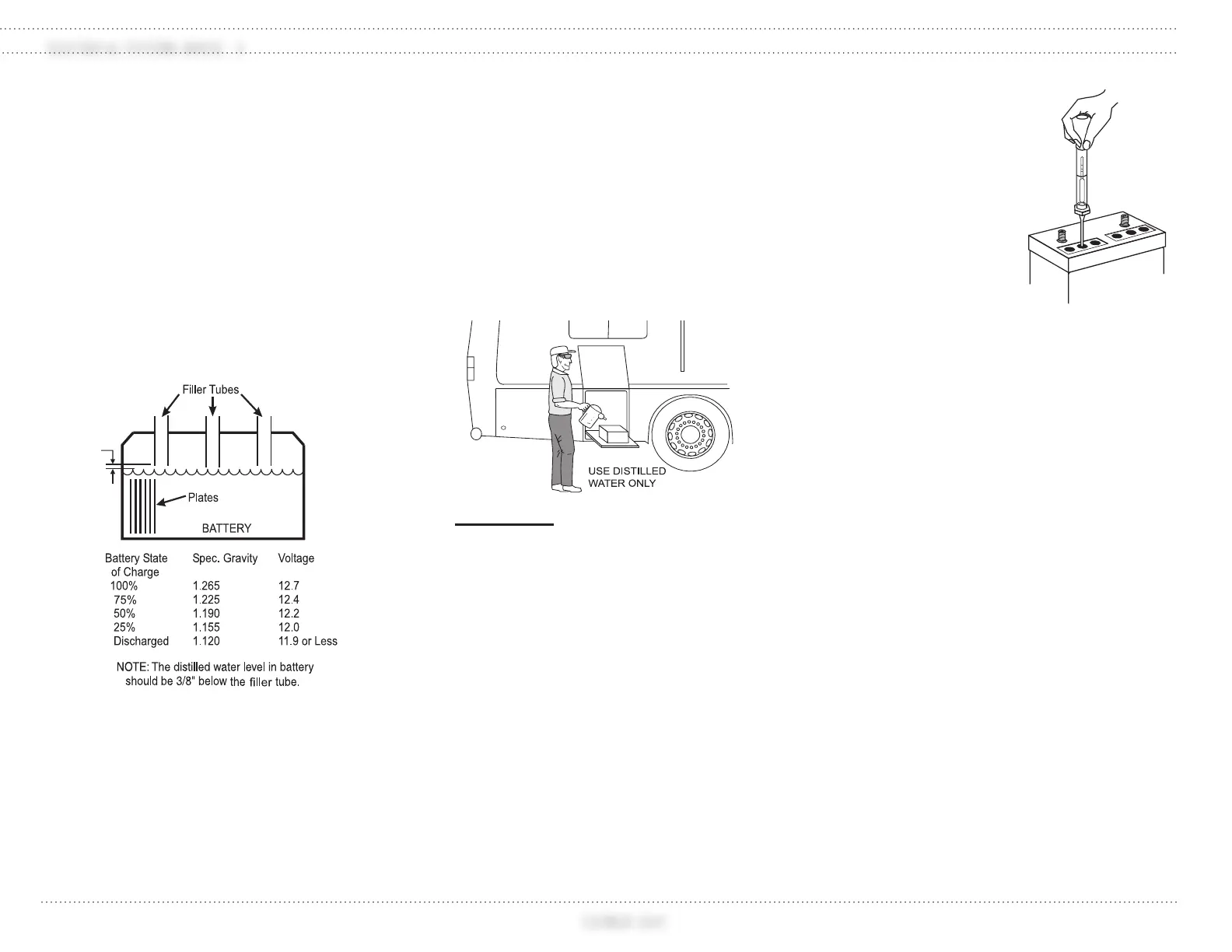
not overfull. The electrolyte level should be
approximately 3/8" below the well to allow
room for expansion while the battery is being
charged. Over- lling the battery will allow the
electrolyte solution to boil or gas out of the
battery cap. Remember to use only distilled
water to re ll the battery. A battery with a low
electrolyte level will rapidly boil out the water
once the plates have been exposed to air.
Periodically check the batteries for corrosion
and cracks. Replace vent plugs that are cracked
or missing. Keep the top of the batteries clean.
The accumulation of electrolyte and dirt may
permit small amounts of current to ow between
the terminals, which can drain the battery.
Check the battery connections for tightness
and corrosion. If corrosion is found, disconnect
the cables (mark cable locations) and carefully
clean them with a mild solution of baking soda
and water, or an aerosol product speci cally
designed for battery maintenance. DO NOT
allow cleaning solution to seep into the battery
and damage the electrolyte balance. Use water
to rinse the top of the battery and surrounding
area when done. Carefully hook the cables
back to the battery. The battery cable to battery
terminal connections should be metal to metal.
Coat the terminals with petroleum jelly or an
anti-corrosion grease.
WARNING:
Liquid lead acid batteries produce
hydrogen gas while being charged. This
is highly explosive. DO NOT smoke
around batteries and keep all sources of
ignition or flames away from batteries.
The hydrogen gas may explode resulting
in fire, personal injury, property
damage or death.
Testing the Battery
A battery can be tested and/or monitored
several ways. The hallway monitor panel
displays house battery voltage.
Checking the Electrolyte Solution (LLA Only)
The most ef cient
way of testing the
batteries is to check the
electrolyte solution.
The only way to test
a battery’s electrolyte
solution is with a
hydrometer. Many
styles are available,
from types with
cylinder graduation
(shown here) to types
with oating balls.
Hydrometers can
be purchased from most auto parts stores.
The hydrometer tests the battery’s electrolyte
solution which is measured in speci c gravity.
Distilled water has a speci c assigned gravity
of 1,000. The hydrometer is calibrated to this
mark. Pure sulfuric acid has a speci c gravity
reading of 1,840. The acid is 1.84 times heavier
than water. The electrolyte solution is about
64% water to 36% acid (fully charged battery).
Hydrometers with cylinder graduation are
graphed and the exact state of speci c gravity
can be determined.
Temperature and recent battery activity
(charging or discharging) affect the hydrometer
readings. It is best to check the battery when it
has been at rest for at least three hours, although
readings taken at other times will give a ballpark
gure. When using the hydrometer, draw the
electrolyte solution up into the tube. Allow the
hydrometer to attain the same temperature as the
electrolyte solution. Note the reading for that
cell. Complete the same test for the rest of the
cells on that battery bank.
020034c
3/8"
020162g
030816b
Hydrometer (cylinder
type) shown testing
LLA type battery.



 To Next Page