DRIVING & SAFETY - 2
CAY M A N 2 0 0 7
36
Dual Rear Wheels:
Slide the inner dual wheel over the studs. Use
caution to avoid damaging threads. Align the
handholds for valve access and slide the outer
dual wheel over the studs, again using caution
to avoid damaging the stud threads. When all
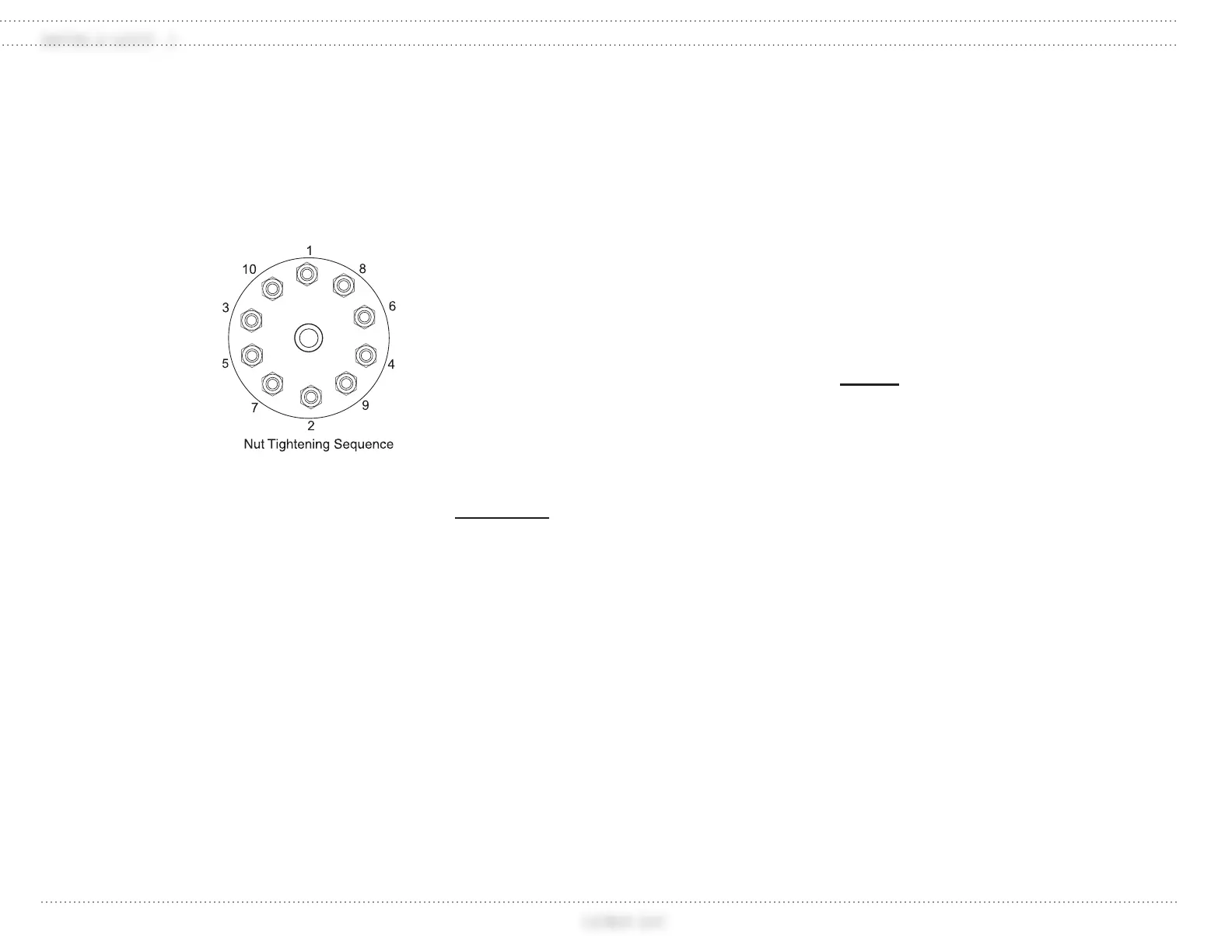
nuts are seated, tighten the nuts to 500 ft. lbs. in
sequence (as in illustration).
The hub mount
wheels use two-
piece ange cap
nuts for both
front and rear
applications. No
inner cap nuts are
required.
Torque the Nuts Properly:
Tighten the wheel nuts to the
recommended lug nut torque. DO NOT
over tighten.
Maintain the nut torque at the
recommended level through planned
periodic checks or at 10,000 mile
intervals, whichever comes rst.
If air wrenches are used, they must be
periodically calibrated for the proper
torque output. Use a torque wrench to
check air wrench output and adjust line
pressure for the correct torque.
WEIGHING THE MOTORHOME
Proper weight distribution, load management
and operating within established limitations will
aid in safe and enjoyable travel. The information
in this section outlines guidelines and provides
worksheets for weighing procedures.
Proper weight distribution and load
management is an individual responsibility.
In order to correctly manage load and weight
distribution, more than one weight measurement
will be required. Each wheel position must be
weighed to accurately determine the weight
placed on each wheel position for proper
weight computations. The entire process of
weigh management begins with the Gross
Vehicle Weight Rating as listed on the Federal
Certi cation Label. This weight cannot be
exceeded.
CAUTION:
Most states limit the amount of weight
carried by any single axle position. It
is the responsibility of the operator to
know the legal weight limit of the state
in which they travel.
Weight Terms
Numerous Federal, State and local governments
mandate weight limits. Understanding the
terminology and performing proper weighing
procedure will help eliminate confusion. It is
important to weigh the motorhome to calculate
Cargo Carrying Capacity (CCC) and ensure no
axle is overloaded.
The Gross Axle Weight Rating (GAWR) of
the axles is listed on the federal certi cation
label attached to the motorhome. This is
the maximum allowable loaded weight on a
particular axle. This label is generally located to
the rear of the driver’s seat, on the wall.
When the actual loaded weight of the
motorhome, and the weight on each axle is
unknown, follow the recommended tire in ation
pressure(s) listed on the federal certi cation
label. When loading a motorhome never exceed
the Gross Vehicle Weight Rating (GVWR) or
the GAWR for each axle.
NOTE:
Contact the tire manufacturer for
further information concerning proper
tire pressure inflation and other tire
issues.
The Gross Vehicle Weight Rating (GVWR)
and Gross Axle Weight Rating (GAWR)
listed on the Federal Certi cation Label
attached to the motorhome details the chassis
manufacturer’s and/or the RV manufacturer’s
total vehicle maximum weight rating and per
axle weight rating.
The GVWR is the maximum total weight
for which the motorhome is rated - including
passengers, uids and cargo. The GAWR is
the maximum weight for which a single axle is
designed. The tires, wheels, axle, motorhome
frame and/or other components of the
motorhome may limit these per axle and total
maximum weight ratings.
090268 copy2



 To Next Page