DRIVING & SAFETY - 2
CAY M A N 2 0 0 7
34
3. Firmly press a tire gauge onto the valve
and record reading.
4. Add air to achieve recommended air
pressure.
5. If the tire is over lled, release air by
pushing on the metal stem in the center
of the valve. Recheck the pressure with
the tire gauge.
6. Replace the valve cap.
7. Repeat with each tire.
8. Visually inspect all the tires for
nails, or other objects that could
be embedded or puncture the tire
and cause an air leak.
9. Check the sidewalls for
gouges, cuts, bulges, or other
irregularities.
NOTE:
Air pressure in a tire goes up (in
warm weather) or down (in cold
weather) one to two pounds
for every 10° F of temperature
change.
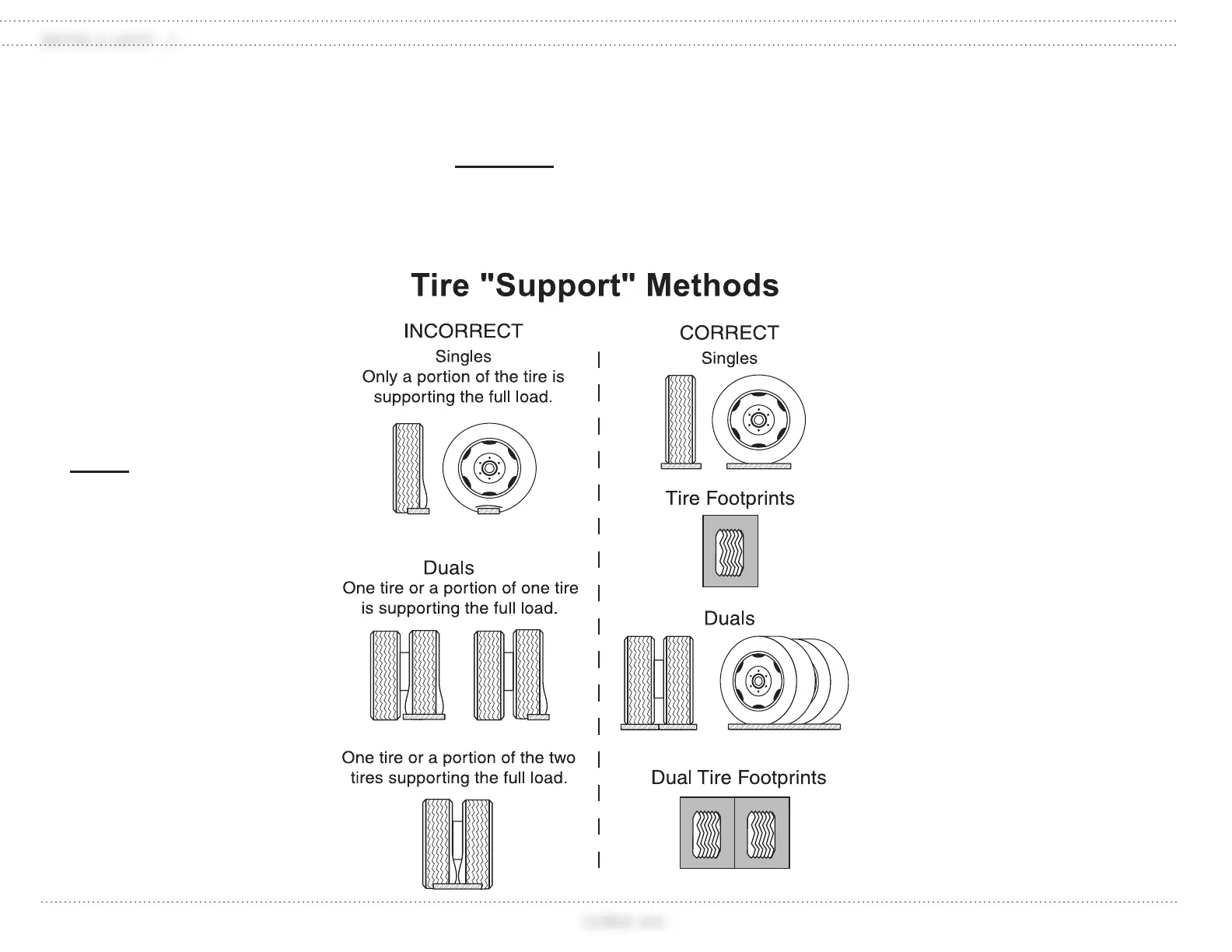
Supporting When Leveling
Extreme caution must be taken to
ensure that the tires are fully supported
when placing blocks under the tires.
The load on the tire should be evenly
distributed on the support block. In the
case of dual tires, distribute the load
evenly on blocks for both tires.
If not properly supported, the steel cables in the
sidewall of the tires may be damaged and could lead
to premature fatigue of the sidewall.
CAUTION:
Supporting the tires prevents damage
to the sidewall of the tires but does not
prevent tire roll.
Tire Vibration
Sudden tire failure is often preceded by tire
vibration. Symptoms that can cause tire failure
are a bulge in the sidewall or swelling in the
tire carcass. Striking an object or large hole
in the road surface can damage a tire. Inspect
the tires periodically thereafter as rotational
forces can continue to stress damaged areas
and later manifest in tire failure. If an unusual
vibration begins, or a bulge is noticed in the
sidewall, have the tires evaluated by a quali ed
professional as soon as possible.
Tire Rotation
Tire rotation can increase the useful life of
the tires by achieving uniform wear on all of the
tires. Have the tire manufacturer determine the
rotation pattern. The rst tire rotation is the most
important in determining which rotation pattern
to use. Any unusual or unique wear patterns,
or indications of uneven wear that may have
developed, should be evaluated for possible tire
rotation. Misalignment, imbalance or other
mechanical problems may exist and will
need to be corrected prior to rotation.
020063 mod




 To Next Page