DRIVING & SAFETY - 2
CAY M A N 2 0 0 7
39
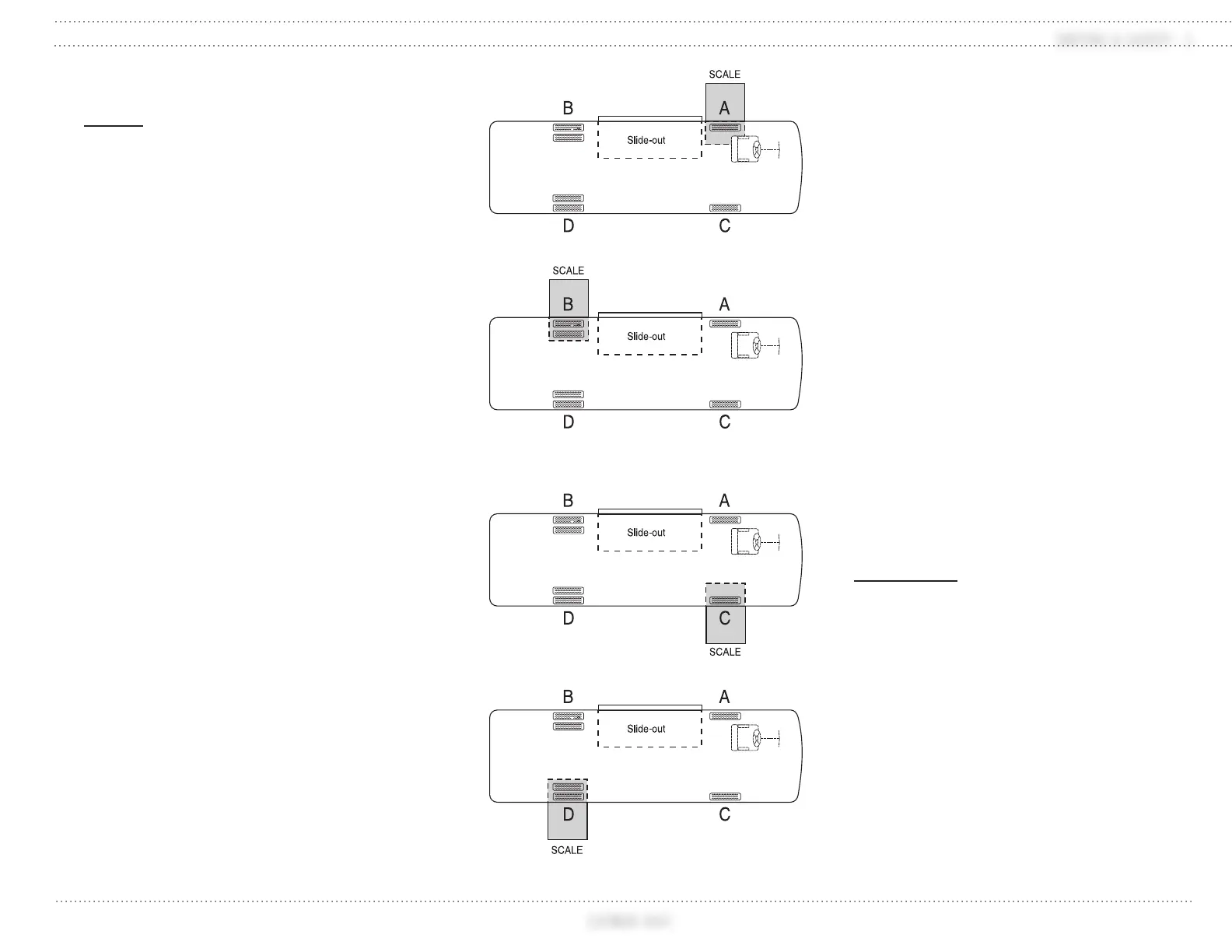
Four Point Weighing (Example)
NOTE:
Following scale readings and Gross Axle
Weight Ratings are fictitious. Actual
scale readings and Gross Axle Weight
Ratings will vary with model and
options.
The motorhome must be weighed fully
loaded to obtain accurate scale readings and
to determine the proper tire pressure. All slide
rooms, must be in retracted position.
1. Take the FRONT axle Gross Axle
Weight Rating (GAWR) and divide
it by two. Example: FRONT axle
GAWR taken from the motorhome
Vehicle Certi cation Label is 13,000
lbs. Divide the gure by 2, using chart,
record 6500 lbs. on line 1.
2. Weigh the driver side FRONT corner
(Scale A) and record weight on chart
scale A, line 2. Example: 5000 lbs.
3. Weigh the passengers side FRONT
corner (Scale C) and record weight on
chart Scale C, line 2. Example: 4000
lbs.
4. Add Roadside and Console side from
line 1, for Gross Axle Weight Rating
(GAWR) and record on chart under
Totals. Example: 13000 lbs.
5. Add chart scale A and C, line 2 for
actual Gross Axle Weight (GAW) and
record on chart under Totals. Example:
9000 lbs.
6. Actual Gross Axle Weight (GAW).
Example: 9000 lbs is not to exceed
Gross Axle Weight Rating (GAWR).
Example: 13000 lbs.
Refer to the Tire Chart (Tire size
295/80R22.5) Use the highest actual
weight, Scale A or C, line 2. Example
5000 lbs. Determine the proper tire
pressure for each tire using the Load
In ation chart. Example: 80 psi or
stamped on the sidewall of the tire.
Repeat above procedures to determine
REAR axle Scale B and D, tire
pressures.
WARNING:
Improperly inflated or overloaded tires
can cause a blowout. An overloaded
axle can cause a component failure of
the suspension system. Tire blowout
or broken suspension components can
lead to loss of vehicle control resulting
in property damage, personal injury or
death.
Four Point Weighing Example Chart
020152b



 To Next Page