DRIVING & SAFETY - 2
CAY M A N 2 0 0 7
29
CAUTION:
A large amount of electrical current
is required to jump-start an engine.
The sizes of the battery, alternator
and jumper cables supplying the
“jump” are current limiting factors.
Wait a sufficient amount of time
for a surface charge to build before
attempting to start the engine. Voltage
fluctuations that occur during a
jump-start procedure can damage
sensitive electronic equipment and
charging systems. If a jump-start is
necessary, it is recommended to call
Roadside Assistance. They will have the
equipment necessary to jump-start the
motorhome.
CAUTION:
DO NOT use the towed vehicle for
jump-starting. The charging system of
the towed vehicle does not supply the
amperage necessary to jump-start the
motorhome. Voltage sensitive equipment
on the towed vehicle can be damaged
and render the towed vehicle disabled.
1. When using an external electrical
source to connect to the chassis battery,
turn the main battery disconnect
switches OFF prior to hooking up the
jumper cables.
2. Hook up the cables then wait several
minutes to allow a surface charge to
build in the chassis battery before
attempting to start the engine.
3. Turn ON the battery disconnect
switches and attempt to start the
engine. DO NOT crank the engine
more than a few seconds.
4. After the engine has started, disconnect
the cables. Disconnect the negative
(-) cables before disconnecting the
positive (+) cables to prevent arcing.
5. If the engine does not crank, or cranks
slowly, DO NOT CONTINUE.
Extensive damage, re or injury can
occur. Obtain help from a quali ed
technician.
TOWING PROCEDURES
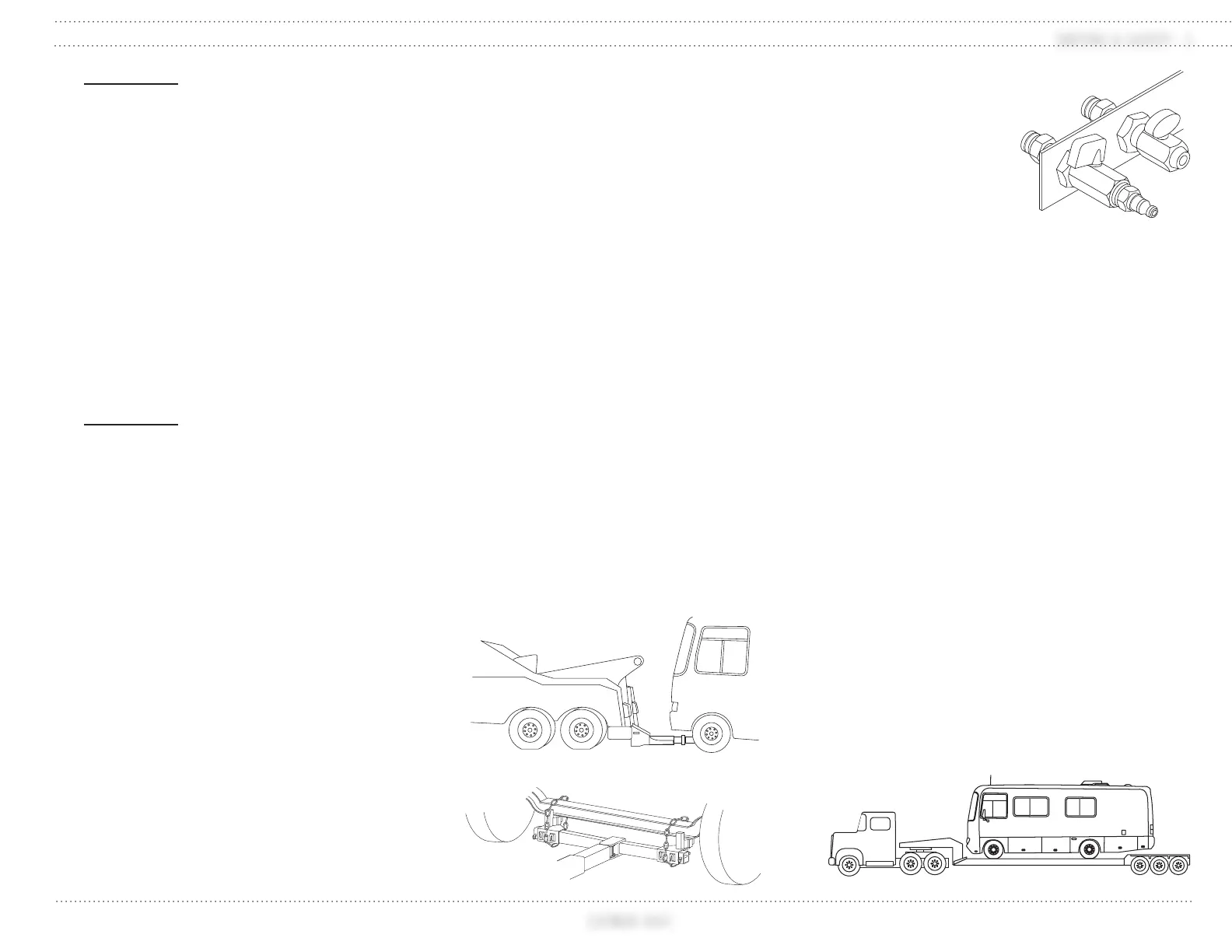
If calling a towing company for service, it is
recommended to use a lowboy/landall type of
trailer. If a tow truck is used it needs to have
a support arm that goes under the motorhome
and secures to the front axle. Inform the tow
company of the axle weights and total weight of
the motorhome.
Other important information is the length
of the motorhome, number of passengers and
milepost location. Two tow trucks may be
necessary to tow the motorhome and to tow a
trailer or tow vehicle if it is not operational.
The towing company
may need to locate the
air nipple to release
the air brakes (air
brakes only). The air
nipple is located in
a rear curbside bay
and should be used
by towing personnel
only. Generally, if the
motorhome ever needs to be towed, use the
following instructions:
Secure any loose or protruding parts if
the motorhome is damaged.
Inspect the points of attachment on
a disabled motorhome. If attachment
points are damaged, select other
attachment points at a substantial frame
structural member.
Never allow anyone to go under a
motorhome while it is being lifted by
towing equipment unless the disabled
motorhome is adequately supported by
safety stands.
DO NOT tow the motorhome from
the rear. Towing from the rear will
severely overload the front tires and
suspension possibly resulting in tire
and/or front suspension failure. Rear
frame extensions are not designed to
support weight loads imposed by lifting
the motorhome from the rear.
090435
Air Nipple: Located in
generator compartment.
020182
020183
020228D



 To Next Page