DRIVING & SAFETY - 2
CAY M A N 2 0 0 7
16
Seat Belt Care:
Keep the belt clean and dry. Clean with mild
soap and lukewarm water. DO NOT clean seat
belts with bleach, dye or abrasive cleansers
that may weaken the belt material. Periodically
inspect belts for cuts, frays or loose parts, and
replace damaged parts. DO NOT disassemble
or modify the system. Replace the seat belt
assembly after a severe impact, even when
damage is not obvious.
DRIVING TIPS
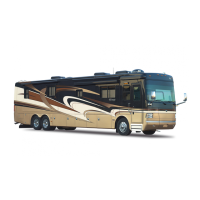
The motorhome is a complex vehicle that
requires increased driving awareness because
of its size and various components. Due to the
motorhome length the turning radius will be
much wider than that of a standard automobile.
Always pay close attention to the perimeter of
the motorhome including front, sides, rear, roof
and undercarriage. Ensure the surrounding area
is clear of obstacles. Utilize the driving mirrors to
observe traf c conditions as well as the motorhome
exterior including tires, bay doors, blind spots, etc.
Use a push-pull method of steering, with both hands
parallel on the steering wheel.
The motorhome is heavier than an automobile
and has a higher center of gravity. Both affect
the reaction time of the motorhome. Swerving
and sharp turning, especially performed at high
speeds, could result in loss of control of the
motorhome. Keep the size of the motorhome
in mind and drive with extra caution to avoid
situations which might require quick momentum
changes. Increase reaction time by paying
attention to traf c and road conditions 12 to 15
seconds ahead of the motorhome’s position.
The motorhome will travel safely
and comfortably at highway speed
limits. However, it takes more time to
reach highway speed. When passing
another vehicle, allow extra time and
space to complete the pass due to the added
length of the motorhome.
When descending a long hill, manually shift
to a lower gear and begin the descent at a slow
speed. DO NOT allow the motorhome to gain
momentum before trying to slow down. Use the
engine brake in conjunction with the service
brakes to help maintain a safe, slow descent.
The transmission and engine will help control
downhill speed and can extend the service life
of the brake lining. Distance required to stop
the motorhome is greater than an automobile.
Practice stopping away from traf c to get
the “feel” of distance required to stop the
motorhome.
Adjust the pilot seat to a comfortable position.
Stay seated, and adjust the outside mirrors if
necessary to gain a clear line of vision down
both sides of the motorhome. After the outside
mirrors have been adjusted, con rm the rear
view camera system is working and clear of any
obstruction.
In the normal course of travel different types of
roads (urban, rural, primitive) will be encountered
along with different weather (rain, wind, snow,
sun) and terrain (mountains, desert, coastal).
Adjusting to road, weather and terrain conditions
is necessary to keep the motorhome under control.
Pay attention to road signs that advise of local road
hazards and driving conditions.
The cockpit, dash area and windshield are
larger than those found on passenger cars and
trucks. Pay special attention to keeping the
windshield clear of humidity in the form of
water or ice. Start the motorhome and turn
on the dash defrost and the overhead blowers
to help remove moisture from inside the
windshield. It may also be necessary to use a
clean cloth to wipe away moisture.
Keep windshield wipers in good working
order at all times. Keep the windshield clear. Do
not operate the motorhome when road, weather
and terrain conditions seem unsafe.
Check tonnage limits of bridges before
crossing to ensure they can support the weight
of the motorhome. Signs should be posted at
bridge entrances. Check the posted height of
all overpasses or situations where overhead
clearance is limited. Keep in mind that road
surfaces may be repaved or packed with snow;
therefore, the actual posted clearance height
would not apply in such conditions.
Driving Cautions:
Avoid getting too close to the shoulder
of the road, which may be too soft to
support the weight of the motorhome.
Side spacing is best maintained by
keeping the motorhome centered in the
driving lane.
Driving lanes in work zones can be uneven,
congested and narrower than usual.
Be cautious of road debris that can
damage the undercarriage of the
motorhome or become lodged in the
dual tires and cause damage to the tires,
wheel rims or tow vehicle.
downhill.eps



 To Next Page