DRIVING & SAFETY - 2
CAY M A N 2 0 0 7
35
Tread
To prevent skidding and hydroplaning, replace
tires when the tread is worn down to 4/32"
on the front and 2/32" on the rear. Questions
regarding tread wear should be directed to the
tire manufacturer.
Built in tread wear indicators, or “wear bars”
which look like narrow strips of smooth rubber
across the tread, will appear on the tire when the
tread is worn down to 2/32". The tire should be
replaced when the “wear bars” are noticed.
Visually check the tires for signs of uneven
wear. Signs of irregular tread wear are usually
exhibited by low or unusually smooth areas on
the tire surface. Consult the tire manufacturer as
soon as possible.
WARNING:
In many instances the life of the tires
on the motorhome is not determined by
mileage but by age. Tires are subject
to weathering. Weathering cracks
run in circumference with the tire.
Though the sidewall of the tire may
look structurally sound, weathering can
occur inside the well of the tread. Have
the tire manufacturer inspect the tires
for age weathering.
Storage of Tires - Long Term
A cool, dry garage with a sealed cement oor
is the preferred method of storage. Tires stored
outside may prematurely age.
Prior to Storage:
Thoroughly clean the tires.
Unload the motorhome to reduce weight
on the tires.
Ensure the surface is reasonably level,
rm, clean and has good drainage.
In ate the tires to the maximum in ation
pressure as indicated on the Federal
Identi cation Tag.
During Storage:
Cover the tires to block direct sunlight.
Periodically ensure tires are at proper
pressure.
Move the motorhome every three
months to prevent cracking in bulge
areas, as well as at spotting from
prolonged sidewall strain and tread
de ection.
Removal from Storage:
Before removing the motorhome from long-
term storage thoroughly inspect each tire’s
tread area and air pressure. If the tires have lost
air during storage, in ate them to the correct
pressure.
WHEEL MOUNTING
Hub Piloted Mounting:
Flange nuts generate higher clamping
force. Always use grade eight studs with
hub mount wheels.
Before installing the wheels, lubricate
the hub pilot pads with a drop of oil to
prevent galling. DO NOT lubricate any
other wheel or hub surface.
For a hub with intermittent
pilot pads, position a pad at
the twelve o’clock position
to center the wheel and
reduce runout.
NOTE:
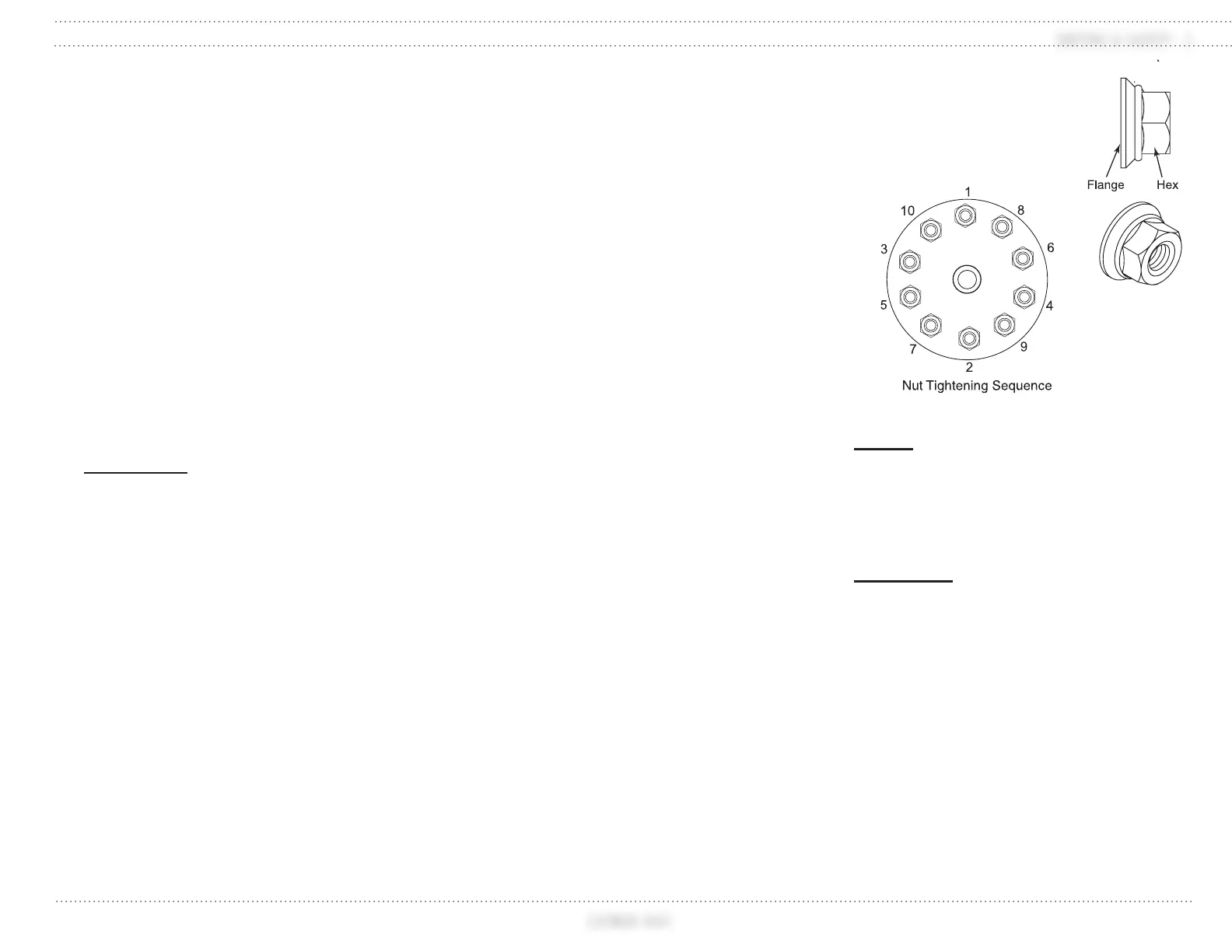
Loosen and tighten lug nuts in sequence
(see illustration). Sequence tighten to
50 ft. lbs. first, then sequence tighten
to 500 ft lbs. Over-tightening can cause
distortion.
WARNING:
Never use wheels or lug nuts different
than the original equipment as
this could damage the wheel or the
mounting system. Damage to the wheel
or mounting system could cause a wheel
to come off while the motorhome is in
motion.
Front Wheels:
Slide the front wheel over the studs. Use
caution to avoid damaging stud threads. Snug
the nuts in sequence. When all nuts have
been seated, tighten the nuts to 500 ft. lbs. in
sequence (as in illustration).
Flange Nut:
Front & Side
View.
090268c
090268 copy2



 To Next Page