Driving 107
ELECTRONIC STABILITY CONTROL
Electronic stability control (ESC) may enhance your vehicle’s
directional stability during adverse maneuvers, for example
when cornering severely or avoiding objects in the roadway.
ESC operates by applying brakes to one or more of the wheels
individually and, if necessary, reducing engine power if the sys-
tem detects that the vehicle is about to skid or slide laterally.
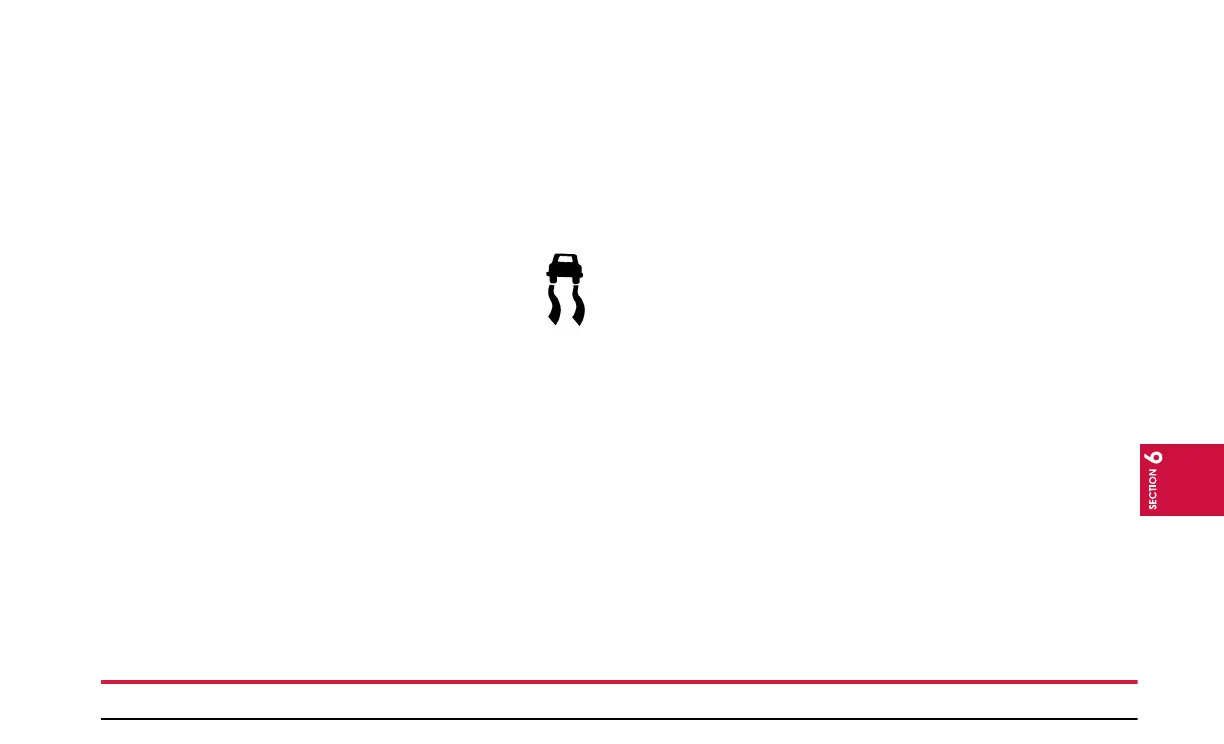
ESC is always “ON” but inactive. When the ESC is
active, the Traction Control/Electronic Stability
Control light in the instrument cluster will flash.
Certain adverse driving maneuvers may activate the
ESC system, including but not limited to:
• taking a turn too fast.
• maneuvering quickly to avoid an accident, pedestrian or
obstacle.
• driving over a patch of ice or other slippery surfaces.
• changing lanes on a snow-rutted road.
• entering a snow-free road from a snow-covered side
street, or vice versa.
• entering a paved road from a gravel road, or vice versa.
If a system fault is detected, the Traction Control/Electronic
Stability Control active light will illuminate steadily in the
instrument cluster.
DRIVING IN ADVERSE CONDITIONS
Road conditions can change quickly due to the weather. It is
important to adjust your driving to the road conditions and
always keep your vehicle, especially the tires, in good repair.
Driving in Rain and on Wet Roads
It is wise to slow down and be cautious when it begins to rain
because you cannot stop, accelerate or turn as well on wet
pavement due to reduced tire-to-road traction.
You should also allow some extra following distance, and be
particularly careful when you pass another vehicle. Allow
yourself more clearance room ahead and be prepared to have
your view restricted by road spray.
It is also important to make sure that your tires and wiper
equipment are in good shape at all times. Keep your wind-
shield washer tank filled with washer fluid and replace your
windshield wiper inserts when they show signs of streaking,
or missing areas on the windshield, or strips of rubber start to
separate from the inserts.


 To Next Page