Maintenance 217
TRANSMISSION FLUID
Checking Automatic Transmission Fluid
Refer to your scheduled maintenance information for sched-
uled intervals for fluid checks and changes. Your transmission
does not consume fluid. However, the fluid level should be
checked if the transmission is not working properly. For exam-
ple, if the transmission slips or shifts slowly or if you notice
some sign of fluid leakage.
Automatic transmission fluid expands when warmed. To
obtain an accurate fluid check, drive the vehicle until it is at
normal operating temperature (approximately 20 miles [30
km]). If your vehicle has been operated for an extended period
at high speeds, or in city traffic during hot weather, the vehicle
should be turned off for about 30 minutes to allow fluid to cool
before checking.
1. Drive the vehicle 20 miles (30 km) or until it reaches nor-
mal operating temperature.
2. Park the vehicle on a level surface and engage the parking
brake.
3. With the parking brake engaged and your foot on the
brake pedal, start the engine and move the gearshift lever
through all of the gear ranges. Allow sufficient time for
each gear to engage.
4. Latch the gearshift lever in P (Park) and leave the engine
running.
5. Remove the dipstick, wiping it clean with a clean, dry
lint free cloth. If necessary, refer to the engine compo-
nents graphic on the back cover for the location of the
transmission dipstick.
6. Install the dipstick, making sure it is fully seated in the
filler tube.
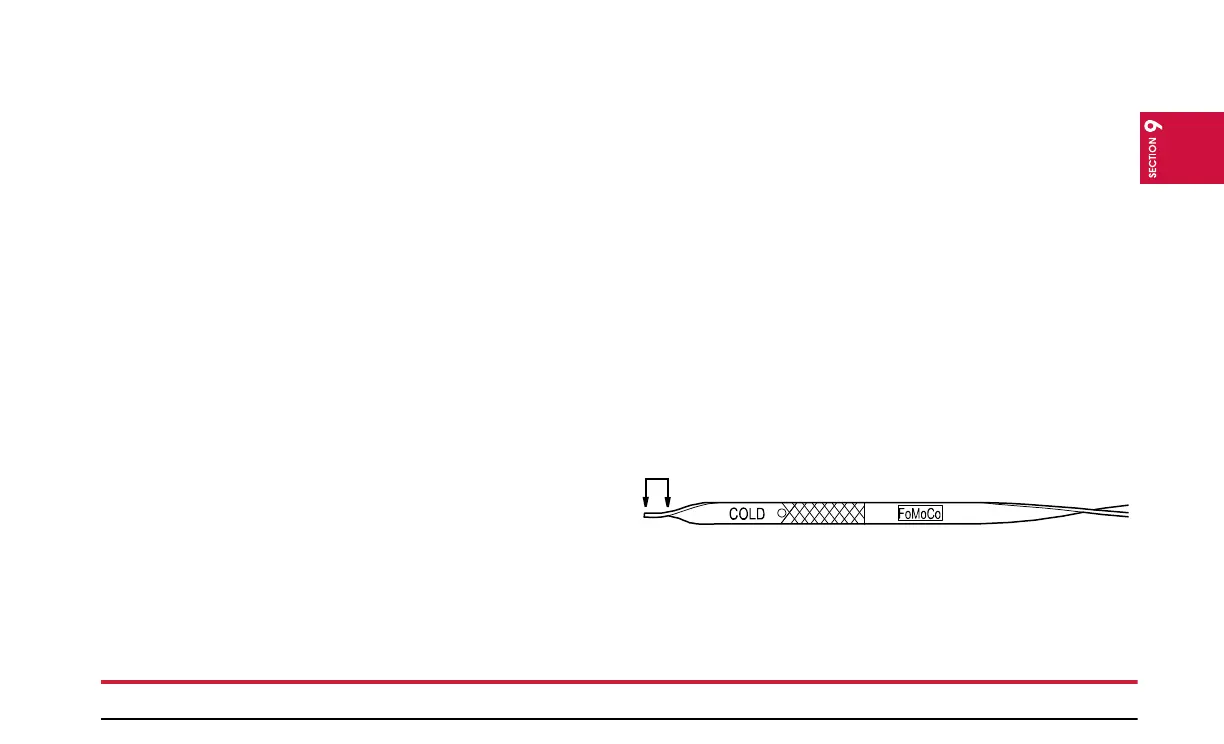
7. Remove the dipstick and inspect the fluid level. The fluid
should be in the designated area for normal operating tem-
perature or ambient temperature.
Low Fluid Level
Do not drive the vehicle if the fluid level is at the bottom of the
dipstick and the ambient temperature is above 50
°F (10°C).


 To Next Page