Seating and Safety Restraints 77
Wearing Seat Belts Properly
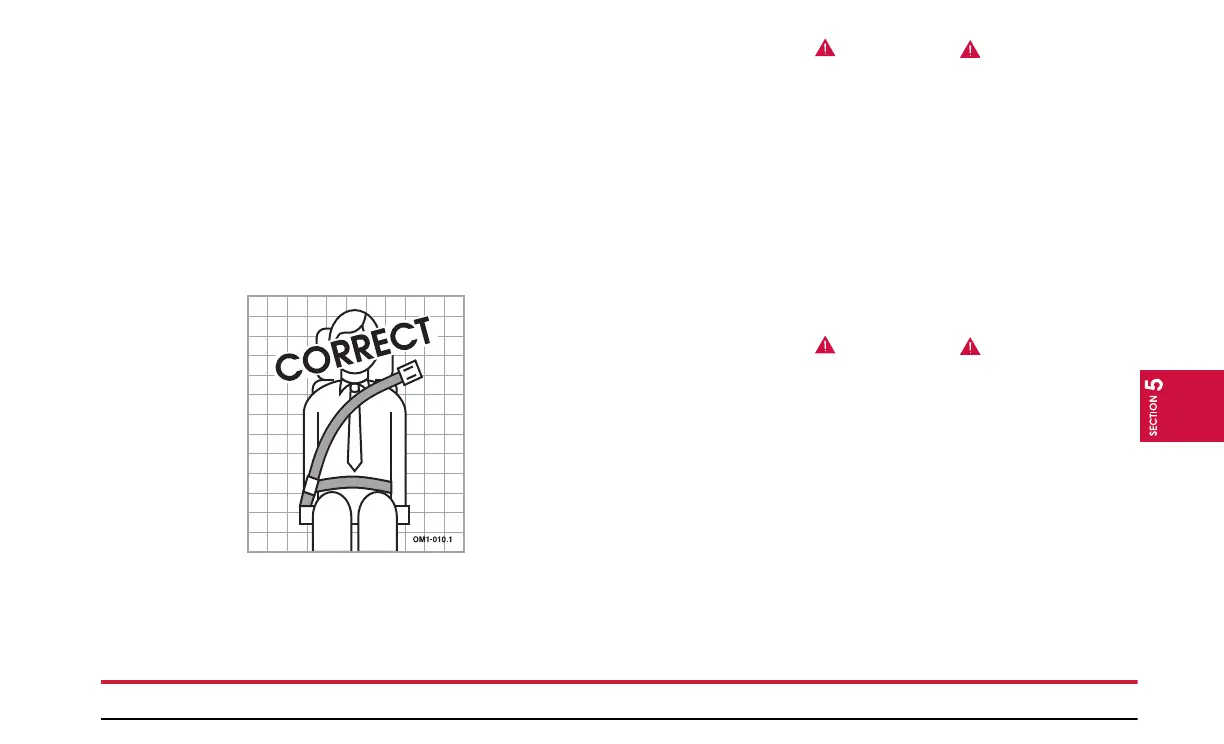
A seat belt is most effective when worn properly. A seat belt
worn improperly will not provide the necessary restraining
capabilities that a properly worn seat belt provides. This sec-
tion outlines some general rules that must be followed in order
to obtain maximum seat belt performance. These rules, which
appear as warnings, are extremely important in maintaining
proper seat belt usage. Read these warnings thoroughly to
ensure you and your passengers use seat belts properly.
To help avoid serious personal injury or death, ALL vehicle
occupants must ALWAYS wear properly adjusted seat belts
during vehicle operation. This INCLUDES pregnant women.
ALL passengers MUST be securely buckled in BEFORE the
vehicle is started.
REASON: When a seat belt is worn properly, it is less
likely that an unborn child will be hurt in a collision. Also,
wearing a lap belt snugly and low across the hips helps
prevent you from sliding under the lap belt during a collision,
and reduces injury to the abdomen. During a collision, the
belt forces will be applied at the strong hip and pelvic bones,
not across the abdomen, which could cause serious internal
injuries.
EACH shoulder harness strap MUST fit snugly against the
chest and on the outside shoulder. Sit upright, NOT in a
slouched position.
REASON:
Seat belts will lock only during sudden stops or
impacts. If a seat belt has slack, it will NOT prevent the user from
moving forward during a collision. This increases the risk of injury.


 To Next Page