Maintenance 195
WHEELS AND TIRES
Inspection and Care
Frequent inspection of the tires will prevent tire failure and
possible loss of vehicle control. Check the tires and wheels for
noticeable damage regularly. See the Maintenance Schedule at
the beginning of this section for proper maintenance intervals.
Tire Wear
When the tire tread is worn down
to 3/32th of an inch (2mm), tires
must be replaced to help prevent
your vehicle from skidding and
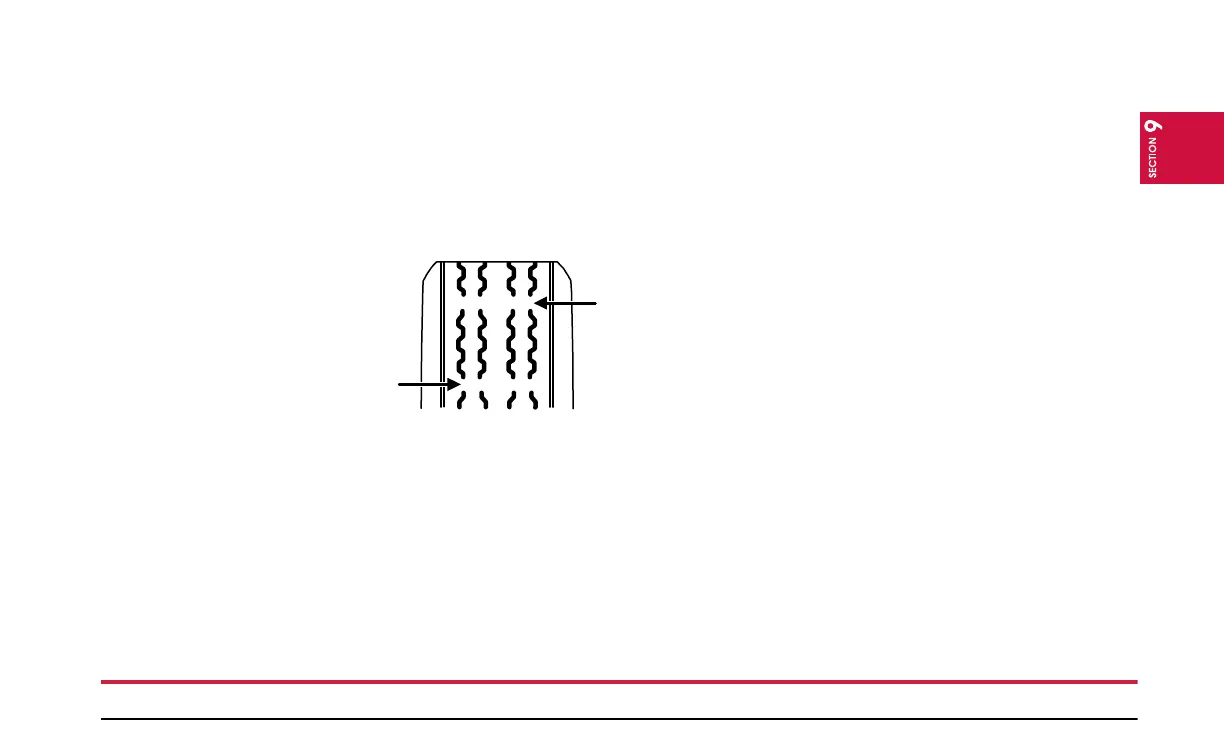
hydroplaning. The tires have built-
in treadwear indicators or “wear
bars”, which look like narrow
strips of smooth rubber across the tread that will appear on the
tire when the tread is worn down to 3/32th of an inch (2mm).
Damage
Uneven wear, gouges, cracks, cuts, bulges, or any exposed
body ply cords indicates tire damage that should be addressed
immediately. Tires will wear more quickly when they are kept
at improper tire pressures or when wheels are not aligned
properly. If you find any noticeable damage, have the tires
checked at an authorized service center.
All tires will wear out faster when subjected to high speeds as
well as hard cornering, rapid starts, sudden stops and frequent
driving on roads which are in poor condition. Roads contain-
ing holes, rocks or other objects can damage tires and cause
misalignment of your vehicle.
Rotation
Rotating your tires regularly extends tire wear life and prevents
any abnormal, uneven wear. Rotate the tires every 7,500 mi
(12,000 km) according to the diagram on page 198. After each
rotation, adjust individual tire pressures to the recommended
pressure for your tires. Tighten the wheel lug nuts to 96 lb-ft
(130 Nm) and check the torque periodically thereafter.
Replacement
Any tire that shows a wear bar or noticeable damage should be
replaced immediately. Replacement of unevenly worn tires
may be necessary even before a wear bar appears.
Inflation
Follow the manufacturer’s guidelines for the proper inflation
pressures.


 To Next Page