Instrument Cluster 55
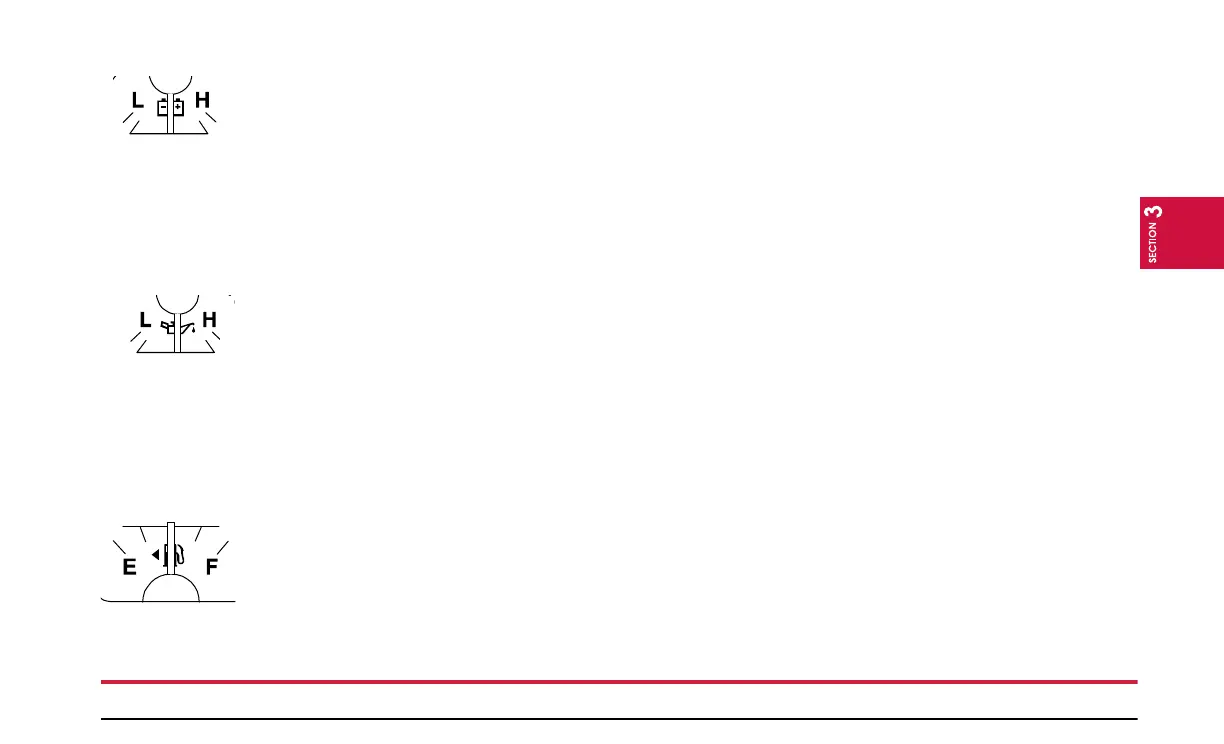
Battery Voltage Gauge
Indicates the battery voltage when the ignition
is in the ON position and the engine is off.
While the engine is running, the voltage indi-
cated is the alternator output. If the pointer moves and stays out-
side the normal operating range, have the vehicle’s electrical
system checked by your authorized service center as soon as
possible.
Engine Oil Pressure Gauge
Indicates engine oil pressure. The needle
should stay in the normal operating range
(between “L” and “H”). If the needle falls
below the normal range, stop the vehicle, turn off the engine and
check the engine oil level. Add oil if needed. If the oil level is
correct, but the needle still falls below the normal range, have
your vehicle checked by your authorized service center.
Fuel Gauge
Indicates approximately how much fuel is
left in the fuel tank (when the ignition is in
the ON position). The fuel gauge may vary
slightly when the vehicle is in motion or on a
grade. The FUEL icon and arrow indicates which side of the
vehicle the fuel filler door is located.
If your vehicle is equipped with the CNG fuel option, there are
some unique characteristics you need to understand regarding
the fuel gauge reading and operation. Because of the proper-
ties of Compressed Natural Gas, the gauge reading will tempo-
rarily read higher than actual, based on outside temperature
and the heat that is generated during refueling.
As you fill the vehicle, the gas in the tanks will compress to
operating pressure as it is pumped in. This causes heat to be
transferred to the shell of the tanks. After the tanks are full,
the temperature of the tanks is higher than the outside tem-
perature. Once the tanks cool to the outside temperature, the
fuel pressure in the tanks will drop slightly resulting in a fuel
gauge reading less than full.
The lower the fuel level is when the vehicle is refueled, the
greater variation can be expected with the fuel reading. If the
temperature outside is very cold and the fuel level was nearing
empty, it could be possible to see a fuel level reading drop as
much as 1/8 of a tank due to the contraction of the Compressed
Natural Gas inside the tanks.
See Gasoline Fuel System on page 199 or Compressed Natural
Gas Fuel System on page 204 for more information.


 To Next Page