Understanding HyperSync and High Speed Sync
63
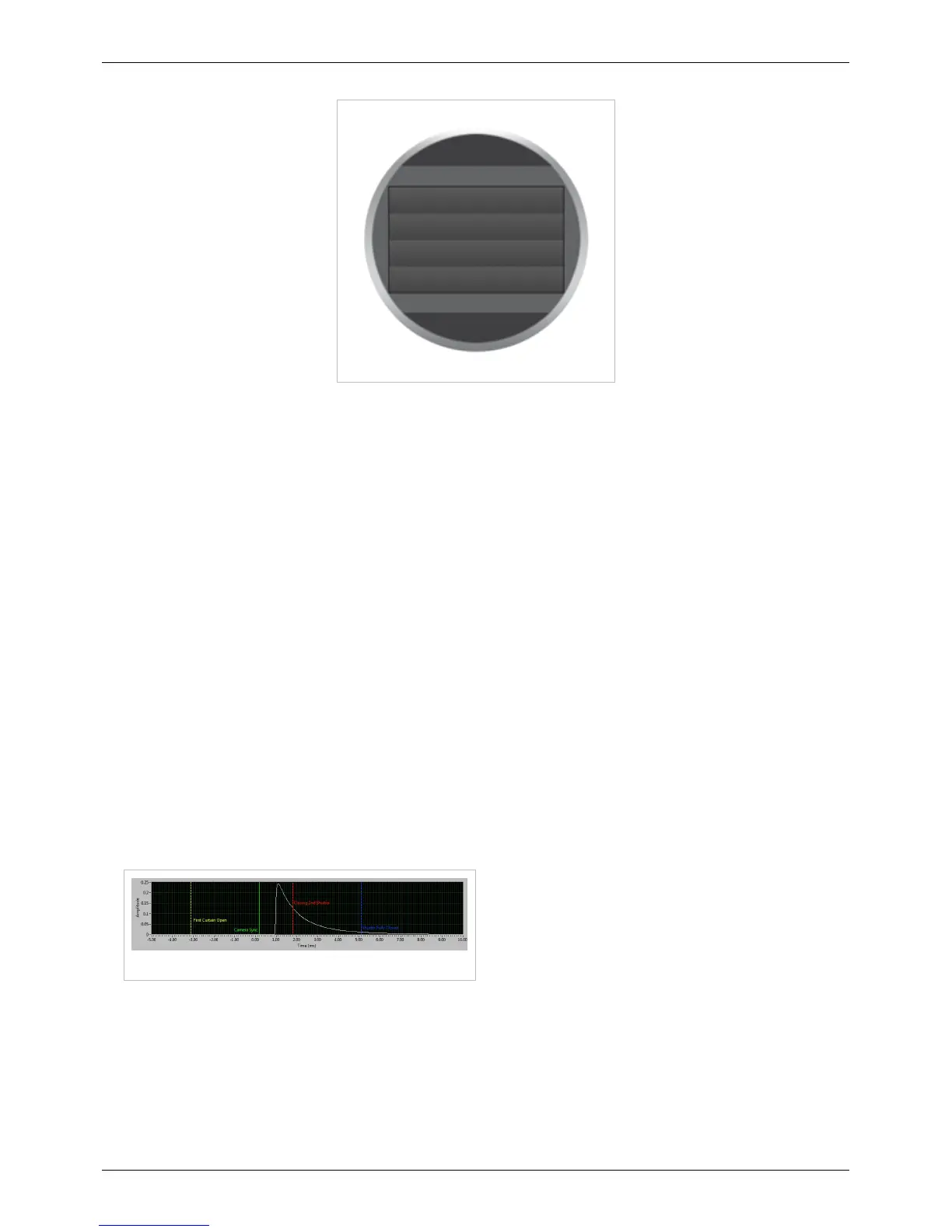
A simulated shutter above X-sync]
The faster the shutter speed, the smaller the slit:
Faster shutter speeds have smaller slits
X-sync - Flash behavior with normal sync limits
A flash directly connected to a camera
Your camera has a limit where it can fully open its shutter and capture flash across the entire sensor all at once. This
is your camera’s X-sync limit.
A camera triggering a flash at X-sync follows this timeline:
1. The shutter button is pressed.
2. Several milliseconds of time pass. This is called lag time. The amount of lag time varies from camera to camera.
3. The first curtain moves from the top of the sensor to the bottom. The camera’s sensor is exposed.
4. Some microseconds of time pass. The camera triggers its PC terminal and the center sync pin on the hot shoe.
5. The flash emits light for its flash duration. The time this happens can be any amount of time up to a few
milliseconds.
6. The second curtain moves from the top of the sensor to the bottom.
7. The second curtain in the camera closes and both curtains reset to the top of the sensor
Timing Sequence at X-sync
Shutter Sequence at X-sync
Shutter speeds above X-sync work differently. A camera triggering a flash above X-sync follows this timeline:
1. The shutter button is pressed.
2. Several milliseconds of time pass. This is called lag time. The amount of lag time varies from camera to camera.
3. The first curtain begins expose the sensor as it moves from top to bottom.
4. Before the first curtain reaches the bottom of the sensor, the second curtain begins to move. The space between
the first and second curtain is a small slit that moves across the sensor. The faster your shutter speed, the smaller



 To Next Page