❈3 The paper feed control board receives the paper
feed signal via the fiber cable, and paper feed starts.
From that point, it is controlled by the timer. The paper
feed motor rotates at the predetermined timing to start
feeding paper. The paper feed motor is turned off when
paper sensor 2 detects the paper.
❈4 When paper sensor 1 detects the paper, the
pick-up solenoid is turned on to raise the pick-up roller.
The solenoid OFF timing is different for each paper size
(after the second paper feed motor ON).
❈5 When the paper feed motor comes on the second
time, the grip roller catches the paper and feeds it to the
vertical transport unit. The second ON period of the
paper feed motor is constant at 40 msec. However, its
ON timing changes according to the feed timing control
(see below).
❈6 The paper passes over the registration sensor and
stops at the registration roller. The paper feed timing
signal turns on the registration motor. The timing of the
paper feed signal and the time for the registration motor
to go ON and OFF varies with the feed station and paper
size.
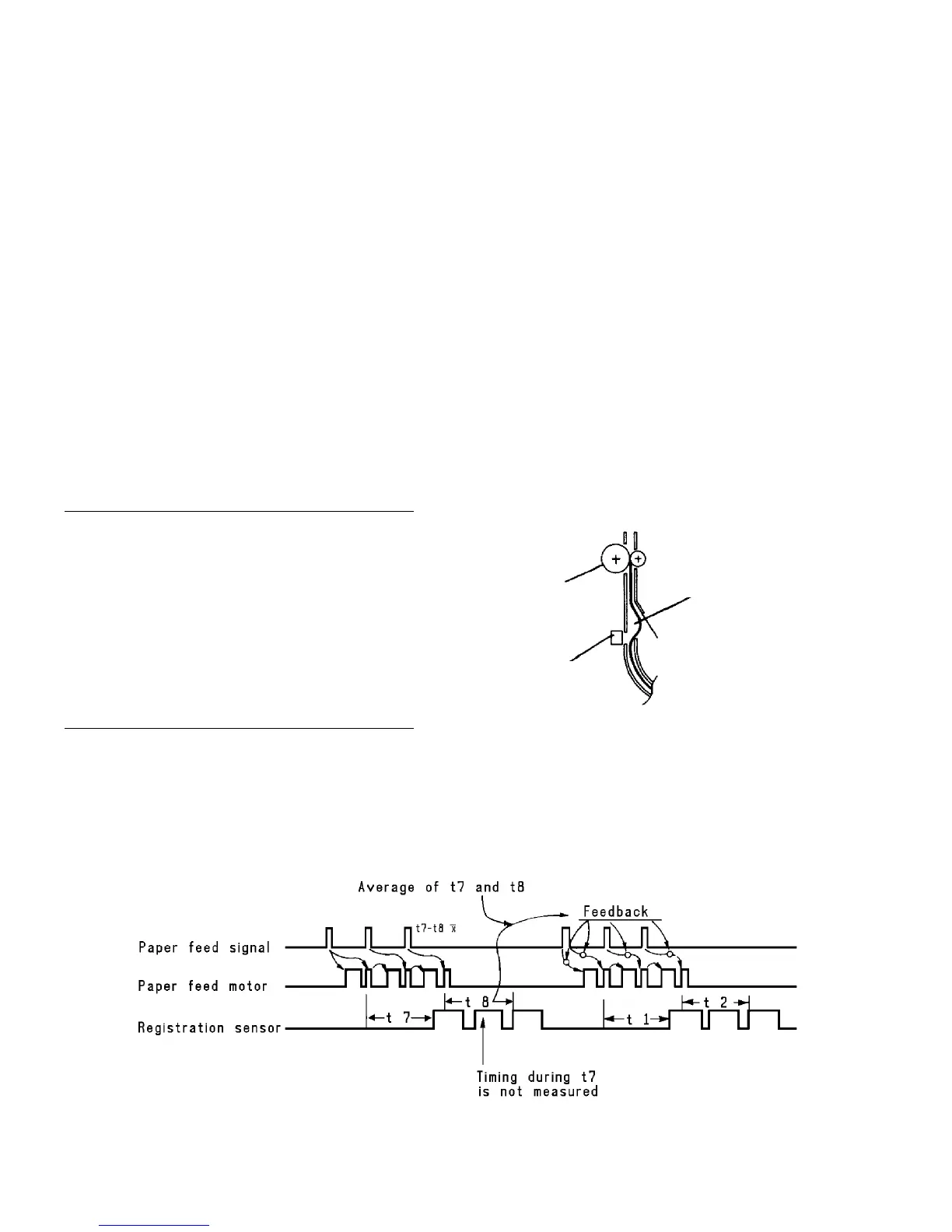
Feed timing control
Purpose of feed timing
To ensure that the registration roller picks up the paper,
when the paper contacts the roller, the paper is buckled.
The object of the feed timing control is to maintain this
buckle and ensure that the registration roller picks up the
paper.
Control of feed timing
The transport time from when the paper feed motor
comes ON the second time to when the registration
sensor comes ON is measured. The feedback from this
timing determines the next paper feed timing.
Registration roller
Registration sensor
8 mm buckle



 To Next Page