Section 3 - Pre-Operation
36 SCHWARZE HYPERVAC HV-18 revised 11/18
How your Schwarze Hypervac sweeper works
The Schwarze Hypervac cleans the road surface by using
vertical digger transfer brooms to move debris to in front of
a vacuum nozzle that then sucks air and the swept debris
into a hopper. The Schwarze patented transfer system
moves any material that is not in-line with the suction
nozzle. The full oating triad of brooms can effectively
remove debris from almost any curved or undulating road
surface.
The air that is sucked in through the nozzle is separated
from the debris in the hopper and returned back to the
atmosphere at the rear of the hopper.
The nozzle sweeps by maintaining a slight gap (1/2”)
between the nozzle rubber and the road surface. This
gap allows high speed air to rush in around the nozzle
effectively acting like a knife at the surface to lift the debris
being swept into the airstream.
To allow the passage bulky such as litter and leaves, the
Hypervac utilizes a nozzle door that may be momentarily
opened to allow larger items to enter the nozzle then
closes to maintain knife air affect described above.
Sweeping techniques with vacuum sweepers
The Schwarze Hypervac is
designed to be most effective
in its ability to remove ne
dust and debris from uneven
surfaces, particulairly the
parting line between the
gutter and the road surface.
Generally pure vacuum sweepers are intended to vacuum
just behind the side broom that is deployed in the gutter
with the nozzle over the gutter/curb parting line.
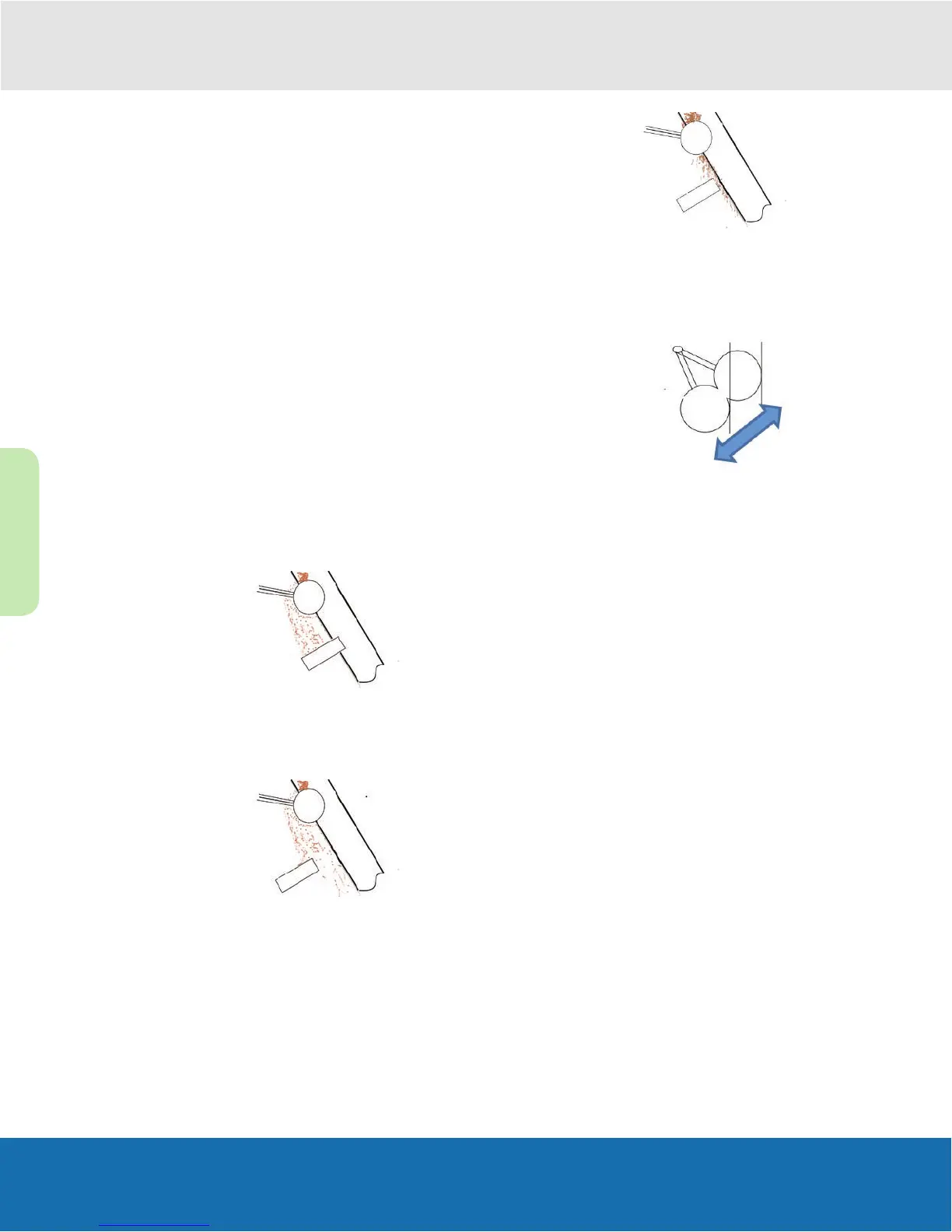
The Hypervac utilizes a side
broom reach mechanism
called Gutter broom
extension override, or GEO.
The GEO allows the side
broom to operate from right
in front of the nozzle to
extended completely out past the nozzle. For conditions
that require the broom to be reached out past the nozzle, a
second pass with the broom overlapping the nozzle will be
required to completely clean the pavement.
The Hypervac broom has an
in-cab tilt and pitch function.
These functions are very
useful for cleaning deep into
the gutter. When the broom is
tilted outward and the pitch is
tilted forward the broom can
be aligned with the deepest
part of the gutter allow bristle contact. When the tilt and
pitch are in the deep gutter, the material will be cleaned
from the gutter but not transferred to the nozzle, requiring a
second pass to completely clean the pavement.
The GEO system also allows
the broom to automatically
stay in contact with the curb
without the operator needing
to readjust the broom or the
chassis position. For best
results, extend the broom into
the curb as far as possible
while still achieving complete
material removal. Adjust the chassis to curb distance to
preload the broom into the curb several inches. If the
broom disk contacts the curb, that is too much preload.
Several inches of preload will assure that if the chassis
distance varies slightly, bristle contact will be maintained. If
something contacts the broom, it will relieve out of the way
to protect itself.
Dust control techniques
The hypervac uses multiple water nozzles as well as
mechanical dust separation in the hopper. Even with all
these systems, controlling dust in extremely dry conditions
can be difcult. The steps below will assist in dust control
1. Be sure all the sweeper nozzles are and pump are
functioning properly. Check both the inlet strainer and
the full flow filter.
2. Fill the hopper with 50 gallons of water before
beginning sweeping. This water will trap the fines.
3. In some soil conditions, water in the suction nozzle
may contribute to plugging on the inlet tube. If this
happens use the optional hopper spraybar in place of
the inlet nozzle water.
4. Use only the fan speed you need. excessive aux
engine speed doesn’t allow the dust to settle do to
the great amount of airflow. Slow the engine to lowest
speed that will picks up the material being swept. This
will also reduce noise and save fuel.


 To Next Page