14
Electronic Controller
Service Manual
SKOPE TME/SKT ActiveCore
No-downward
Tendency
Protection
The electronic controller initiates No-downward Tendency Protection (NDTP) when the
compressor has been running for 200 minutes (parameter d12) and the control probe
temperature has not decreased. This will force a standard defrost cycle (see page 13). If the
electronic controller is required to force consecutive defrost cycles due to NDTP, the
refrigeration system error alarm will start (E3) and the fridge will shut down indicating a fault
within the refrigeration system.
High Pressure
Switch
The refrigeration unit is fitted with a high pressure switch which protects the refrigeration unit
from damage due to over-pressure (high temperature) conditions. When activated, the high
pressure switch cuts power to the electronic controller, the controller display goes blank and
the cabinet lights turn off. Refer to page 41 for service information.
Cold Climate
Protection
The fridge will enter cold climate protection (CCP) mode if the ambient temperature becomes
too cold. This happens if the control probe (at the evaporator air out) detects the interior
temperature below 0°C (parameter St - CCt) for more than 30 minutes (parameter CCd). The
lights will stay on and cannot be switched off while the fridge is in CCP mode. The fridge will
return to its previous mode (Normal or Energy Saving mode) once the control probe reading
raises to parameter St temperature.
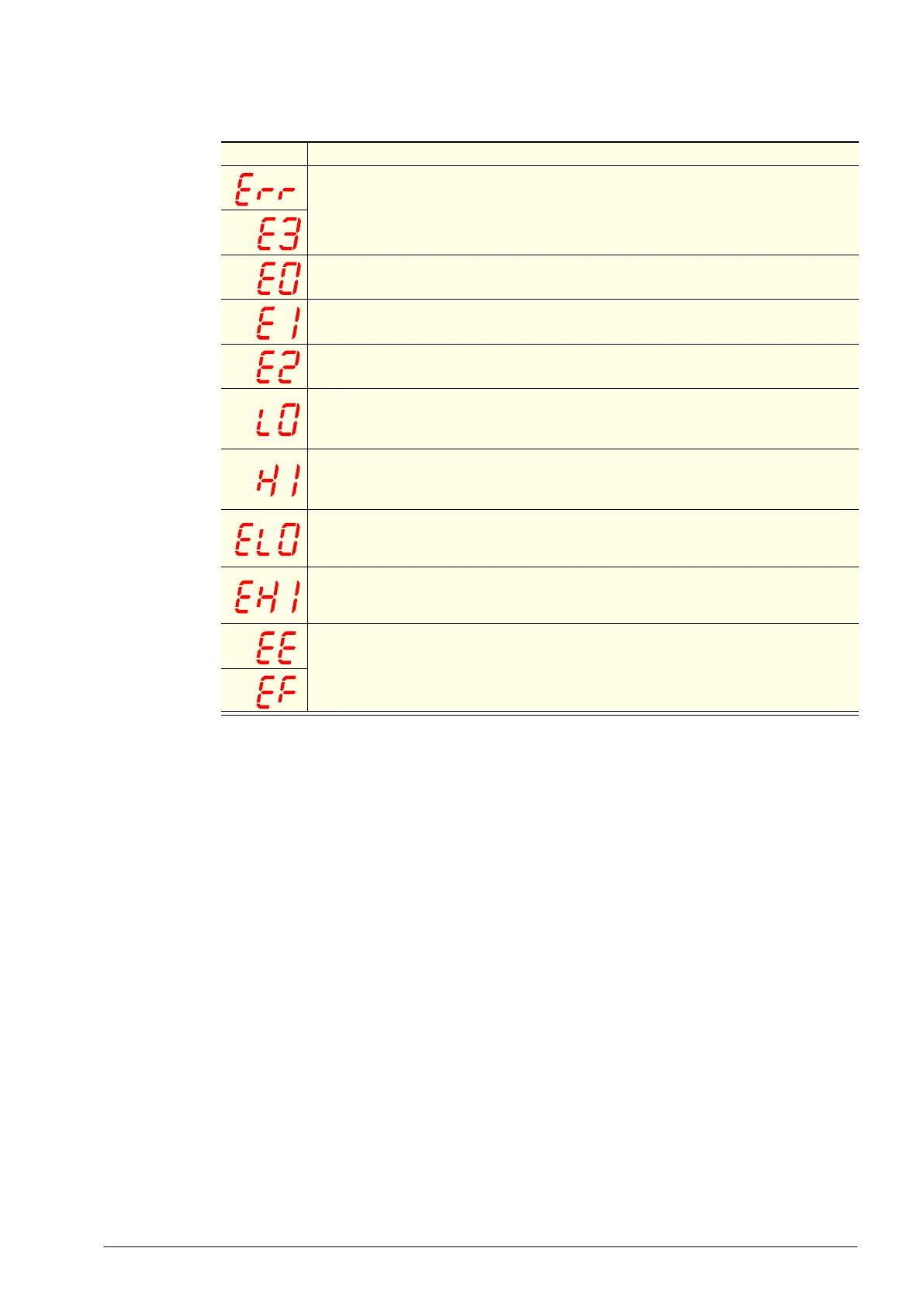
Table 4: Alarms
Display Description
Refrigeration system error. An alarm sounds. The controller turns the fridge off to avoid
damage. Investigate fault with refrigeration system.
Control probe fault. An alarm sounds.
Evaporator probe fault. An alarm sounds.
Door switch fault. An alarm sounds.
Low temperature alarm. An alarm sounds. The temperature inside the fridge is too cold
and an alarm sounds. The controller will automatically reset the alarm once the
temperature inside the fridge raises.
High temperature alarm. An alarm sounds. The temperature inside the fridge is too warm
and an alarm sounds. The controller will automatically reset the alarm once the
temperature inside the fridge drops.
Low voltage alarm. An alarm sounds. The mains voltage is low. An alarm sounds and the
controller switches off the compressor. The controller will automatically reset the alarm
once the mains voltage raises.
High voltage alarm. An alarm sounds. The mains voltage is high. An alarm sounds and
the controller switches off the compressor. The controller will automatically reset the
alarm once the mains voltage drops.
Electronic controller fault.



 To Next Page