70
Troubleshooting
Service Manual
SKOPE TME/SKT ActiveCore
8 Troubleshooting
Controller Alarms
Alarms signal unexpected operational changes in the fridge. When an alarm is activated, use
the following charts to assist with fault diagnosis and service as necessary.
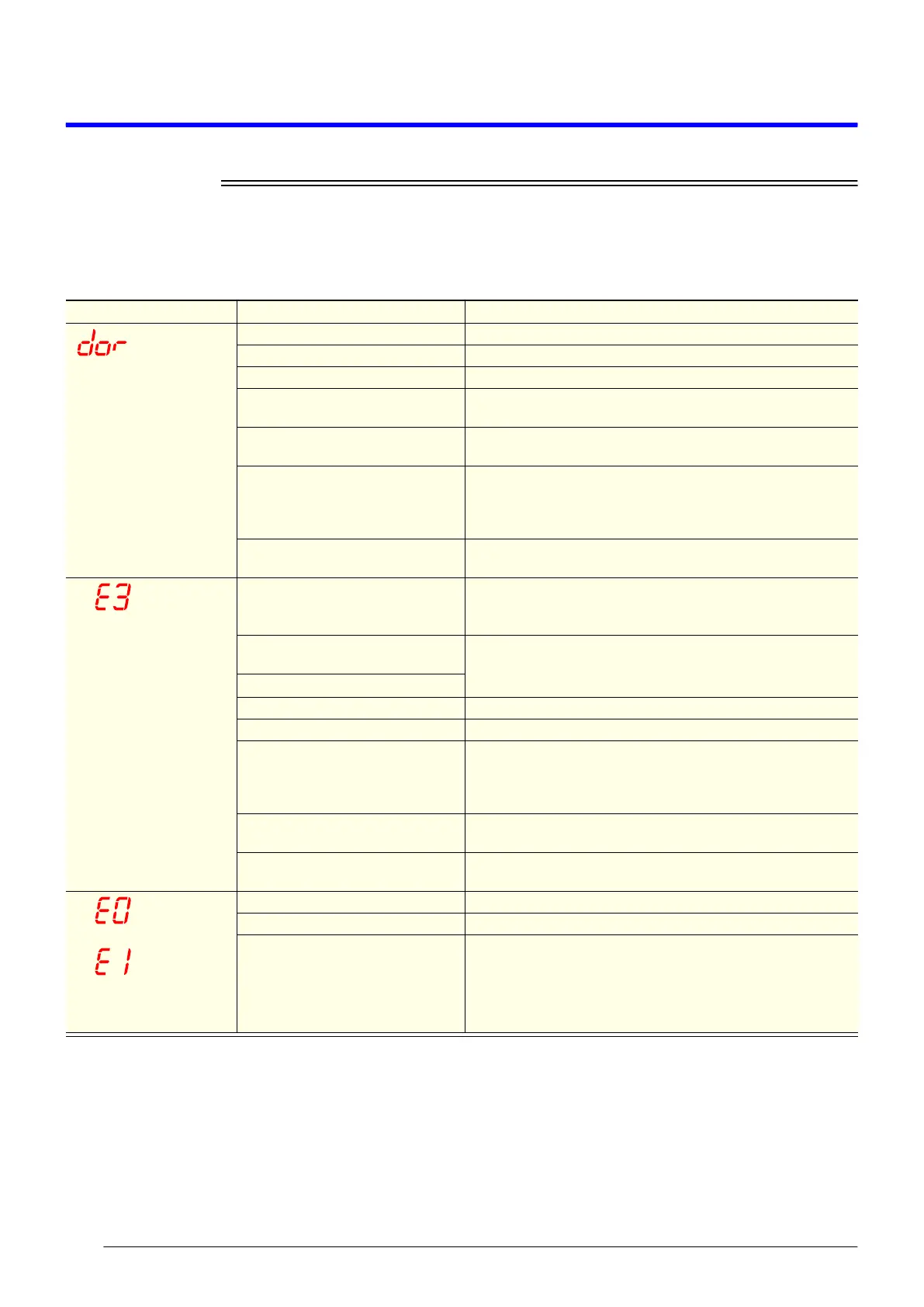
Table 34: Electronic controller alarms
Alarm Possible cause Repair
Door alarm. The door has
been open for longer than
parameter A10 time. An
alarm sounds, and the
controller turns the
compressor and
evaporator fan off.
• Door is open • Close door
• Door/s not aligned correctly • Realign door/s
• Door switch/es not aligned • Realign door switch/es
• Door switch cable not connected
to electrics box correctly.
• Check connection in electrics box.
• Door switch cable plug and
sockets not connected correctly.
• Check connection of door switch cable plug and sockets in
refrigeration unit compartment.
• Door switch cable damaged. • Inspect door switch cable, and repair or replace if
necessary.
• Use multi meter to check for signal through lead when
opening and closing door/s.
• Door switch faulty. • Disconnect door switch plug and use multi meter to check
open/closed signal while opening and closing door.
Refrigeration system error.
An alarm sounds and the
controller turns the fridge
off to avoid damage. This
alarm is triggered if no-
downward tendency
protection is triggered
twice consecutively.
• Cabinet not installed correctly. • Check the installation meets specification. Ensure there are
no blockages in front or behind fridge. Make installation
changes or advise shop-keeper of any changes required.
• Abnormal environmental
conditions.
• Discuss with shop staff to determine and advise why alarm
occurred and how to avoid it in future.
• Very high use of fridge
• Condenser blockage. • Check and clean condenser filter and coil.
• Door/s not closing and sealing. • Service the door/s.
• Refrigeration unit not sealing
properly.
• Inspect seal between top of cabinet and bottom of
refrigeration unit. Reseal as necessary.
• Remove refrigeration unit and inspect gasket condition.
Replace gasket if damaged.
• Electronic controller not reading
correct temperature.
• Investigate temperature probe or electronic controller fault.
• Fans and/or compressor not
running correctly.
• Investigate fan, compressor and/or compressor electrics
fault.
Probe fault. An alarm
sounds.
• Probe not securely fitted. • Secure loose probe.
• Probe is open circuit. • Replace probe.
• Controller fault. • Replace controller.



 To Next Page