91
T/°C
➑b
➑a
➒
DXmax/
CWmax
➑a
➑b
➒
➓
© STULZ GmbH – all rights reserved EN/06.2019/G57
C7000 INSTRUCTIONS fOR a/C UNITS
The corresponding commands:
Setpoint
Fan speed
Components/Air
Fan/special/more
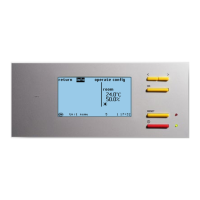
If the A/C unit is operated during nominal operation with a low airflow, the fan
speed can be raised, when the temperature setpoint is exceeded. The fan
speed increase depends on the temperature difference to the setpoint.
For this you adjust a positive temperature difference
➑a to the setpoint, which
represents the start point of the speed increase.
Then you adjust a maximum speed
➑b for the overload operation and another
temperature difference
➒ to the setpoint, which marks the end of the propor-
tional fan speed increase. Having attained the second temperature difference,
the fan is operated with the maximum speed for the overload operation.This
speed is kept even if the temperature continues to rise.
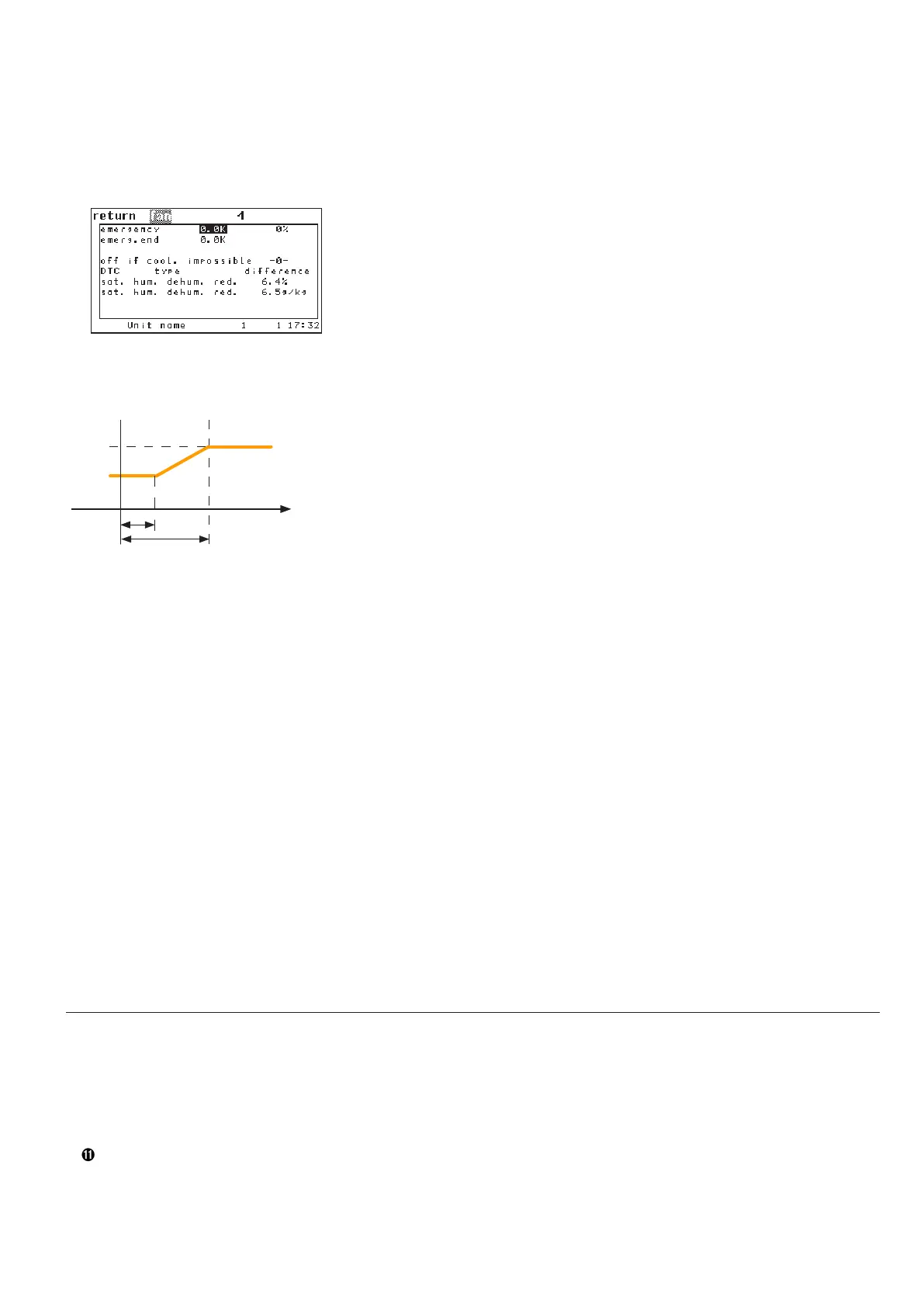
In the fourth line you can disable fan operation when cooling is not possible
due to a compressor alarm or because the cooling water is too warm
➓ by set-
ting a "1".
This setting is especially useful for CyberRow units because of the big temper-
ature difference between cold aisle and warm aisle. Fan operation in case of a
cooling malfunction would unnecessarily convey warm air into the cold aisle.
By the parameter "DTC Type" the differential temperature control mode can be
set. For details see chapter 6.7.
The following two parameters serve to configure an operating mode which is
only used for EShelter units. The value "0" disables this operating mode.
These parameters concern the proportional dehumidification by changing the
fan speed.
fan 1 emerstart 0.7
fan 1 emernmax 95
fan 1 emerend 2.0
fan 1 cestop 1
fan 1 dtctype 0
fan 1 dehumisat 6.4
fan 1 dehumisatsp 6.5
Config


 To Next Page