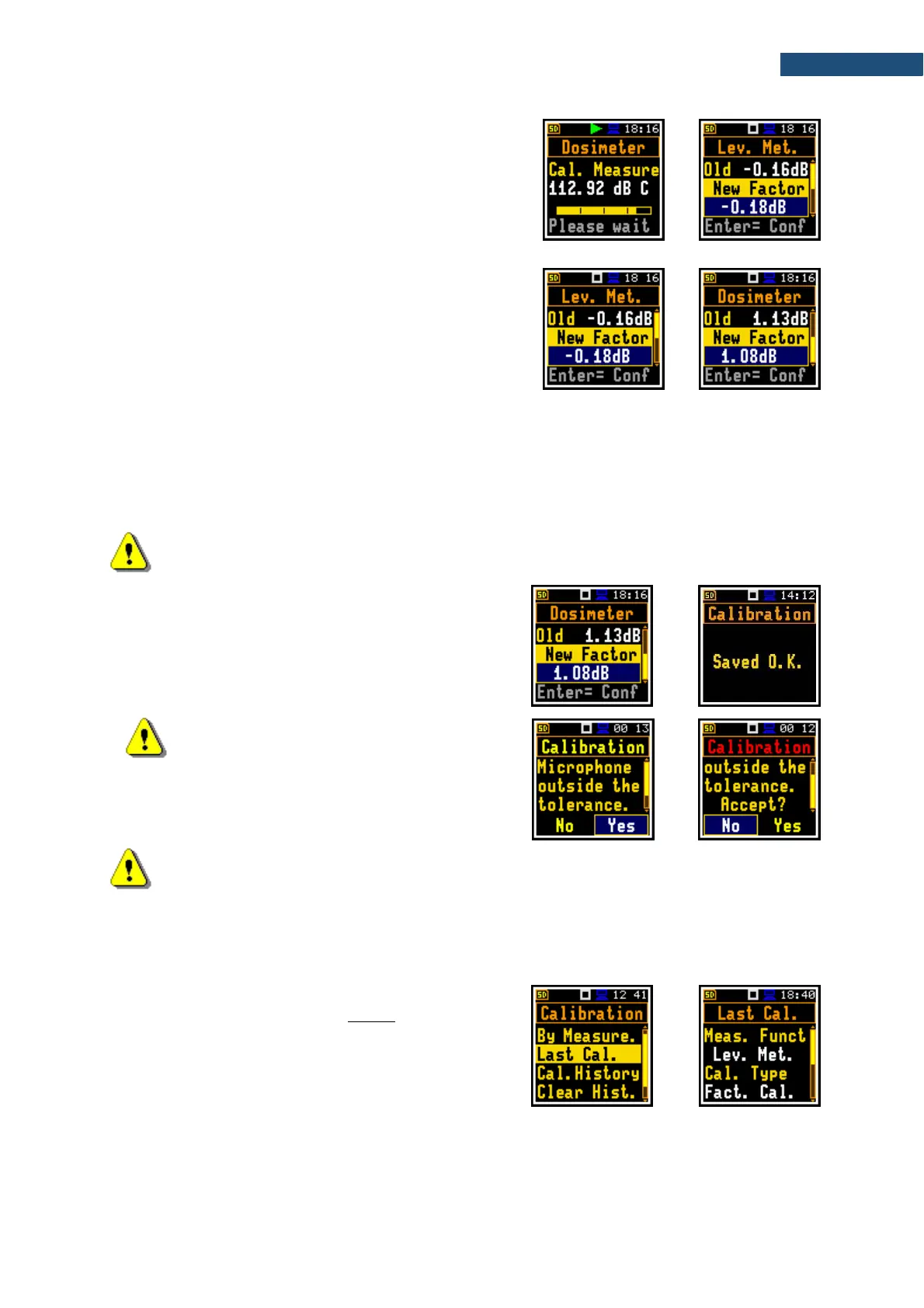
During the second calibration, the level of the calibration
signal measured by the Dosimeter is displayed until the
measured result stabilizes (the maximum difference between
three consecutive 1-second LCeq results should be within
0.05 dB).
After second calibration stop the screen with both calibration
factors will be displayed.
The screen with the calibration factors is divided into two
parts. First part displays the calibration factor for the Level
Meter. You can scroll to the Dosimeter part with the ▼ key.
It is recommended to repeat calibration measurements few times. Obtained results should be almost the
same (with 0.1 dB difference). Reasons for unstable results are as follows:
• calibrator is not properly attached to the instrument,
• there are external acoustic disturbances such as high noise levels nearby,
• calibrator or measurement channel (the microphone, the preamplifier or the instrument itself)
are damaged.
Note: During the calibration measurement, external disturbances (acoustic noise or vibrations)
should not exceed a value of 100 dB (when using a calibrator that generates 114 dB).
5. Press <Enter> to accept and save the new calibration
factors.
6. Detach the calibrator from the microphone.
Note: If calculated calibration factor is out of
the ±3 dB range, the warning “Microphone
outside the tolerance. Accept?” appears on the
screen. If the calibration drift is out of the ±20
dB range, the header of the screen turns red:
Calibration.
Note: To quit the calibration procedure without saving the calibration factor, press <ESC>.
3.2.1 Last calibration record – Last Calibration
The Last Cal. screen displays the information regarding
recent calibration record for the current measurement
function: measurement function for which calibration was
performed (Level Meter or Dosimeter), type of calibration
(Factory Calibration, By Sensitivity or By Measurement),
date of calibration and calibration factor.


 To Next Page