1-18
System Overview
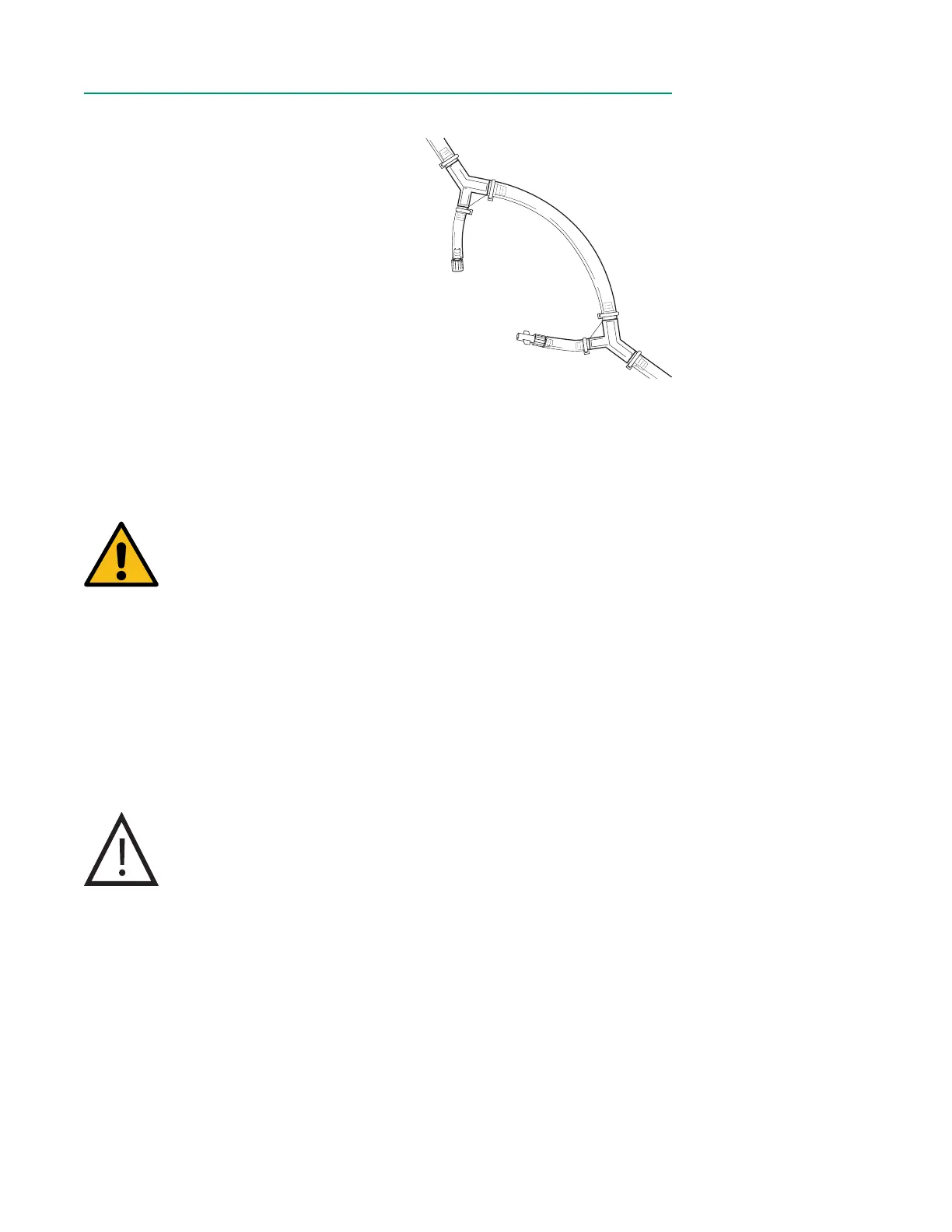
The Shunt Bypass LineThe Shunt Bypass Line
The shunt bypass line is a tubing pack
modication designed to connect to the CDI
Shunt Sensor when an in-line application is
desired. Two opposing Y-connectors allow
a small fraction of the total blood ow to
pass through the sensor while minimizing
any additional ow resistance. The shunt
bypass line is recommended when continuous
venous side monitoring is desired and/or
when a continuous shunt/purge line is not
available on the arterial side. The lines can be
supplied as sterile individual assemblies for
incorporation into the circuit at the time of use,
or by a tubing pack supplier as a modication
to an existing tube pack. The three tubing
sizes supported are 1/2", 3/8" and 1/4".
Warning
A minimum blood ow of 35 mL/min is recommended to maintain
measurement performance of the Shunt Sensor. To maintain the
minimum blood ow through the sensor, keep total blood ow in
the shunt bypass line above 1.5 L/min for 1/2 inch tubing, 0.6 L/
min for 3/8 inch tubing, and 0.2 L/min for 1/4 inch tubing.
Use aseptic technique when inserting the shunt bypass line
into the extracorporeal circuit to ensure that the blood contact
surfaces remain sterile.
For all shunt bypass line applications: Use an arterial lter distal
to the shunt bypass line when utilizing the shunt bypass line on the
arterial side of the circuit. This protects against the introduction
of air into the blood circulation.
Caution
For single sterile shunt bypass line assemblies. Do not use the shunt
bypass line after the date printed on the package label. Use
beyond the date may result in inaccurate performance.
The shunt bypass lines, which are supplied sterile, will remain so if
the package is unopened and undamaged.
Secure all connections on the shunt bypass line with tie-bands.



 To Next Page