Conduit Shielding 227
Appendix C Recommended Wiring Methods
Conduit Shielding
Conduit and cable trays route the network trunkline within the plant for short
distances or for several miles. Often the same conduit carries both data and power
wiring, creating a problem with electromagnetic interference. Your choice of
materials and configuration for the cable conduit determines the degree of
protection from this interference.
For detailed information on raceway shielding for conduits and trays, refer to IEEE
Standard 518-1982, Guide for the Installation of Electrical Equipment to Minimize
Electrical Noise Inputs to Controllers from External Sources.
Cable Spacing
You should separate noise-creating sources (those with time-varying voltage or
time-varying current) from data signal cables as much as possible. Group cables
with similar levels of noise susceptibility together. Group cables with similar levels
of noise generation together in trays and conduit.
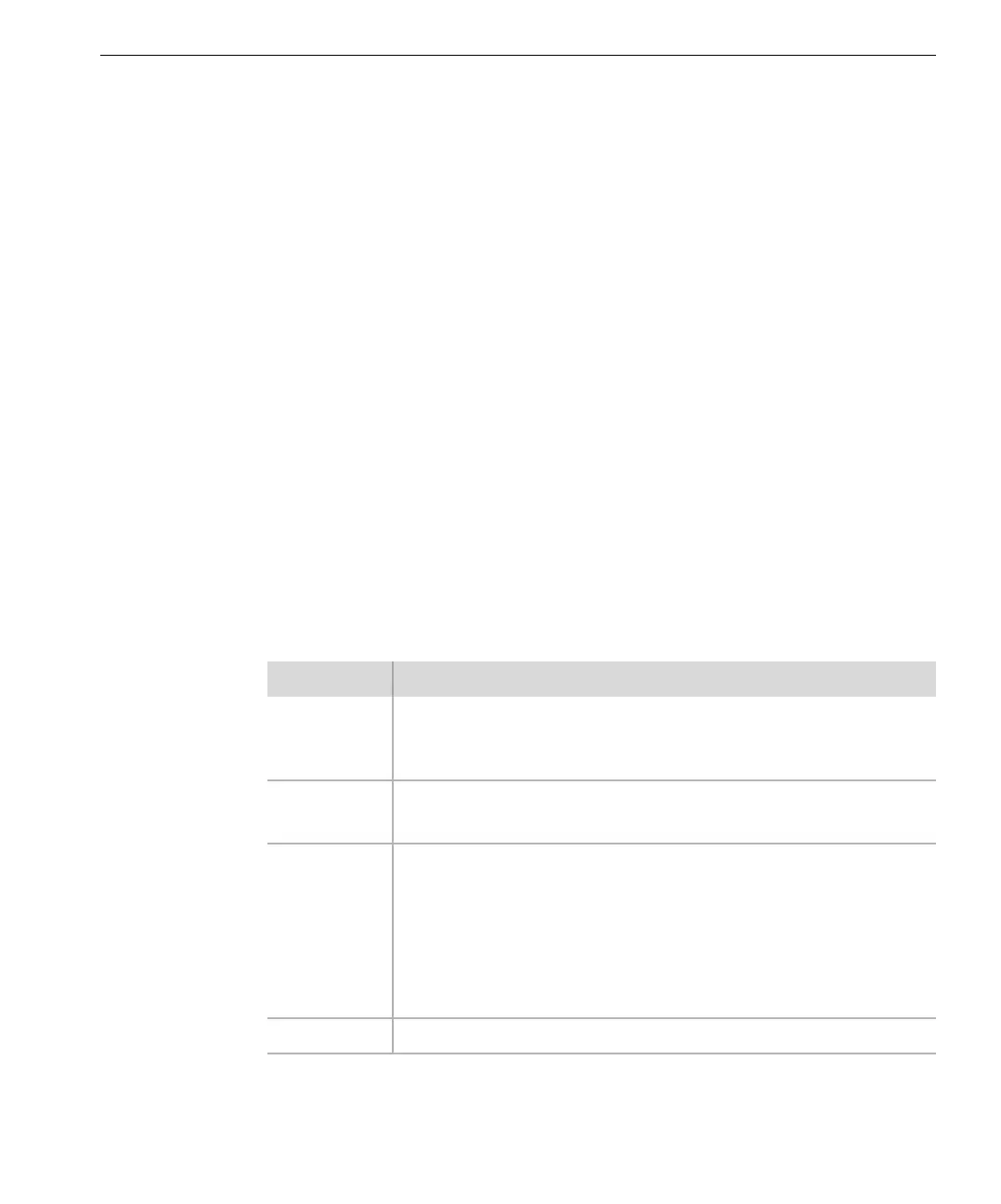
IEEE defines four classes of wiring that differ in signal level and noise
susceptibility:
IEEE Class Definition
Data 1 High-noise susceptibility
Includes analog signals of less than 50 V and digital signals of less
than 15 V
Data 2 Medium-noise susceptibility
Includes analog signals greater than 50 V and switching circuits
Data 3 Low-noise susceptibility
Includes the following:
• Switching signals greater than 50 V
• Analog signals greater than 50 V
• Regulating signals of 50 V with currents less than 20 A
• Feeders less than 20 A
Power AC and DC buses of 0 – 1000 V with currents of 20 - 800 A



 To Next Page