108 3064298_201805
Maintenance/cleaning
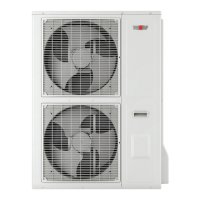
38.2 CleaningtheevaporatorontheBWL-1S(B)
Inareaswithhighconcentrationsofdustorpollen,shortercleaningintervalsmaybenecessary
alongside the mandatoryannual inspection and cleaning, in order to ensure that thesystem
operatesefciently.Adjustthecleaningintervaltosuitthelocalconditions.
The evaporator must be checked annually for dirt/contamination and cleaned if necessary. Wet cleaning
withacommerciallyavailablegardenhoseisrecommended.Contaminatednsmayreducethesystem's
transferperformanceandconsequentlyitsenergyefciency,andintheworstcasescenariomayresult
in system failure.
Whencleaning,ideallyuseawidenozzlewithasprayangleof15°-20°.Topreventdamagetothens,
direct the water spray at the evaporator surface from the front at an angle of 90°. When cleaning, the
water pressure should not exceed 2 - 3 bar.
Neverspraythensfromtheside,asthismaycausethemtobecomedeformedorbent.Maintain
adistanceofapprox.20cmto30cmfromtheevaporatorsurface.
38.3 Cleaningthecondensatepan/condensatedrain
Before the heating season, remove any dirt (leaves, twigs, sludge, etc.)
from the condensate drain.
Beforeopeningtheappliance,ensurethatallpowercircuits
areisolatedfromthepowersupply.
When cleaning, avoid using sharp or hard objects in order to prevent damage to the evaporator and
condensate pan.
In extreme weather conditions (e.g. drifting snow), ice may occasionally form on the intake and discharge
grilles. In this event, remove any ice and snow from the intake and discharge areas to ensure the minimum
airowrate.
Regularly check and clean the condensate pan to ensure correct drainage. Check and clean the
condensate drain hose. For correct drainage, ensure that there is a continuous fall.
38.4 Cleaningthecasing
The appliance can be cleaned with a damp cloth and commercially available detergents. Never use
abrasive cleaners or detergents containing acid or chlorine on the appliance surfaces.
38.5 Cleaningthedirttrap/sludgeseparator
Install a dirt trap/sludge separator in the heating return. This ensures that neither particles nor dirt can
get into the plate heat exchanger (condenser) of the heat pump. Condenser blockages and any resulting
high pressure malfunctions are thereby prevented.
Please
note
Please
note



 To Next Page