5-33
1
2
3
4
5
6
7
8
9
10
ELECTRICAL
ELECTRICAL COMPONENTS
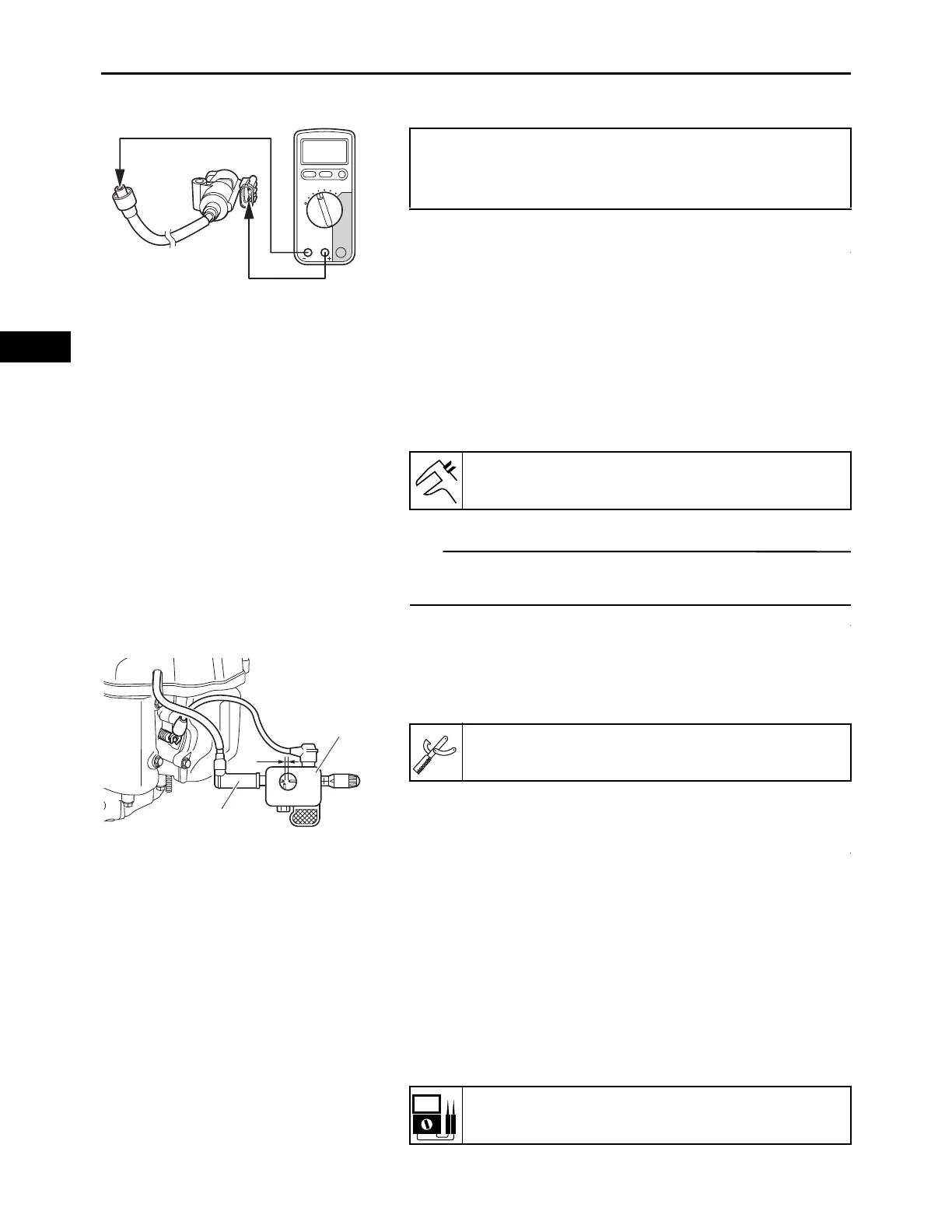
b. Measure the secondary coil resistance.
▲▲▲▲▲▲▲▲▲▲▲▲▲▲▲▲▲▲▲▲▲▲▲▲▲▲▲▲▲▲▲▲▲▲▲▲▲▲▲▲▲
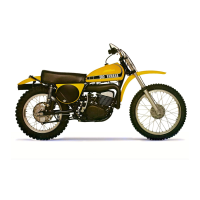
CHECKING THE IGNITION SPARK GAP
The following procedure applies to all of the ignition coils.
1.
Check:
• Ignition spark gap
Out of specification Perform the ignition system
troubleshooting, starting with step 5.
(Refer to “IGNITION SYSTEM” on page 6-1)
If the ignition spark gap is within specification, the ignition
system circuit is operating normally.
▼▼▼▼▼▼▼▼▼▼▼▼▼▼▼▼▼▼▼▼▼▼▼▼▼▼▼▼▼▼▼▼▼▼▼▼▼▼▼▼▼
a. Disconnect the spark plug cap “1” from the spark
plug.
b. Connect the ignition checker “2” as shown.
c. Turn the main switch to “START”.
d. Measure the ignition spark gap “a”.
▲▲▲▲▲▲▲▲▲▲▲▲▲▲▲▲▲▲▲▲▲▲▲▲▲▲▲▲▲▲▲▲▲▲▲▲▲▲▲▲▲
CHECKING THE SPARK PLUG CAPS
The following procedure applies to all of the spark plug
caps.
1.
Remove:
• Spark plug cap
2.
Check:
• Spark plug cap resistance
Out of specification Replace the spark plug cap.
• Positive tester probe
Red “1” (wire harness color)
• Negative tester probe
High-tension cord “2”
Minimum ignition spark gap:
6.0 mm (0.236 in)
Ignition checker:
90890-06754
Spark plug cap resistance:
3.75–6.25 k


 To Next Page