QS=çÑ=NPQ fåëíêìÅíáçå=j~åì~ä=`êçëëÄÉ~ã=PQM=ÉåMOE`lo F
PK=aÉëÅêáéíáçå
léíáçåë
3.4.8.2. SESI detector
The Secondary Electrons Secondary Ions detector (SESI detector) is suitable to detect secondary
electrons as well as secondary ions. The SESI detector replaces the SE2 detector.
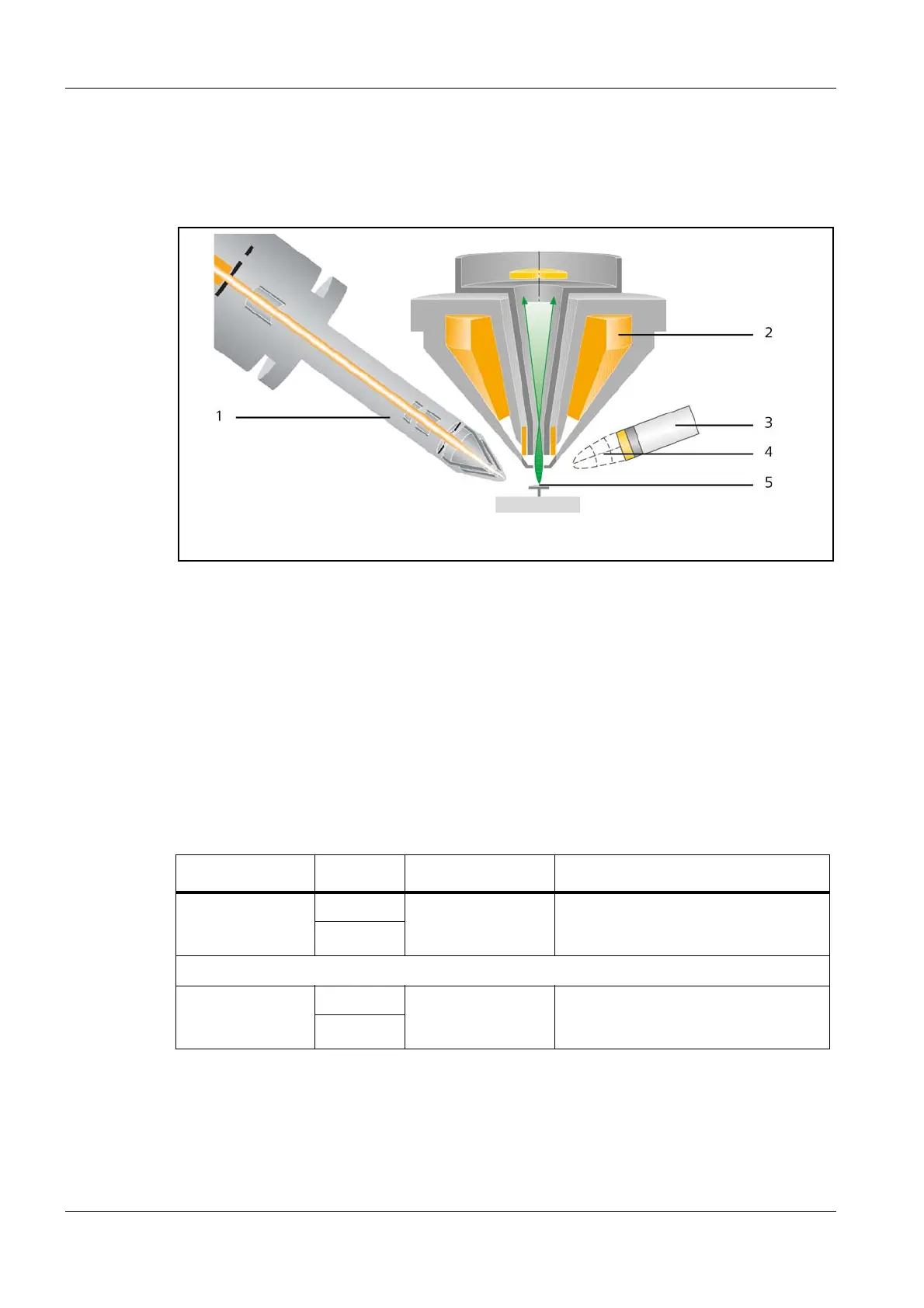
Depending on the polarity of the collector voltage either electrons or ions scattered from the spec-
imen (5) are attracted by a collector grid (4) and accelerated to the converter. In the converter,
both electrons and ions are converted into secondary electrons which are used to generate an
image.
The SESI detector can be operated in two modes: SE mode and Ion mode.
1 FIB column 4 Collector grid
2GEMINI
®
column 5 Specimen
3 SESI detector
Operating mode FIB mode Detected signals Typical application
SE mode
(typical collector
voltage +300 V)
SEM Secondary electrons Topography
FIB
Ion mode
(typical collector
voltage -4 kV)
- Secondary ions Crystal orientation contrast, material con-
trast e.g. imaging of corrosion/oxidation
processes in metals
FIB
Fig. 3.14: Schematics of the SESI detector


 To Next Page