Virtual Leased Line Services
7210 SAS-X, R6 OS Services Guide Page 139
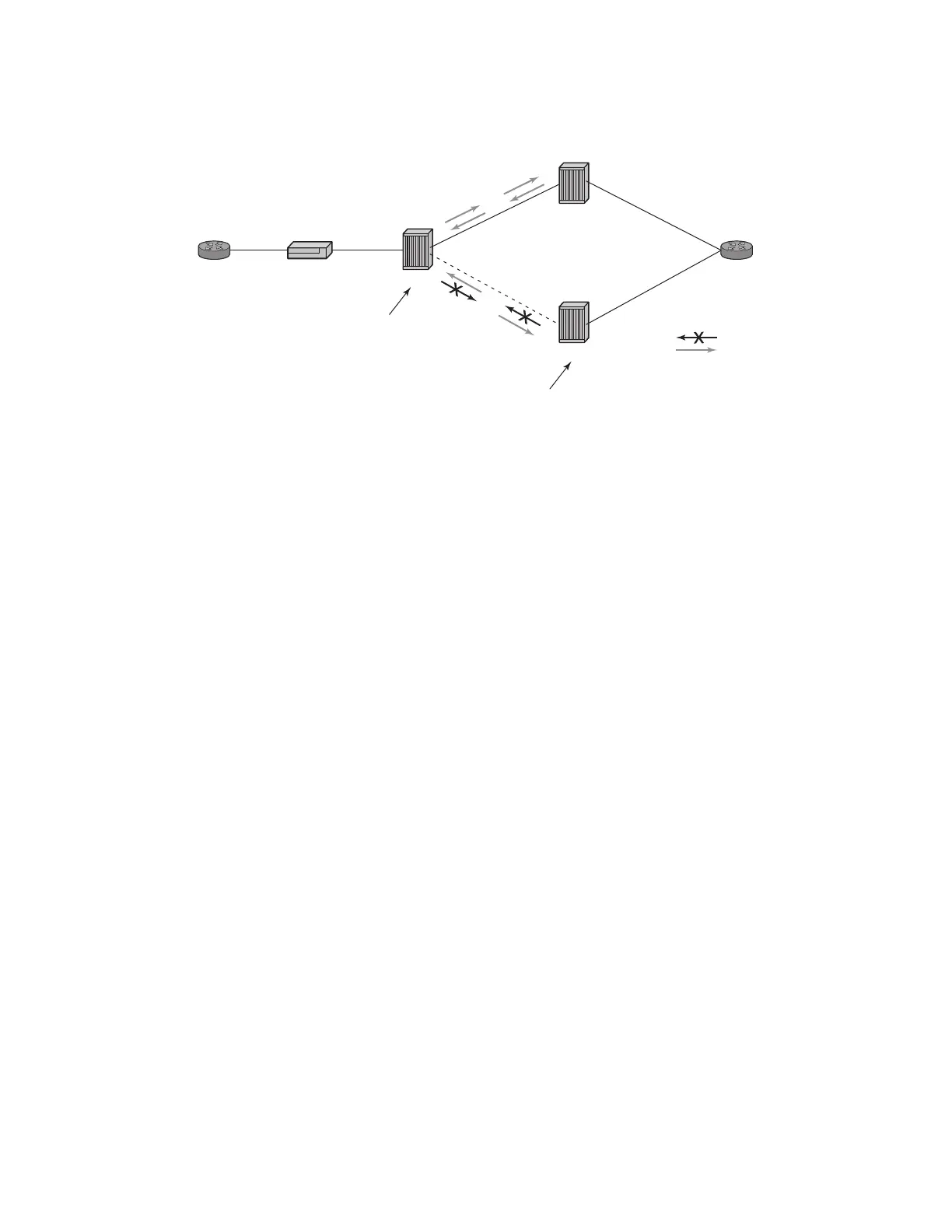
Figure 17: Master-Slave Pseudowire Redundancy
Master-slave pseudowire redundancy adds the ability for the remote peer to react to the
pseudowire standby status notification, even if only one spoke SDP terminates on the VLL
endpoint on the remote peer. When the CLI command standby-signaling-slave is enabled at the
spoke SDP or explicit endpoint level in PE2 and PE3, then any spoke SDP for which the remote
peer signals PW FWD Standby will be blocked in the transmit direction.
This is achieved as follows. The standby-signaling-master state is activated on the VLL endpoint
in PE1. In this case, a spoke SDP is blocked in the transmit direction at this master endpoint if it is
either in operDown state, or it has lower precedence than the highest precedence spoke SDP, or
the given peer PE signals one of the following pseudowire status bits:
• Pseudowire not forwarding (0x01)
• SAP (ingress) receive fault (0x02)
• SAP (egress) transmit fault (0x04)
• SDP binding (ingress) receive fault (0x08)
• SDP binding (egress) transmit fault (0x10)
The fact that the given spoke SDP has been blocked will be signaled to LDP peer through the
pseudowire status bit (PW FWD Standby (0x20)). This will prevent traffic being sent over this
spoke SDP by the remote peer, but obviously only in case that remote peer supports and reacts to
pseudowire status notification. Previously, this applied only if the spoke SDP terminates on an
IES, VPRN or VPLS. However, if standby-signaling-slave is enabled at the remote VLL endpoint
then the Tx direction of the spoke SDP will also be blocked, according to the rules in Operation of
Master-Slave Pseudowire Redundancy with Existing Scenarios on page 142.
Note that although master-slave operation provides bidirectional blocking of a standby spoke SDP
during steady-state conditions, it is possible that the Tx directions of more than one slave endpoint
can be active for transient periods during a fail-over operation. This is due to slave endpoints
epipe
standby-signaling-master
standby-signaling-slave
Block
Fwd
A
A
A
S
epipe
PE2
NO MC-LAG
PE3
PE1
L2 Switch
CE1 CE2
al_0149



 To Next Page