Programming with SCPI 2-8 Notational Examples
S412E PM PN: 10580-00319 Rev. N 2-11
2-8 Notational Examples
Command statements read from left to right and from top to bottom. In the command
statement above, the :FREQuency keyword immediately follows the :SENSe keyword with
no separating space. A space (sp) is used between the command string and its argument.
Note that the first keyword in the command string does not require a leading colon. It is good
practice, however, to always use a leading colon for all keywords. Note also that the
[:SENSe] keyword is optional. This is a SCPI convention (for all voltage or signal source
type instruments) that allows shorter command statements to be used.
The following is an example of a multiple command statement that uses two separate
commands in a single statement:
:FREQuency:STARt 10E6;:FREQuency:STOP 20E9
Command Terminators
The <new line> character (ASCII 10) in the last data byte of a command string is used as a
command terminator. The use of a command terminator resets the command path to the root
of the tree.
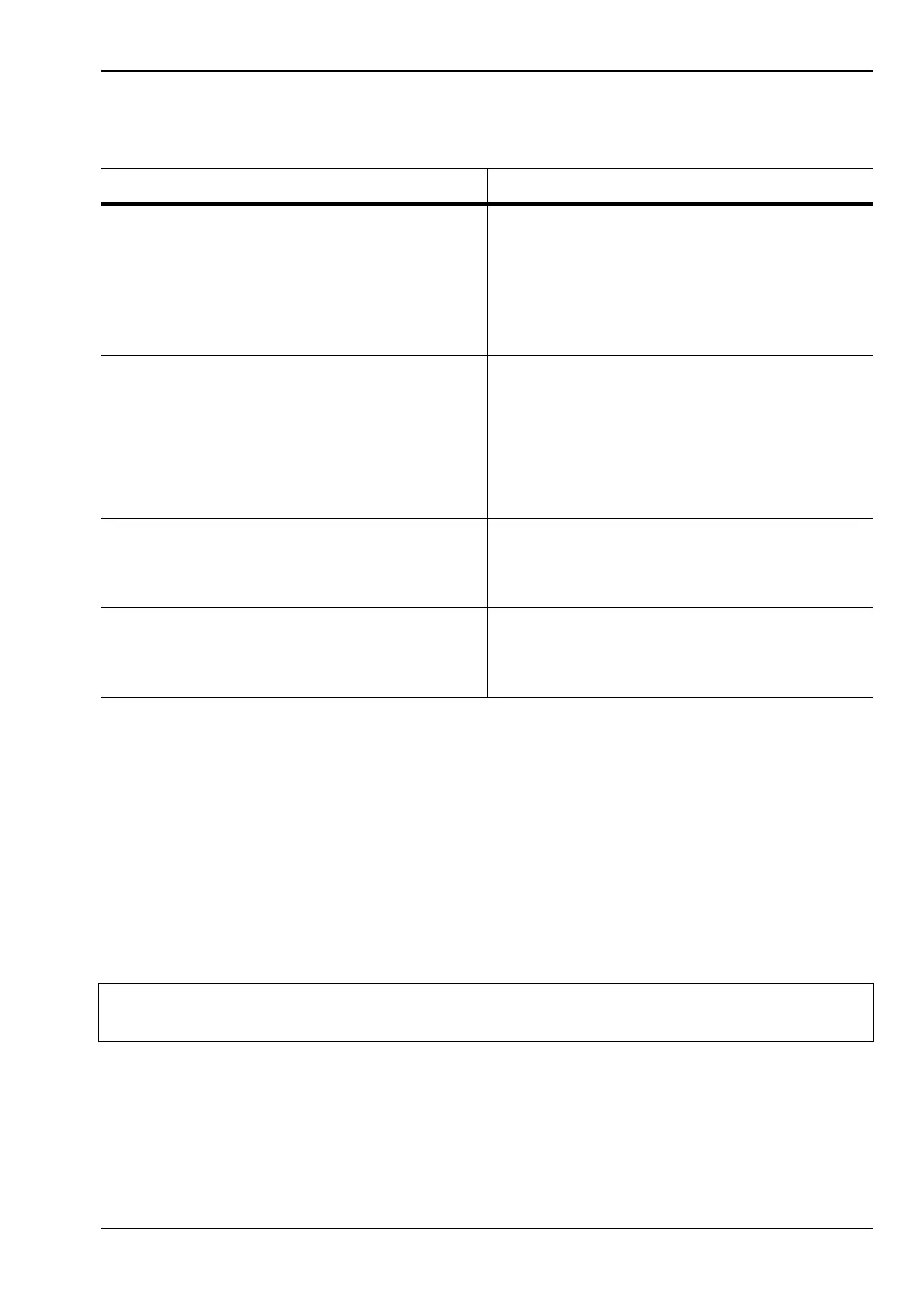
Table 2-6. Creating Valid Commands
Command Specification Valid Forms
[:SENSe]:FREQuency:STARt <freq> The following all produce the same result:
:SENSe:FREQuency:STARt 1 MHZ
:SENS:FREQ:STAR 1 MHZ
:sense:frequency:start 1000000
:FREQ:STAR 1000 KHZ
:CALCulate:MARKer{1|2|3|4|5|6}:X
<x-parameter>
The first 2 commands set the location of
marker 1. The third command sets the location
of marker 2.
:CALC:MARK:X 1 GHZ
:CALC:MARK1:X 1 GHZ
:CALC:MARK2:X 2 GHZ
:UNIT:POWer DBM|DBV|DBMV|DBUV|V|W The following commands are identical:
:UNIT:POWer DBM
:unit:pow dbm
:INITiate:CONTinuous OFF|ON|0|1 The following commands are identical:
:INITiate:CONTinuous OFF
:init:cont 0
Note
A semicolon is used to join the commands, and a leading colon is used
immediately after the semicolon to start the second command.







 To Next Page