
 To Next Page

B
biancafordSep 12, 2025
What to do if ASP Laboratory Equipment displays 'Delivery System Not Ready'?
- TthowardSep 12, 2025
If the ASP Laboratory Equipment displays 'Delivery System Not Ready', run diagnostics. Replace the failed component.

What to do if ASP Laboratory Equipment displays 'Delivery System Not Ready'?
If the ASP Laboratory Equipment displays 'Delivery System Not Ready', run diagnostics. Replace the failed component.
What to do if ASP sterrad NX displays 'Chamber X Temperature' error?
If the ASP Laboratory Equipment displays a chamber temperature error (drifted higher, drifted low, has not risen, too high, or too low), run diagnostics to check for sensor or heater failures. Troubleshoot or replace chamber temperature sensor 1 or 2 if there are errors like 'temp has not risen' or 'temp too high', or replace any other failed components.
What to do if ASP sterrad NX Laboratory Equipment cannot eject the cassette?
If the ASP Laboratory Equipment cannot eject the cassette, run diagnostics. If diagnostics fail, adjust or replace the delivery subsystem.
What to do if ASP sterrad NX Laboratory Equipment displays 'Unknown Reason'?
If the ASP Laboratory Equipment displays 'Unknown Reason', start cycle again. If problem persists, run diagnostics.
What to do if ASP sterrad NX displays 'Main Fan Fault'?
If the ASP Laboratory Equipment displays a 'Main Fan Fault', inspect the fan and replace it if needed.
What to do if ASP sterrad NX displays 'Unable to Open One Second Data File'?
If the ASP Laboratory Equipment displays 'Unable to Open One Second Data File', install a new PCMCIA compact flash memory card.
What to do if ASP sterrad NX displays 'Pressure Out of Range'?
If the ASP Laboratory Equipment displays a 'Pressure Out of Range' error (high or low), verify the load is dry and not outgassing. Start a new cycle. If the pressure cannot be maintained during vacuum, run diagnostics and replace any failed components.
What to do if ASP sterrad NX Laboratory Equipment displays 'Cannot Light Plasma'?
If the ASP Laboratory Equipment displays 'Cannot Light Plasma', inspect the load. If the load is touching the electrode, reposition the load and start a new cycle. If the problem persists, run diagnostics. If diagnostics fail, troubleshoot or replace the LFPS II power supply.
What to do if ASP sterrad NX displays 'Memory Card Full'?
If the ASP Laboratory Equipment displays 'Memory Card Full', store the cycle record information from the PCMCIA card on an external PC.
What to do if ASP sterrad NX shows 'H2O2 Adjustment Failed' or related H2O2 errors?
If the ASP Laboratory Equipment displays an H2O2 adjustment failure, bulb/detector fault, monitoring failure, or sensor fault, verify the UV lamp is working and replace it if necessary. Clean the optical windows on the lamp and detector. Run diagnostics and replace any failed components.
Explains how to use the guide and its structure.
Provides contact information for questions and support.
Details warnings and precautions related to personal safety and first aid.
Lists necessary personal protective equipment for safe operation.
Outlines safety precautions for the sterilizer device itself.
Explains the meaning of various symbols and text indicators used in the guide.
Defines symbols used on the sterilizer and within the manual for quick identification.
Describes the purpose and application of the STERRAD NX Sterilization System.
Explains the technology and steps involved in the sterilization process.
Details the phases and stages of the sterilization cycle.
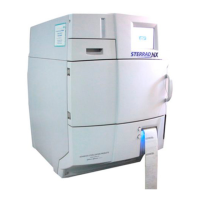
Introduces the main components and features of the STERRAD NX sterilizer.
Describes the function and use of the sterilization cassette.
Explains the cassette drawer's role in holding used cassettes.
Describes the cassette disposal box and its capacity.
Details the functions of the touch screen and speaker for user interaction.
Describes the sterilization chamber and its internal features.
Explains the printer's function for cycle reports.
Identifies components located on the rear panel of the sterilizer.
Illustrates how to enter data using the touch screen interface.
Describes the optional sterilizer cart for mobility and placement.
Specifies the types of medical devices suitable for sterilization.
Guides users on selecting items that can be safely sterilized.
Provides charts of recommended materials and lumen sizes for sterilization.
Lists items that should not be sterilized in the STERRAD NX Sterilizer.
Outlines the necessary steps for preparing items before sterilization.
Details the critical cleaning, rinsing, and drying procedures for instruments.
Explains the correct methods for packaging and loading items into the sterilizer.
Specifies approved instrument trays for use with the STERRAD NX.
Describes the use of tray mats for proper load configuration.
Provides guidelines for packaging instruments using compatible materials.
Details the procedures for safely loading the sterilizer chamber.
Explains the role and use of chemical indicators for process verification.
Pre-operation checks and responsibilities before starting.
Steps to initiate the sterilizer and its warm-up sequence.
Detailed instructions for inserting a new sterilization cassette.
Steps for preparing the load while the sterilizer warms up.
Information on using biological indicators for sterilization monitoring.
Procedure for logging into the sterilizer system.
How to enter details about the load for tracking and traceability.
How to record notes related to a sterilization cycle.
Step-by-step guide for placing items into the sterilization chamber.
How to choose and initiate a sterilization cycle.
Explains the process and duration of the sterilizer's warm-up phase.
Describes the functions available on the System Ready screen.
Information displayed while a sterilization cycle is running.
Procedures for canceling an ongoing sterilization cycle.
What the system displays upon successful cycle completion.
Steps for removing and handling the sterilized load.
How to check chemical indicators after a cycle.
Instructions for processing biological indicators after sterilization.
Introduces user access levels and their purpose.
Defines operator and supervisor access levels and their capabilities.
Describes the menu for advanced system configuration and tasks.
How to configure the sterilizer's date, time, and time zone.
Steps for setting the date on the sterilizer.
Steps for setting the time on the sterilizer.
How to select the correct time zone.
How to select the date display format.
How to select the time display format.
Describes the Cancel and Done functions within settings.
Function to move a loaded cassette to the disposal drawer.
Notes that service functions are reserved for ASP representatives.
Settings for alarm volume, backlight, language, and other options.
Configuration for user login requirements.
Settings for short or long format printouts.
Setting for vacuum unit display (torr or kPa).
Configuration for enabling/disabling load data entry.
Configuration for load removal requiring login.
Configuration for enabling/disabling cycle notes.
Configuration for network connectivity.
How to adjust the alarm volume.
Settings for touch screen backlight timeout.
How to select the display language.
Function to cancel or confirm system configuration changes.
Accessing and viewing calibration and diagnostic files.
Viewing calibration reports.
Viewing diagnostic reports.
Managing user accounts, passwords, and access levels.
Procedure for creating new user accounts.
Procedure for editing existing user accounts.
How to upload user data from a network.
Detailed steps for creating and uploading a user database.
Initiating automatic diagnostic tests for the sterilizer.
Lists the available diagnostic tests and their duration.
Overview of available reports for users.
Details of the sterilizer's configuration and program settings.
Explains the contents of the System Summary file.
Information on viewing and managing cycle history data.
Screen for selecting specific cycle history files.
Information on printing cycle reports.
Description of the short format cycle report.
Description of the detailed long format cycle report.
General overview of sterilizer files.
Detailed explanation of cycle history file content and use.
Information on calibration files and their purpose.
Information on diagnostic files and their content.
Procedures performed automatically by the sterilizer software.
Process for adjusting pressure transducers for accurate readings.
Automatic adjustment of the UV lamp intensity.
Maintenance tasks performed by the user.
Procedures for safely disposing of used cassettes.
How to remove a full cassette disposal box.
How to assemble and insert a new cassette disposal box.
Steps for replacing the printer paper roll.
How to clean the exterior surfaces of the sterilizer.
Instructions for cleaning the monitor lens.
Procedure for replacing the air filter.
How to handle and replace the PCMCIA card for data storage.
Guidelines for the safe and compliant disposal of the sterilizer.
Explains system messages and their probable causes/remedies.
Explains diagnostic messages and suggested remedies.
Details the commercial warranty for the sterilizer.
Details the warranty for service repairs.
Terms of the software license agreement.
 General
| Category | Laboratory Equipment |
|---|---|
| Frequency | 50/60 Hz |
| Product Name | ASP sterrad NX |
| Sterilization Technology | Hydrogen Peroxide Plasma |
| Cycle Time | 28 minutes (Standard Cycle) |
| Power Supply/Voltage | 200-240 VAC |
| Regulatory Approvals | CE, FDA |
| Type | Sterilization System |