56-101-01175 Revision H Page | 63
D. Testing the Aircraft Static System
CAUTION: Observe all safety precautions detailed in the AMM and or CMM.
CAUTION: The AMM or CMM procedure should always be recognized as the
primary authority and this manual should be recognized as a
secondary aide. As such the primary objective of this manual is to
provide instruction relevant to general Test Set operation while the
AMM or CMM dictates the specific test process, sequences and
values.
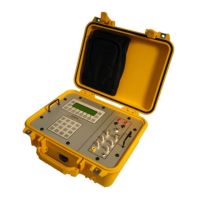
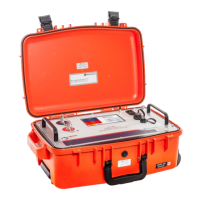
1. Ensure the DPS1000 is powered ON. Wait for Initialization to be completed the
system to be safe at Ground and the display to indicate “Vented”.
If required, select Go To Ground and wait for the Test Set to indicate “Unit Safe at
Ground”.
2. Connect the hoses, both Static (Ps) and Pitot (Pt) to the DPS1000 ports.
Note: The Pitot (Pt) hose is not required to perform a Static system test, however it
is highly recommended as a safety precaution to protect the ASI from possible
damage.
3. If not already done, perform a Leak Test on the Test Set and hoses.
Note: CAP the aircraft end of each hose.
4. Connect the hoses to the aircraft Static and Pitot ports.
Note: Using the Pitot (Pt) hose for a Static system test will prevent the possibility of
damaging the ASI “Airspeed Indicator” which can happen if the Static (Ps)
channel is driven to a high altitude while testing and creates a large differential
pressure which could exceed the ASI full scale rating.
Note: While testing the Static (Ps) system, the Target value for CAS should remain
at 0 kts. While testing various altitude levels, the Test Set will maintain 0 kts
(Qc = 0.000 inHg pressure differential) between the Ps and Pt ports which will
ensure the ASI is not damaged.


 To Next Page