1 – Introduction
11
1.3 System Overview
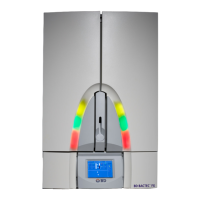
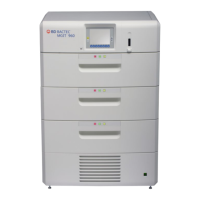
The BD BACTEC FX instrument provides the following major features:
• Modular instrument design permits flexibility to accommodate laboratory needs
• Sliding drawers provide increased vial density, saving laboratory floor space
• Graphical user interface with color display and touchscreen provides ease of use
• Real-time vial presence sensors located in each vial station provide immediate feedback on
vial insertion and removal from stations
• Agitation provides additional enhancement of organism growth and detection
• The ability to mix bacterial, fungal, and mycobacterial cultures within a module or system is
accomplished by varying the medium type
• Can be connected to a BD EpiCenter™ workstation for enhanced instrument reporting and
data management capabilities. Standalone instruments can be connected to a compatible
Laboratory Information System (LIS).
1.3.1 Instrument Overview
The BD BACTEC FX instrument is an automated system for detecting the presence of microorganisms
in clinical samples, blood, and blood products. Inoculated vials are placed in one of the drawers in the
instrument, each of which contains a 10 x 10 array of vial stations. When the drawers are closed, vials
in protocol are monitored for microbial metabolic activity over time by measuring the fluorescence
levels from a specially designed sensor in the vial. This is performed by the measurement subsystem.
The algorithm subsystem analyzes the signals from the measurement subsystem to determine if
evidence of microbial growth (i.e. positivity) is present. Agitation is performed by the agitation
subsystem, which enhances organism growth. Data storage and examination is managed through a
data management subsystem. Stations are rendered unusable due to an alert condition such as an
incubation failure, agitation failure, or measurement system failure.
The user interface subsystem encompasses all instrument functions pertaining to instrument workflow,
primarily inserting vials into the instrument for testing, and subsequent removal of positive and final
negative vials. Demographic information can be entered into the system and reported out. Vial
information can be entered via a barcode reader, designed for one-handed operation, or can be
entered manually via an onscreen keyboard. Vials are associated to a particular station by the process
of inserting the vial into a station immediately after scanning the vial; this activates the station’s vial
presence sensor. You can view information about vials processed by the instrument, request printed
reports, or communicate with a BD
EpiCenter system. Indicator LEDs on the front of the instrument
and others above each station convey status information. The instrument provides confirmatory audio
and visual feedback at the completion of each workflow transaction.
The instrument system has two basic configurations, a Single or a Stack. A Stack consists of a Top and
Bottom instrument. Multiple Stacks/Singles can be linked together with a BD
EpiCenter system to
create a larger installation with full connectivity between modules. The measurement compartments of
the two instruments are identical, but the electronics bay of the Top instrument contains a display and
touchscreen and a computer and interface module which controls and collects data from both Top and
Bottom instruments. Both units contain a barcode scanner which is used to scan a unique sequence
number to identify the vial and the medium type, and a user applied (optional) accession label for
tracking specimens.



 To Next Page