540
HYDRAULIC SYSTEMS
Studio ti 03312 540-04usa
198
9
9.7 AIR-CONDITIONING SYSTEM
9.7.1 Air-conditioning system operation
The basic principle of an air conditioner is the movement of heat. In a
marine, direct expansion (DX) seawater-cooled air conditioner, heat is
transferred from the cabin air to the refrigerant gas, which then releases
the heat into the seawater. In reverse cycle heating (heat pump), the
refrigerant flow is reversed and heat is extracted from the seawater and
discharged into the cabin.
Part of the cooling process, in addition to lowering the air temperature, is
the removal of moisture from the air. This lowers the humidity, making the
area feel more comfortable and helping to keep the boat dry, reducing
mold growth and other moisture related problems.
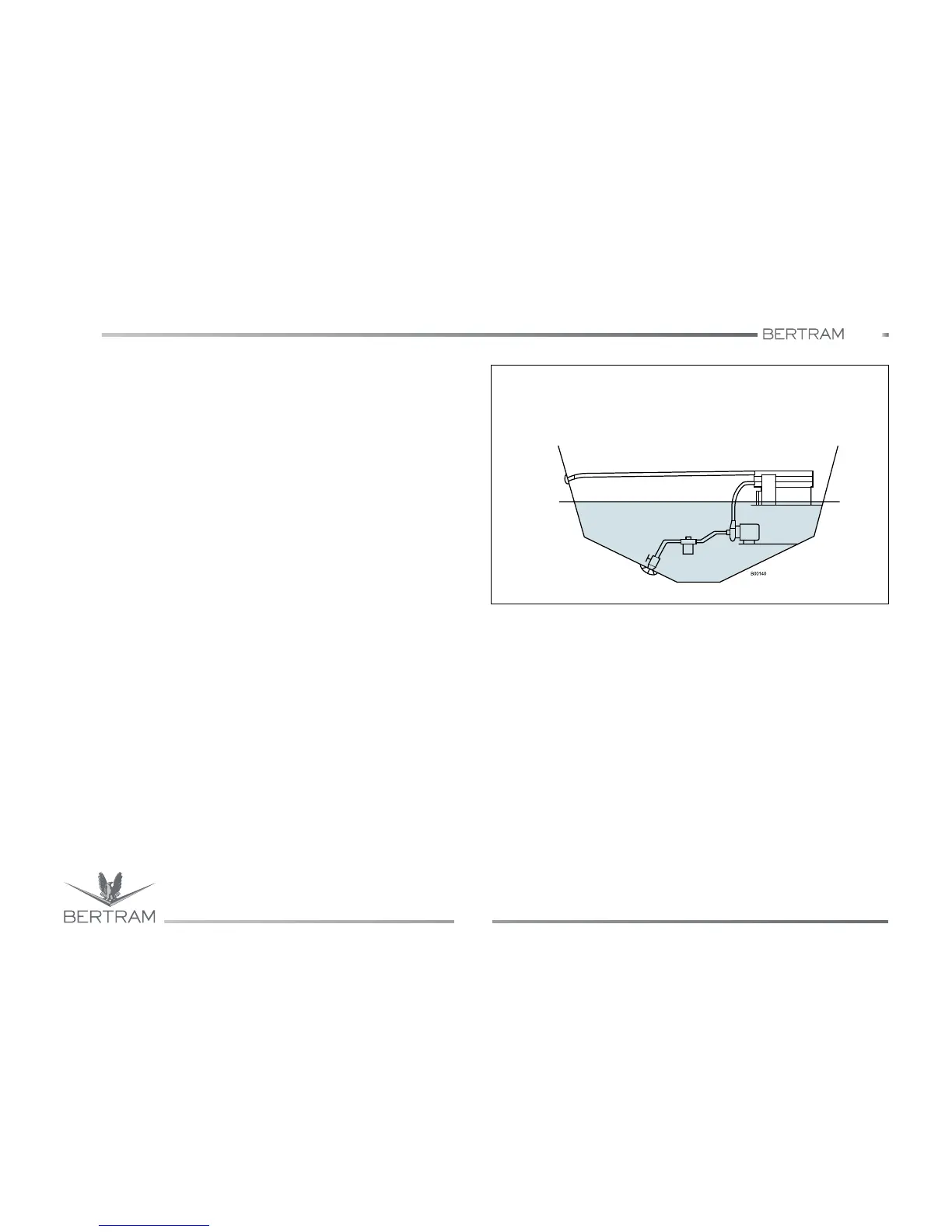
Seawater System: The seawater cooling system consists of an inlet
through-hull fitting, seacock (water valve), strainer, pump, and overboard
discharge fitting all connected by hose or piping.
If multiple air conditioning units are served by a single seawater pump,
then a pump relay and water manifold are required.
Cruisair recommends a centrifugal seawater pump for efficient, quiet
operation and long life. Centrifugal pumps are not self-priming and must
be mounted below the water-line. It is important that the seawater
plumbing be “self-draining”; this means that, if the yacht is lifted, all water
in the piping will drain out. An air conditioning system plumbed this way
will have no air locks which could disrupt the flow of seawater.
For shallow-draft boats where it is impossible to mount the pump below
the water-line, a self-priming pump must be used.
On this yacht each air-conditioned space has an independent
temperature control panel. The air conditioning units are located in the
bilge below the galley, while the relevant intake seacocks, strainers and
pumps for seawater supply are located in the engineroom.
The components in your air conditioning system are designed and built
for saltwater use. Your system operates with seawater cooled, reverse-
cycle condensers and either cools or heats as required for your comfort.
The condensate from the forward cooling units drains into the gray water
sump tank and is automatically pumped overboard. Important: do not turn
off the gray water differential circuit breaker. If the differential circuit
breaker is turned off, condensate may overflow the gray water tank. The
salon cooling unit drains overboard via the common drain. The machinery
room cooling units have a dedicated sump pump to discharge the
condensate water.
All air conditioning units are 240 V AC and powered through the
differential circuit breakers in the salon AC distribution panel.
- Steady uphill flow from inlet to unit.
- Steady uphill or downhill flow from unit to overboard.
- Hoses double clamped (with reversed clamps).
- SW pump and strainer below waterline.
Filter
Inlet flow
Seacock (ballvalve) and
scoop type through-hull inlet
Seawater
pump
A/C condenser coil
Outlet flow
Seawater
outlet
Water line



 To Next Page