Group PS, Periodic Service
PS-2-8 • Planned Maintenance SM 765, Nov ’06
Test the service brake (drive motor cut-off) switch. Drive
the truck FORWARD (or in REVERSE) at creep speed.
While holding the accelerator pedal steady in creep speed
position, depress brake pedal. The braking action should
interrupt power to the drive motor and stop the truck.
Release the brake pedal. The drive motor should again
start moving the truck.
Test brake operation by depressing and releasing the brake
pedal several times while driving the truck. The brakes
should bring the truck to a smooth stop without pulling,
squealing, or shuddering. Have the brakes adjusted or
repaired as necessary. Drive motor should cut off before
brakes apply.
To check brake holding capability and adjustment, park
the truck on a grade and depress brake pedal. The brake
should hold a lift truck with rated load on a 15% grade.
Check Steering
CAUTION
!
DO NOT operate lift truck if steering system
is not operating properly.
Check steering control operation. First, drive the truck in a
straight line. The truck must drive in a straight line with-
out drifting toward either side. Then drive slowly (creep
speed) through a series of full right and left turns. Check
steering response and smoothness of operation. Turning
effort must be the same in either direction. You will hear
the hydraulic pump operate over relief when in a full turn.
If there is a steering problem, have it repaired.
N
TE
Conduct the following test with a rated
capacity load.
Test for general drive train operation. Drive the truck at
various speeds and operating conditions, in both FOR-
WARD and REVERSE directions. Test shifting from
NEUTRAL to FORWARD, then back to NEUTRAL. Test
shifting from NEUTRAL to REVERSE, then back to
NEUTRAL. Check for positive control action when
changing directions.
Listen for clunking, squealing, grinding, scraping, or other
unusual noises. Check for vibration. Listen for wheel
bearing or other specific running noise.
Lift Mechanism and Controls
N
TE
Conduct these tests with a rated
capacity load.
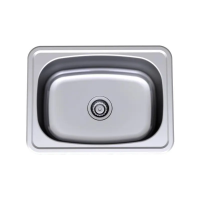
Test the operation of the hydraulic system and upright.
CAUTION
!
Be sure there is adequate overhead clearance
before raising the upright.
Cycle (raise to full height and then lower) the upright at
both slow and fast speed, with the upright tilted slightly
backward. Watch the upright assembly as it rises. All
movements of the upright, fork carriage, and lift chains
must be even and smooth, without binding or jerking
motions. Watch for chain wobble or looseness. The chains
should have equal tension and move smoothly, without
noticeable wobble.
Check function of the control lever and main hydraulic
valve. Listen for abnormal noises in the hydraulic valve,
main hydraulic pump, and system components.
If the maximum fork height is not reached, either the fluid
level in the hydraulic sump tank is low, or there is severe
binding within the upright.
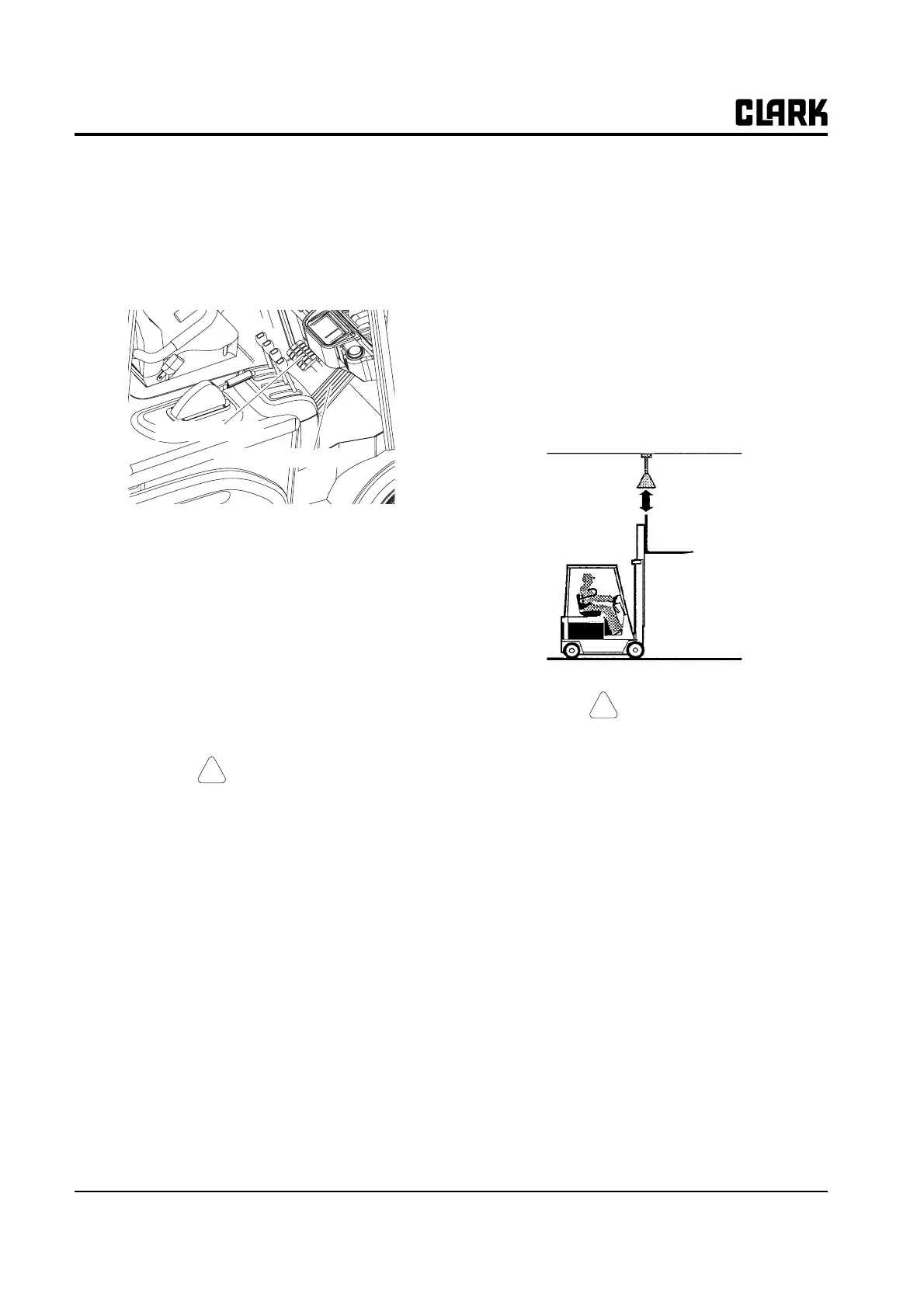
Accelerator Pedal
Brake Pedal



 To Next Page