9
INSTALLATION PROCEDURES
HOISTING
A dolly, a cart or a hoist is highly recommended to raise or lower the Handilift over short distances.
Make sure that you have enough manpower available during the site placement part of the installation.
Use extreme care and ensure that no one is under the unit or in any place where they may be struck by
any part of the equipment.
MAKE SURE THE HOIST HAS SUFFICIENT CAPACITY
TO SUPPORT THE HANDILIFT UNIT
MINIMUM 1 TON
.
For hoistway installations, an overhead hoist may be needed to lower the Handilift into the shaft. If
applicable, install a gantry or "A" frame over the op
installed, ensure that the gantry or "A" frame is stable, secure and designed to support the suspended
load.
NOTE
en shaft to support the hoist and the Handilift. If
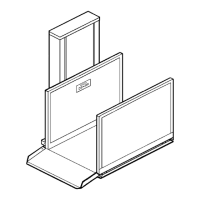
Refer to the dimensional drawings and determine the correct location of the Handilift Base.
SHIMMING TOWER BASE AND TOWER SUPPORT ARMS
(FOR FREE-STANDING UNITS)
1) Shim them as required to ensure a level, plumb and square foundation. There are drilled
holes in the tower base and tower support arms, which are templates for drilling into the
concrete foundation
under the drilled holes in the tower support (cantilever) arms.
or wood structure.
2) Place shims
NOTE
For hoistway applications where support arms are not required, anchor the shims at the base
of the tower. Use only steel shims (provided).
3) Drill the floor through the prepared holes. Insert anchors into the floor.
4) Make sure the tower support arms (if equipped) are parallel before they are fastened to
the floor. This ensures optimum cleara units with under-platform sensors, and
prevents "twisting" the Handilift “out-of-square”.
nce for


 To Next Page