55
LeeBoy Model 8515D Conveyor Paver 5-31
Maintenance
Weldment
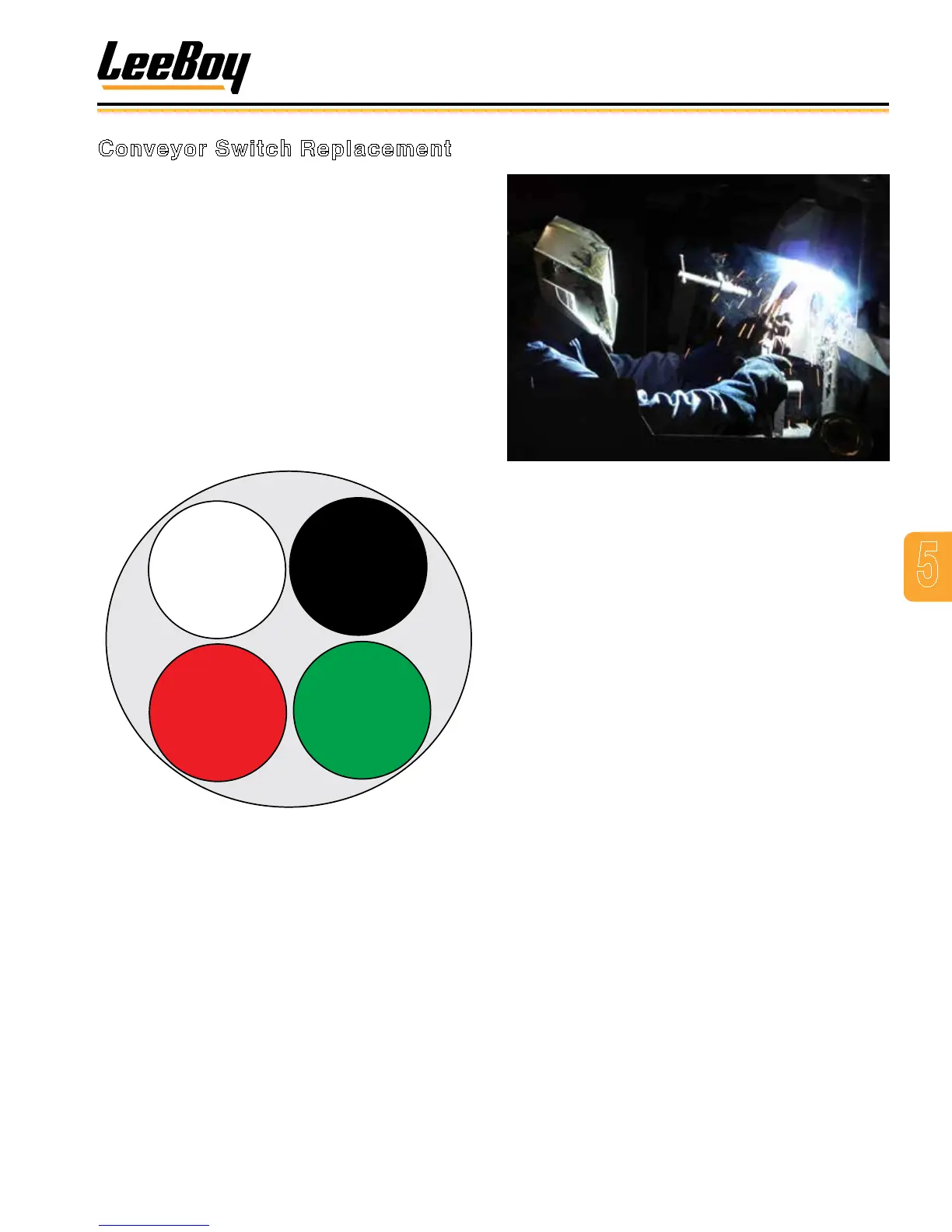
Figure 5-39. Welding
If the machine has been damaged or metal parts worn
due to extensive use, minor welding may be necessary
for repair. Welding is very dangerous. Only individuals
who are properly trained should weld in a dedicated
area away from others as even looking at ultraviolet light
from the ame can cause serious eye injury.
Welding hazards include toxic fumes, harmful dust,
light radiation, burns, combustion from sparks and the
potential for extensive damage to the eye. There is also
a danger of electric shock. If combustible or ammable
materials are nearby, the heat and sparks produced by
welding can cause res or explosions.
TURN THE BATTERY SWITCH OFF AND
DISCONNECT BATTERY TERMINALS BEFORE
WELDING ON THE MACHINE.
Electrical current can ignite re or cause an explosion,
therefore it is critical to turn off power to the machine. It
is also important to grind off the paint to ensure proper
ground on the area being welded.
DO NOT MAKE MODIFICATIONS TO THE MACHINE.
ONLY weld if needed for repair purposes. Weldment
modications to the machine can void your warranty.
Conveyor Switch Replacement
If you need to replace the conveyor switches, follow
these instructions, using the color codes for wiring
(Figure 5-38) to ensure the conveyor switches on the
conveyor ap are wired correctly:
1. Raise the conveyor ap 6-1/2 to 7 inches (16.5 to
17.8 cm) from the bottom of the tank mount support.
2. With the switch installed and the conveyor paddle
hanging down:
• Using a multimeter, measure the ohms across
the black and white wires.
• Using a multimeter, measure the ohms across
the red and green wires.
4
WHITE
3
BLACK
1
RED
2
GREEN
Figure 5-38. Conveyor Switch Wiring
3. Wire the switch using the wires that show continuity.
4. Repeat Steps 2 - 3 for the second switch.
NOTE: The switches are sealed and potted,
therefore, they are not serviceable.


 To Next Page