4
LeeBoy 8515D Conveyor Paver 4-27
Operation
• Use a reference guide such as a curb, gutter, adjacent
mat or string line.
• It is very important that the rst pass be straight as it
will serve as your guideline for the following passes.
• Extend the lower guide bar gauge to further assist you
in paving a straight line from the operator’s station.
(Page 4-50)
Guide Bar
Figure 4-50. Lower Guide Bar Gauge
Avoid low limbs, power lines, and
other objects that can endanger crew or paver.
Basic Paving
1. Position paver at the starting point for the mat.
(Operate the paver from one side only.)
2. Open cut-off gates under auger. (Page 4-23)
3. Adjust screed as needed. (Page 4-24)
4. Open hopper wings to accept asphalt from the
material truck. (Page 4-22)
NOTE: Allow only a partial load of asphalt to enter the
hopper when rst starting to pave.
6. Turn the left and right conveyor switches to the
AUTO position.
7. When the material begins to discharge from under
the screed, set the screed lift switch to the FLOAT
position. (Pages 3-6 to 3-11)
8. If paving a width more than eight feet, turn the left
and right auger switches to AUTO to control the
material height at the endgate. (Augers aren’t
needed when paving a basic eight-foot pull.)
(Pages 3-6 to 3-11)
Starting to Pave
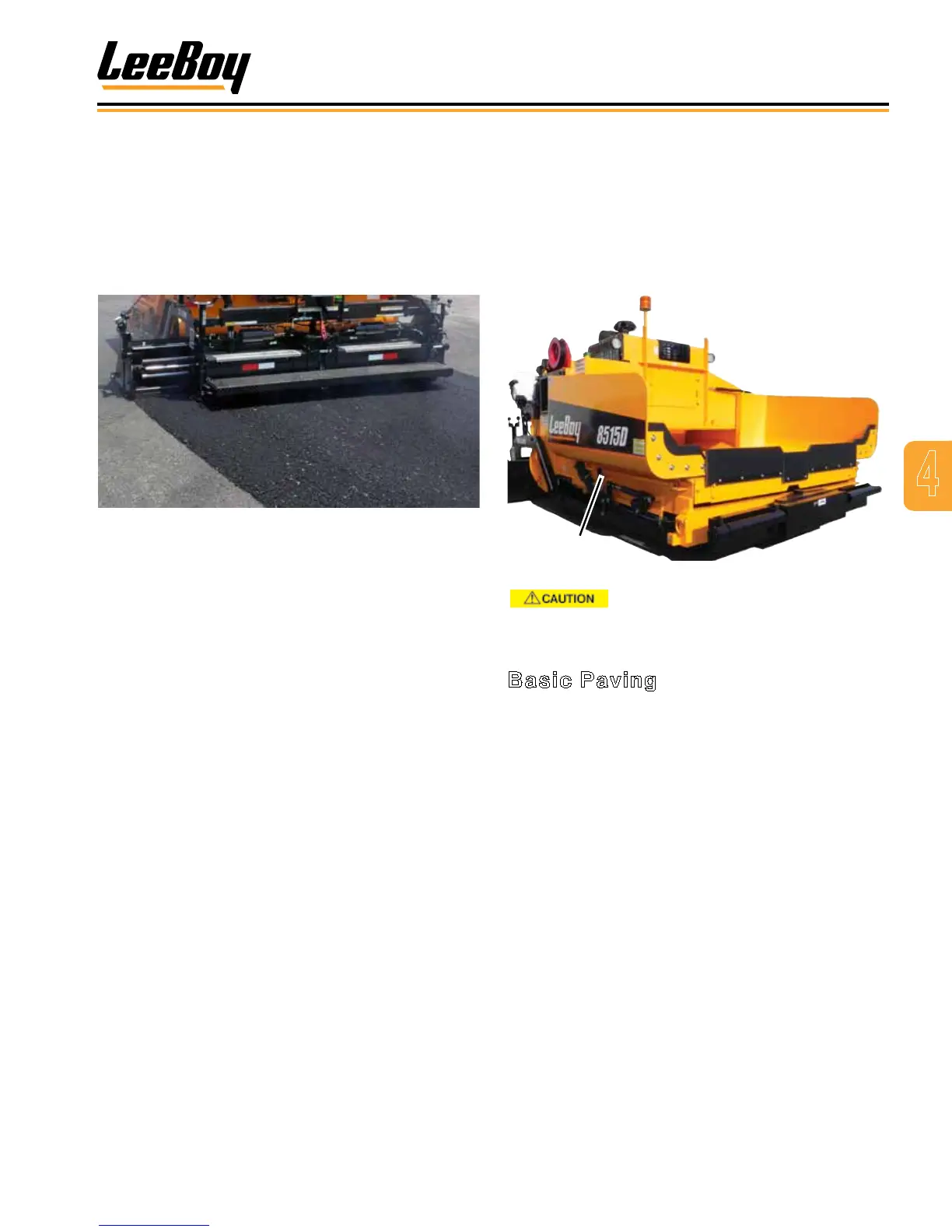
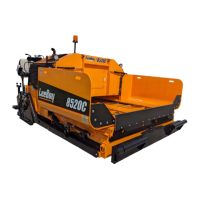
The LeeBoy 8515D Conveyor Paver provides superior
paving for driveways, small to large parking lots, and
secondary roads. The paver is equipped with electric
and manual thickness controls, and can be operated
from either side of the operator platform. It has a
production rate of approximately 250 tons per hour.
Figure 4-49. Paving
This paver is capable of placing a mat thickness of six
inches (20 centimeters) for:
• Bituminous base.
• Binder or surface course.
• Lime or Portland cement-stabilized sub-base.
• Graded aggregate materials.
Operators should be trained to operate the various
machine components along with proper paving
techniques before operating the machine.
Before starting to pave, keep these items in mind:
• Plan the project so you pave the most narrow passes
rst (the width of the paver), leaving the widest passes
until last.
• Always pave in low range.
• It is the operator’s job to guide the material truck
back to the hopper and signal the driver when to stop
dumping the asphalt into the hopper. The driver must
maintain a light pressure on the brakes to prevent the
truck from dumping asphalt onto the ground.
NOTE: If paver is equipped with the optional truck
hitch, the truck driver will not be required to
maintain brake pressure. (Page 4-33)


 To Next Page