4. Pull the circulating valve lever UP to open. (Figure
4-13)
5. Turn ON the liquid asphalt valve.
6. Circulate material at least ve minutes.
7. After circulating the material, pull the circulating
valve lever DOWN to close.
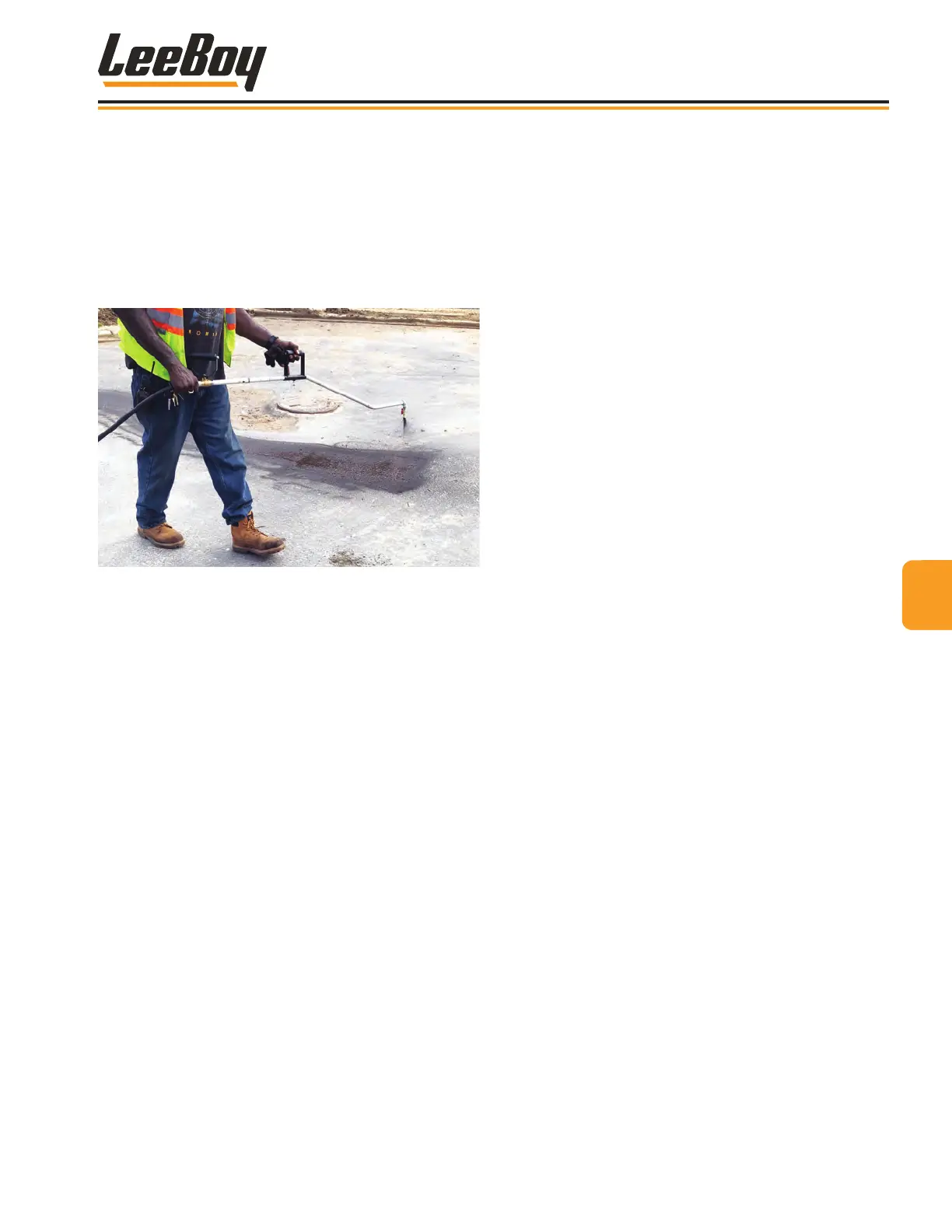
Figure 4-14. Spraying Tack Coat
SPRAYING THE MATERIAL
The liquid asphalt “tack coat” is sprayed onto the
paving surface, acting as a glue to bond to aggregate.
Emulsied asphalt promotes the bond and prevents
slippage between old and new pavement layers. The
tack coat layer is vital for structural performance of the
pavement and should be applied uniformly across the
entire pavement surface.
NOTE: Trafc should never be allowed on the liquid
asphalt to avoid dust and dirt on the surface.
NOTE: If working at night or other low visibility
conditions, equip the unit with special
lighting. Use reective tape on all sides of
the unit and use impact barriers to protect
workers from trafc hazards. Be sure
all personnel wear reective vests when
working in these conditions.
NOTE: Be sure the material is heated to the correct
temperature (See Asphalt Temperature
Guide on Page 4-12) and properly circulated
BEFORE spraying.
Important considerations for achieving optimum surface
coverage are:
• Too little tack coat can result in inadequate bonding
between layers.
• Too much tack coat can create a lubricated slippage
plane between layers.
• Adjusting and setting components correctly is critical
to achieving uniform tack coat. The tack distributor
can pump up to seven (7) gallons of material per
minute at 40 PSI.
• Application coverage depends upon pavement
condition. Rough surfaces require more tack coat
than smooth surfaces.
• Sweeping the substrate is always good practice prior
to tack coating, especially If using on existing and
milled pavements. Clean or sweep the surface before
applying any tack coat to prevent it from bonding to
dirt and dust.
• Keeping the asphalt delivery system clean is a VERY
important part of operation. The emulsion tank should
ALWAYS be cleaned thoroughly before switching
types of emulsion or liquid asphalt.
• It is recommended that you clean the distributor
DAILY after use (or more often if needed) Allowing
tack material to build up in the system where it will
harden will block the hoses, piping, and nozzle(s)
nozzle. This will damage the unit and its components.
• Ensure the spray nozzle(s) are clean and not clogged.
• The best conditions for applying a seal coat or surface
treatment are when temperatures are high, humidity
is low, and there is little or no wind. Emulsied
asphalt may be applied to cool or even slightly damp
pavement, but such conditions require more time
for the material to set. No asphalt binders should be
applied when raining.
• If stopping the spraying operation for an extended
period of time (30 minutes or more), it is advisable to
perform the Reverse Suction procedure beginning on
Page 4-20.
44
Operation
L300 and L600 Tack Distributors 4-17


 To Next Page