MiR1000 User Guide (en) 12/2020 - v.1.4 ©Copyright 2019-2020: Mobile Industrial Robots A/S. 208
I
Identification label
The identification label is the label that is mounted to the product in production. The
label is used to identify the components in your MiR application. It identifies the
product model, the hardware version, and the product serial number.
L
Local path
The local path is the route the robot creates within its immediate vicinity that guides
it around obstacles while still following the global path.
Localization
The method used by the robot to determine its position on the map relative to where
it is in the work environment.
M
Manual mode
The mode in which you can drive the robot manually using the joystick in the robot
interface.
Mapping
Mapping is the process of manually driving the robot around to create a new map.
The robot uses its sensors to detect walls and obstacles and generates a map of the
area based on this input.
Marker
A marker of a physical entity that the robot can dock to. This enables the robot to
position itself accurately relative to the marker.
Markers
A marker is a physical element that the robot can detect with it laser scanners to use
to dock to a certain position precisely. This can for example be V, VL, or L-markers.
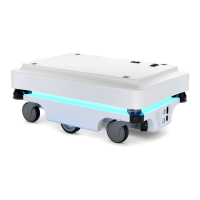
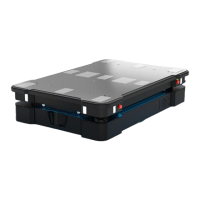
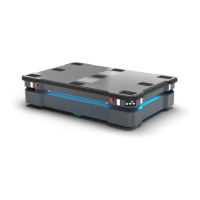
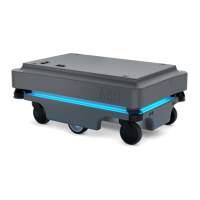
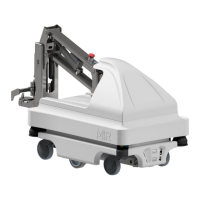
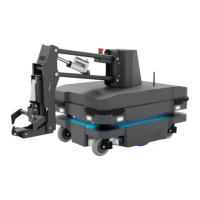
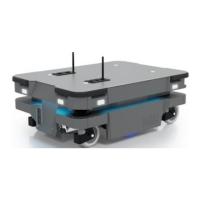
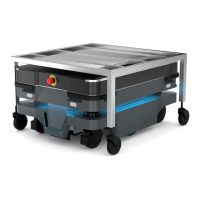
MiR application
A MiR application is either a single MiR product or a combination of MiR products
that is able to execute certain tasks. A MiR application is often a MiR base robot


 To Next Page