NetApp AltaVault Cloud Integrated Storage Administration Guide 15
Beta Draft
Basic configuration Deploying the AltaVault appliance
Basic configuration
This procedure assumes that you have already installed your AltaVault appliance as described in the respective
installation guide:
After installing the appliance, use the following table to guide your initial AltaVault setup and deployment:
AltaVault Model Installation Guide
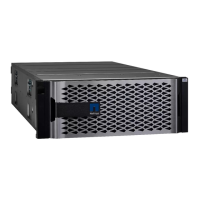
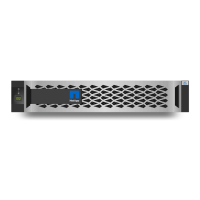
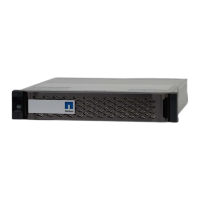
AltaVault physical appliance (AVA-400, AVA-800) AltaVault System Installation and Setup Instructions (poster)
AltaVault virtual appliance (Microsoft Hyper-V, VMware
ESXi, or Linux KVM
NetApp AltaVault Cloud Integrated Storage Installation and
Service Guide for Virtual Appliances
AltaVault cloud appliance (Amazon Machine Image or
Microsoft Azure Virtual Machine)
NetApp AltaVault Cloud Integrated Storage Installation and
Service Guide for Cloud Appliances
Step Configuration Reference
1 Gather configuration information Appendix A, “Administrator’s configuration worksheet.”
2 Provide the initial system configuration
using the CLI Wizard
“Using the AltaVault appliance CLI configuration wizard” on page17
3 Set the Service Processor password (AV-
400, AV-800 models only)
“Setting the Service Processor password” on page 200
4 Configure remote management (AV-400,
AV-800 models only)
“Configuring the Service Processor for remote management” on
page 200
5 Connect to the Management Console
and log in
“Using the Management Console” on page 18
6 Configure the system settings from the
System Setup Wizard
“Using the System Settings wizard” on page 21
7 Configure cloud service provider
settings using the Cloud Setup Wizard
“Using the Cloud Settings wizard” on page 22
8 Add the license information (virtual
appliance models only)
“Managing licenses using the Management Console” on page 117
9 Configure data interfaces “Modifying data interfaces” on page 54
10 Optionally, configure virtual interfaces
(VIFS)
“Modifying virtual interfaces (VIFs)” on page 56
11 Optionally, configure VLAN interfaces “Modifying VLANs” on page 57
12 Optionally, join the domain (for SMB) “Configuring SMB” on page 37
14 Configure storage (select SMB, NFS,
OST, or SnapMirror)
“Configuring SMB” on page 37
“Configuring NFS” on page 42
“Configuring OST” on page 45
“Configuring SnapMirror” on page 47
15 Save your configuration to a safe
location using the Export Wizard
“Using the export configuration wizard” on page 34


 To Next Page