44 NetApp AltaVault Cloud Integrated Storage Administration Guide
Beta Draft
Configuring storage settings Configuring NFS
Editing an NFS configuration
To edit an existing configuration
1. Choose Configure > NFS and click the share name at the bottom of the page.
2. Select the NFS share name and specify:
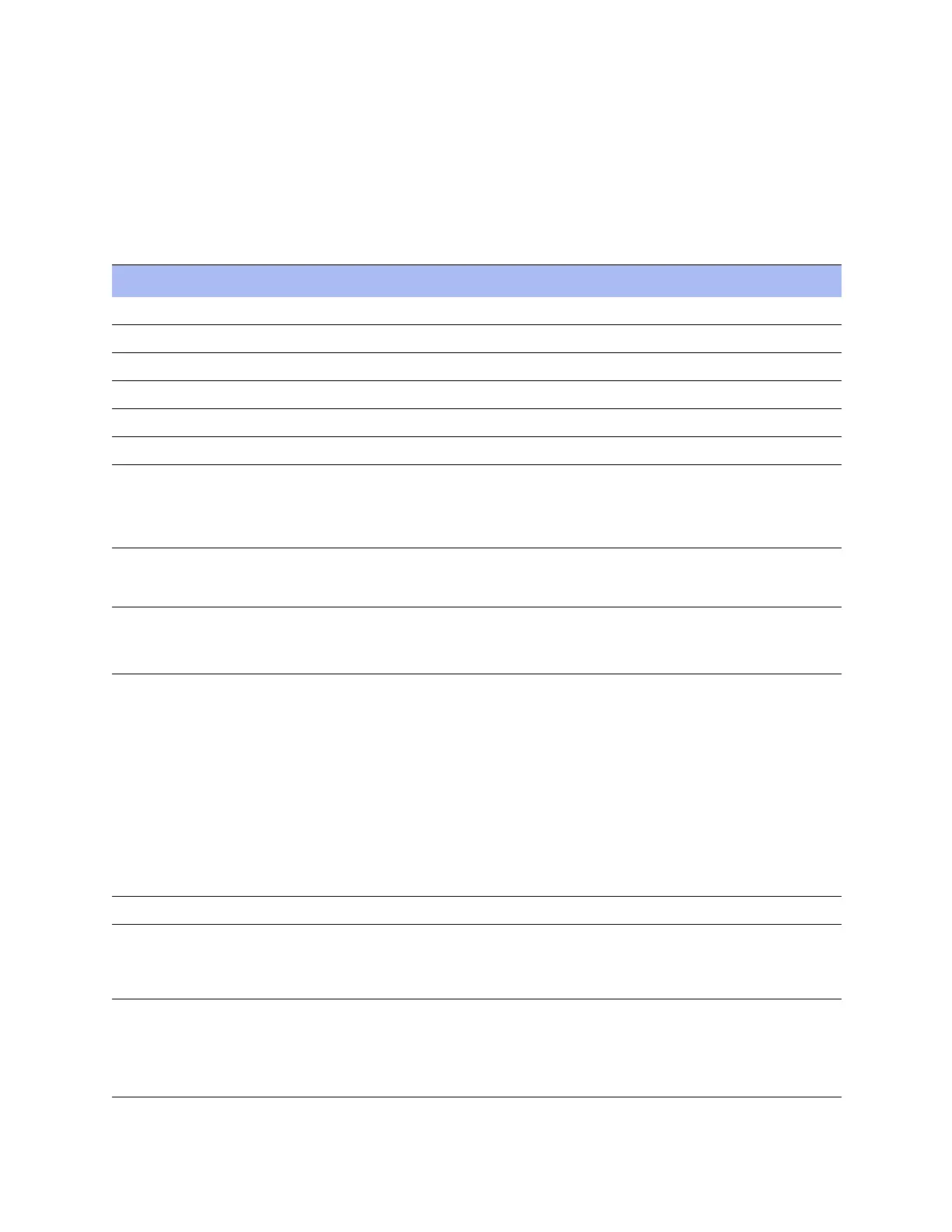
Control Description
Edit Export Select tab to edit the exported NFS share.
Local Path Change the export file pathname, which starts with a forward slash (/).
Comment Specify or change the comment about the NFS share.
Export as NFSv4 Not available for editing.
Kerberos Authentication Available for editing only when Export as NFSv4 is selected.
Pinned Not available for editing.
Early Eviction Select yes or no from the drop-down list to specify whether or not data from this share
should be assigned a higher priority for eviction.
If you select yes, data written to this share is eligible for eviction earlier than other data.
If you select no, data written to this share is evicted using the default method.
Disable Dedupe Specify whether or not data written to this share should be checked for de-duplication.
If you select yes, then the AltaVault will not perform duplication checks on data written
to the share.
Disable Compression Specify whether or not data written to this share should be compressed.
Select yes if your data set is already in a compressed format and will not benefit from
further compression attempts.
Export Asynchronously Select the check box to export the NFS share asynchronously. Click the icon for the
following information:
Exporting NFS asynchronously forces the server to drop all fsync requests from the
client. This is a feature of the NFS protocol. It is required to obtain good performance
with NFS clients that issue frequent NFS COMMIT operations, which might degrade
the AltaVault performance significantly. Many UNIX clients often execute NFS
COMMIT operations when low on memory. To understand the circumstances that cause
this behavior and to detect and prevent it, contact your client operating system vendor.
The AltaVault automatically synchronizes any file that is idle for a configurable amount
of time. The default value is 10 seconds. Although there is a window of time (after the
server responds with success for an fsync request and before the data is written to disk),
this window is small and performance benefits are large. NetApp recommends
exporting NFS asynchronously.
Allow All Clients Enables all clients connected to the AltaVault system to access the NFS share.
Allow Specified Clients Enables only the clients that you specify to connect to the AltaVault system to access
the NFS share. If you select this option, you must specify the client’s IP address and
subnet mask in the Client IP/Network text field below it. To enable all clients to access
the NFS share, specify 0.0.0.0/0 in the Client IP/Network field.
Mount Commands Select this tab to display the Linux and UNIX NFS mount commands. You configure
the mount commands through the command-line. These commands are for your
reference.
If the AltaVault is a secondary appliance, the mount commands enable only read
permissions and not write permissions.


 To Next Page