Chapter 1
Preface
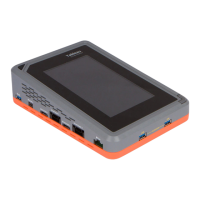
This guide presents a wide range of technical information and procedures for using
the OpenText Tableau Forensic TX1 Imager. It is divided into the following chapters:
• Overview: Provides general information about TX1 as well as unpacking,
starting up, and navigating TX1 menus and reading the LEDs.
• Configuring TX1: Provides system overview information about TX1 as well as
procedures for configuring and connecting it.
• Using TX1: Provides detailed information and procedures for TX1 operation.
• Adapters: Describes the adapters that extend the drive acquisition options and
destination drive capabilities of TX1.
• Specifications and troubleshooting: Provides a brief list of potential problems
and solutions. For more complete and current troubleshooting information as
well as answers to frequently asked questions (FAQ), visit OpenText My Support
https://support.opentext.com ).
1.1 Drive capacity and transfer rate measurement
conventions
The computer industry generally adheres to two different conventions for
definitions of the terms megabyte (MB) and gigabyte (GB). For computer RAM, 1
MB is defined as 2
20
= 1,048,576 bytes and 1 GB is defined as 2
30
= 1,073,741,824
bytes. For drive storage, 1 MB is defined as 10
6
= 1,000,000 bytes and 1 GB is defined
as 10
9
= 1,000,000,000 bytes. These two conventions are known as powers of two and
powers of ten respectively. Microsoft deviates from the hard drive capacity
measurement convention and uses the powers of two convention for its operating
systems.
Tableau products report drive capacities and transfer rates according to the industry
standard powers of ten convention. In TX1 screens, reports, and documentation, a 4
GB hard drive stores up to 4,000,000,000 bytes; a hard drive with a 150 MB/sec
transfer rate transfers 150,000,000 bytes per second.
ISTX240300-UGD-EN-1
User Guide
7


 To Next Page