Gilat Satellite Networks | Confidential and Proprietary Information | 25
Installation on a Double Decker Bus
This section provides general guidelines for SR1500 antenna placement in a 45 foot
double decker bus, or other situations where mounting on top of a roof is not
practical. In this case the antenna can be mounted either indoors (inside the roof at
the back of the bus), or outdoors on a trailer.
Indoor Back-of-Bus Installation
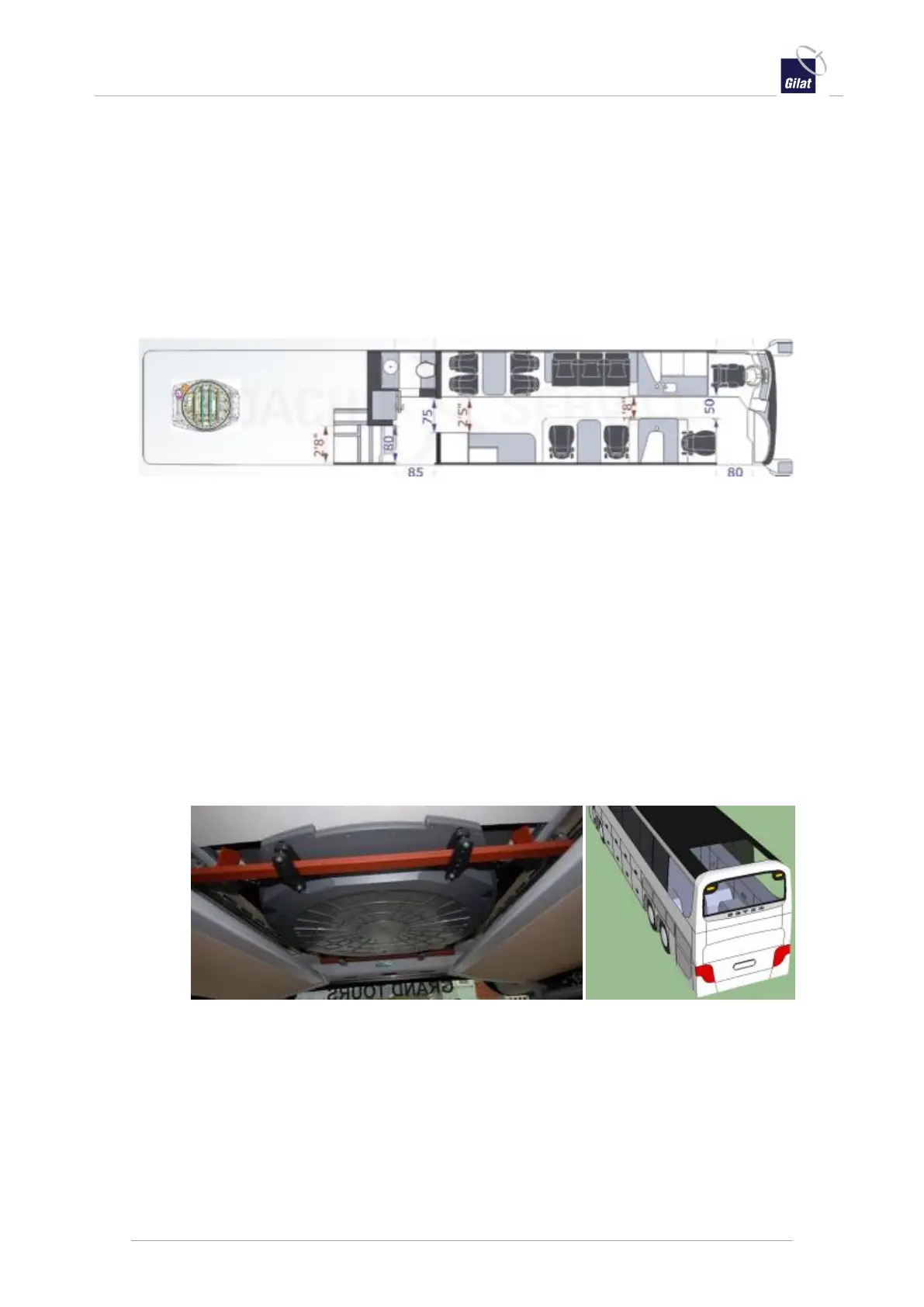
Indoor installation requires mounting under the bus rooftop. This figure shows the
approximate location of antenna under the rooftop at the back or the bus.
Figure 27: Upper deck plan showing indoor antenna location
The installation requires the following considerations:
Most double decker bus roofs have three metal support bars lengthwise. In this
case a middle support bar segment must be removed.
When the roof is built of metallic sheet, a rooftop segment may need to be cut
(1.5m x 1.5m) and refilled with pro-RF material. A composite of honeycomb
core (piper or aramid) and fiberglass skin is recommended. A very thin sheet of
polycarbonate (less than 1.5 mm) or polypropylene (less than 2mm) can also be
used. In each case, mechanical strength, impact resistance and cost limitations
may apply. A cut-out is not needed when the roof material is plastic or
fiberglass.
Indoor installation requires an under-roof mounting chassis installed under the
bus roof, which straddles the cut-out space. The antenna is installed on the
mounting chassis on custom crossbars or legs.
Figure 28: Typical under-roof mount and roof cut-out example


 To Next Page